
Most people planning for a new driveway spend their time comparing concrete versus asphalt versus pavers. Fair enough, that's the part you actually see every day. But there's a step that happens before any of that matters, and it's the one homeowners skip most often, which is figuring out how the ground underneath is going to handle water. A percolation test for driveway drainage planning answers exactly that question. It tells you how fast (or how slowly) water moves through your soil, which in turn tells you what kind of base, slope, and drainage support your driveway actually needs. If you skip this step, a season or two later, once cracks and puddles start showing up.
What Exactly Is a Percolation Test?
At its core, a perc test just measures absorption rate . How long soil takes to soak up a given amount of water. Septic system installers have used this test for decades to figure out whether a property can support a leach field. Turns out the same logic applies beautifully to driveways. Run the test in the spot where your driveway is going, and you'll get answers to a few practical questions:
- Is water going to drain away, or sit and pool under the surface?
- Does this soil need help, extra drainage, a different base or is it fine on its own?
- What base material actually makes sense here?
Basically, it's a quick way to find out if your soil is a team player or a problem waiting to happen.
Bad Drainage Wrecks Driveways
Here's the Uncomfortable Truth
drainage failure is behind a huge share of driveway problems. When water can't get away from the base layer, that base weakens, and everything built on top of it eventually shows the strain. Watch for these warning signs of a drainage problem:
- Puddles that linger long after the rain stops
- Soil washing out from beneath the edges
- Frost heave, if you're somewhere with real winters
- Cracks that show up way earlier than they should
A percolation test for driveway drainage planning catches these risks on paper, before they turn into repair bills.
How to Actually Run the Test
None of this requires special equipment. It just requires patience and a bit of care.
- Pick your spot(s): Test right where the driveway will sit. Got a bigger project? Test in a few different spots, soil composition can shift more than you'd expect across even a modest lot.
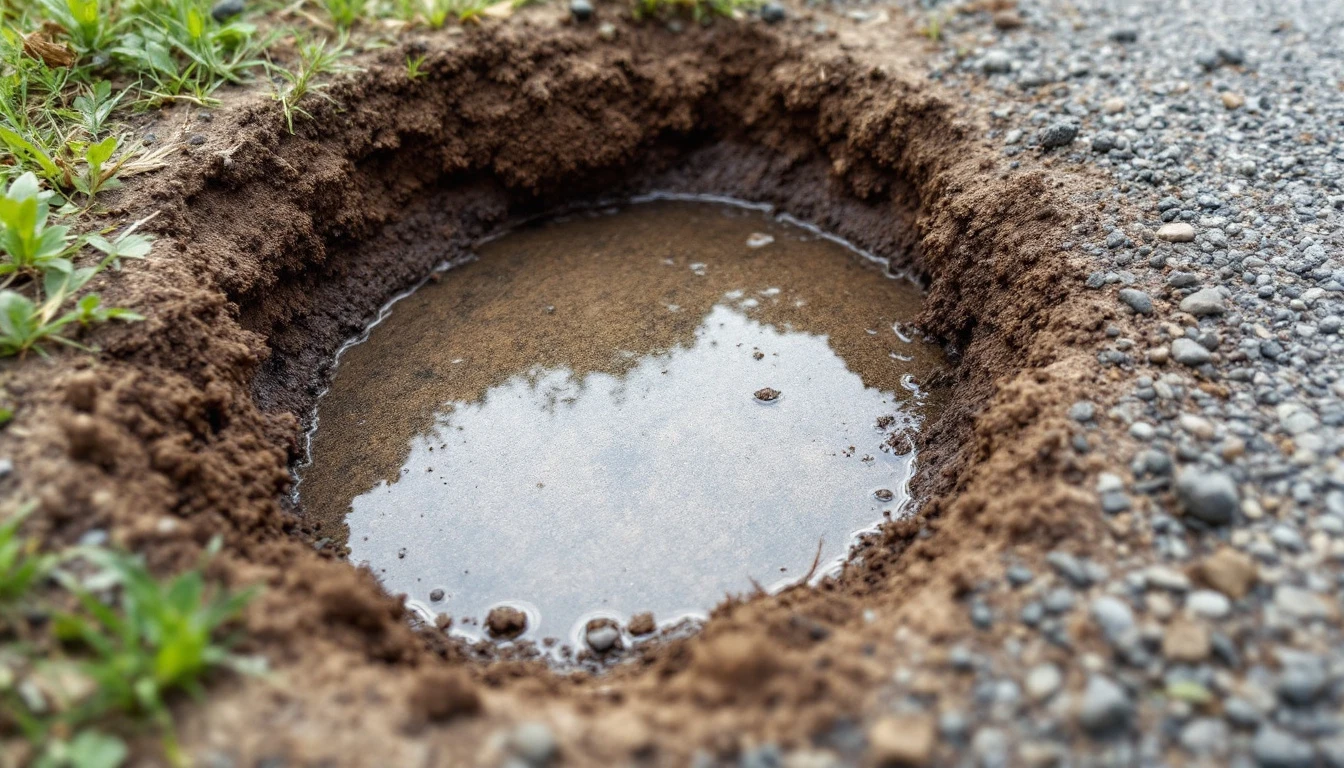
- Dig your hole: Roughly a foot deep, somewhere between 6 and 12 inches across. This depth roughly mirrors what a driveway base sits on.
- Let it soak first: Fill the hole and walk away for several hours, ideally overnight, this pre-soak matters. It gets the surrounding soil saturated the way a real storm would, so your reading isn't skewed by bone-dry ground soaking up an unrealistic amount at first.
- Time the drops: Refill the hole, then track how long it takes the water level to fall by one inch. That number is your percolation rate.
- Write it down: Faster drainage means healthier soil in general. Slower drainage means you've got some planning to do.
Analyse Your Results
Once you've got a number, here's roughly what it means.
Fast Drainage
It usually points to sandy or gravelly soil. Good news, you likely won't need much beyond a standard base setup.
Moderate Drainage
This suggests fairly balanced soil. A well-compacted gravel base plus correct grading should serve you fine.
Slow Drainage
This is the one to take seriously. It usually means clay-heavy or dense soil, and it comes with real pooling risk unless you address it directly.
A Real-World Comparison
Picture two neighbors, same street, same rainfall. One pours a concrete driveway without ever checking the soil. Turns out the lot has heavy clay underneath. Twelve months later, cracks are already spreading, trapped moisture expanding and contracting under the slab did the damage.
The other neighbor tests first. The results come back slow-draining, so before pouring anything, they add a gravel base and tuck in a drainage channel along the edge. Years pass. That driveway is still holding up fine.
Same street, same weather, wildly different outcomes, all because one person spent an afternoon testing soil before pouring concrete.
Matching Drainage Fixes to Soil Type
Soil Drains Fast?
- A compacted gravel base is usually enough
- Just make sure the slope carries water away from your house and any other structures
Soil drains at a moderate pace?
- Layer in crushed stone under the base
- Keep the grading consistent across the whole surface
Soil Drains Slowly?
- French drains or trench drains earn their keep here
- Geotextile fabric helps stabilize things underneath
- A thicker base layer gives water more room to move instead of pooling
Does Your Material Choice Matter Too?
It does, and drainage plays into that decision more than most people realize.
Concrete
It holds up well structurally, but water trapped underneath is basically its worst enemy, that's when cracking starts.
Asphalt
It flexes more than concrete, which helps, but soften it up with prolonged water exposure and you'll shorten its life significantly.
Gravel
It is naturally forgiving when it comes to drainage, though it still benefits from a solid base and correct grading rather than just being dumped and leveled.
Pairing the right material with what your soil is actually doing is half the battle.
Practical Tips Worth Following
- Test the soil before you commit to any construction plan, not after
- For larger driveways, test more than one spot
- Pair your percolation results with proper grading, one without the other won't get you far
- Be wary of building directly on untreated clay
- If your results are ambiguous or borderline, bring in a professional rather than guessing
Mistakes That Undo All This Work
Even people who run the test sometimes trip up afterward:
- Getting the results, then building as if they hadn't
- Rushing past proper soil prep
- Cutting corners on base material quality
- Forgetting to grade the slope correctly
Any one of these can quietly cancel out the benefit of testing in the first place.
Final Thoughts
A driveway is genuinely only as good as what's underneath it. Running a percolation test for driveway drainage planning before you build is one of those unglamorous steps that rarely gets talked about. But it's often the difference between a driveway that lasts decades and one that's cracking within a year or two.
For more guidance on driveway projects planning, materials, and everything in between check out the resources at Drivewayz USA.
Frequently Asked Questions
It measures how fast water moves through your soil, which tells you what kind of drainage strategy your driveway actually needs.
You could, but it's risky. Even small driveways can develop cracks and surface damage if the soil underneath doesn't drain well.
Plan on several hours total, mostly because of the soak time, the actual measurement only takes a few minutes once the soil is saturated.
You've got options: gravel layers, drainage installations, or soil stabilization, all of which can offset a slow-draining site.
Yes. Your soil's drainage behavior plays a real role in whether concrete, asphalt, or gravel is the smarter fit for your property.