
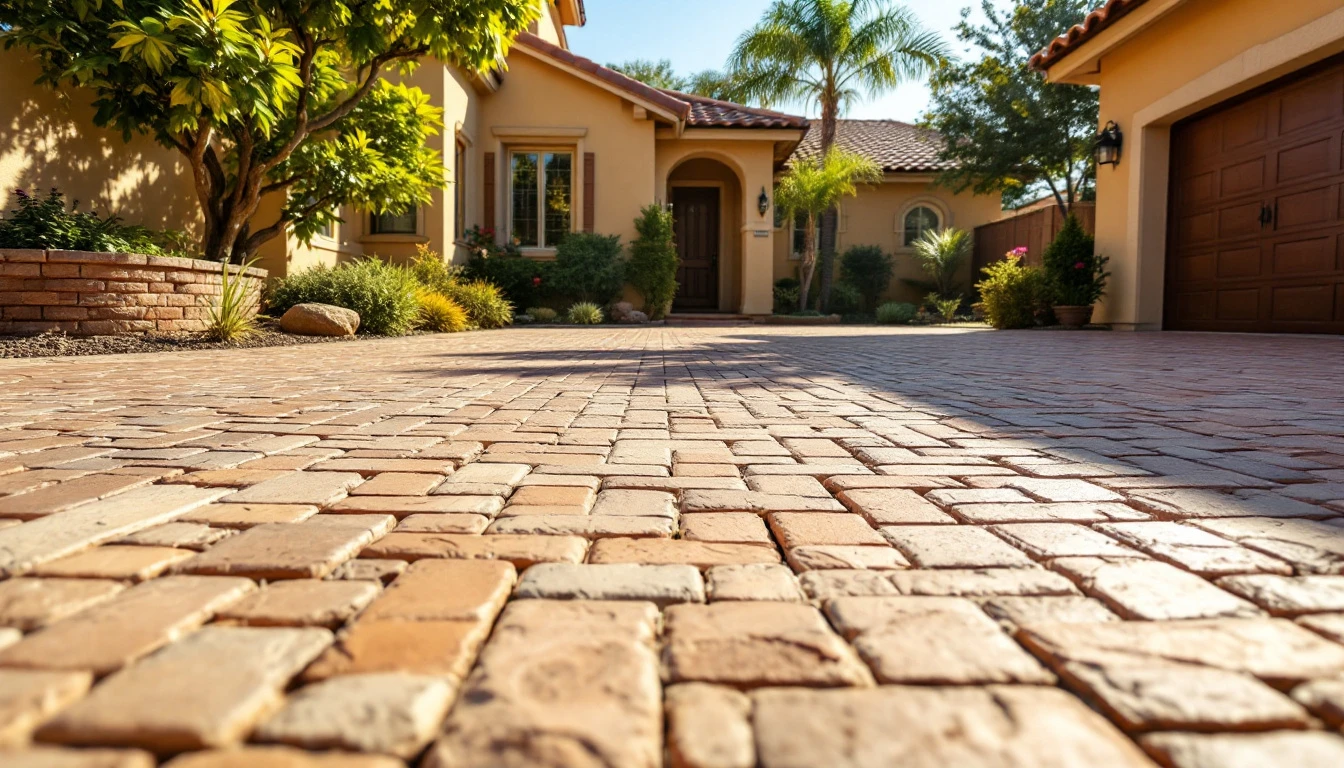
Walk up to a well-done Mediterranean home and your eye usually lands on the driveway before anything else. Plain concrete or asphalt just can't deliver the warmth and texture that this style depends on, you need real stone, real clay, real color variation. Get the materials right and the driveway stops being a slab you just park on and becomes part of the house's story.
What Actually Makes a Driveway "Mediterranean"
There's no single ingredient here, but a few things tend to show up together: sun-baked color tones, surfaces with a bit of handcrafted irregularity, patterned tile worked in somewhere, and a layout that doesn't fight with the landscaping around it. Skip any one of these and the driveway starts to feel like an afterthought instead of a design choice. Done well, it does more than get you from the street to the garage, it adds real curb appeal, and buyers notice that when it's time to sell.
Picking the Right Material
This is where a lot of projects go sideways. People fall in love with a look in a photo without asking whether that material can handle daily tires, summer heat, and the occasional downpour. A Mediterranean driveway that's gorgeous for six months and cracking by year two isn't a win for anyone.
Travertine: The Reliable Favorite
Travertine pavers show up in more Mediterranean driveways than just about anything else, and for good reason. The stone stays noticeably cooler underfoot than concrete even in direct sun, which matters more than people expect once summer hits. It's also naturally slip-resistant and holds up over years of use without much fuss. You'll typically find it in beige, ivory, or walnut, soft, sun-washed shades that don't fight with the rest of the house.
A lot of homeowners in warmer coastal areas carry travertine from the driveway straight into the patio, which keeps the whole exterior feeling like one connected space rather than a series of disconnected surfaces.
Saltillo Tile: Great Character, Limited Job
Spanish quarry tile, most people know it as Saltillo. It is where the handmade charm really comes through. Because each tile is made by hand, no two are perfectly alike, and that slight inconsistency is exactly what gives it personality. The terracotta color is unmistakably Mediterranean.
Saltillo is a softer material, so it's not really built to be the main surface a car rolls over every day. Treat it as an accent like borders, edging, a decorative strip near the entry, paired with something sturdier underneath the actual traffic.
Limestone and Cantera: Where the Strength Comes From
Limestone and cantera stone earn their keep on durability. Limestone in particular resists weathering well and holds a neutral tone that works with almost any Mediterranean color scheme, which is why it's often the material chosen to carry the full driveway. Cantera tends to show up more in steps, edging, and other decorative touches rather than as the primary surface, but it pulls its weight where it's used.
Small Details That Benefits Well
The stone sets the tone, but it's usually the tile accents that make people stop and look twice. Encaustic cement tile is the go-to one here. Those richly patterned tiles you'll spot lining a driveway border, framing an entry threshold, or forming a medallion at the center of a turnaround.
Picture a mostly travertine driveway with a band of encaustic tile laid near the gate, that one detail can turn a nice driveway into a memorable one.
When Full Stone Isn't the Choice
Not every homeowner wants or needs a driveway that's solid stone from end to end. A gravel-and-chip-seal surface bordered with stone curbing is a legitimate Mediterranean option, not a compromise. It drains well, costs noticeably less to install than full paving, holds up to repairs without much drama, and has an easy, countryside feel that suits certain properties better than polished stone ever would. The stone curbing isn't optional here, though without it, gravel just spreads and the whole layout loses its shape.
Getting the Design Right
A few principles separate a driveway that looks intentional from one that looks like materials were picked at random:
Tie It to the House
The driveway's tones should echo the roofline, the exterior walls, and whatever's happening in the yard, not compete with them.
Don't Ignore the Pattern
Herringbone layouts, mosaic borders, a circular feature near the entry, these small geometric touches are often what separates a good Mediterranean driveway from a forgettable one.
Stay in the Warm Palette
Terracotta, sand, beige, soft gray. Bright or artificial-looking colors break the illusion fast.
Think About Water Before You Pour Anything
Gravel sections and permeable pavers aren't just aesthetic choices, they keep water from pooling and slowly wrecking the surface underneath.
How This Plays Out in Practice
One homeowner in a hot, dry climate rebuilt their driveway around travertine as the main surface, added Saltillo tile along the edges for texture, and finished it off with limestone curbing to hold everything together structurally. The payoff was a driveway that stayed comfortably cool underfoot, needed very little upkeep, and looked like it belonged to the house rather than sitting in front of it. That layered approach, one dominant material, one accent material, one structural material comes up again and again because it just works.
Keeping It Looking Good Long-Term
Natural stone and tile aren't maintenance-free, but they're not demanding either:
- Reseal stone surfaces periodically to keep stains from setting in
- Stick to mild cleaning solutions, harsh chemicals will dull or damage the finish
- Top off gravel sections as they settle or wear thin
- Check joints and edges once a year so small issues don't turn into bigger repairs
Final Thoughts
A Mediterranean driveway comes down to picking materials that can actually do the job. Travertine for the main surface, limestone or cantera for strength, Saltillo and encaustic tile for the character that makes it memorable. Get that combination right and you end up with something that's both durable and genuinely good-looking, not just for the next season but for years.
If you're planning this kind of upgrade, working with a team that installs this stuff regularly like Drivewayz USA. We can help you make the right choice for a driveway that looks right on day one and one that still looks right a decade later.
Frequently Asked Questions
Travertine and limestone top the list most often both hold up well in heat, wear evenly, and fit the aesthetic without much extra effort.
It depends heavily on material choice. Full natural stone costs more upfront than gravel, but it tends to outlast cheaper options by a wide margin, which affects the real long-term cost.
Not really recommended. It's a softer material better suited to accents and borders than to daily vehicle traffic across the whole surface.
Periodic sealing, cleaning with mild (not harsh) products, and a yearly check of joints and edges covers most of it.
Yes, gravel with chip-seal and stone curbing is a genuinely popular choice, especially when drainage and lower maintenance matter more than a fully paved look.