
Most people, when planning a new driveway, think about the top layer. Asphalt versus concrete, pavers versus gravel. Because that's the part you'll actually see and drive on every day. None of those choices matter much if the ground underneath can't hold up its end of the deal. A look at the site and a full lab or field program are different steps. Walking the ground and checking drainage can be enough to decide. Sampling, a dynamic cone penetrometer, moisture-density tests, or a lab program are chosen for that site. There is no single nationwide rule that requires a full soil investigation for every residential driveway. Soil testing looks at what's beneath the surface: classification, moisture, and the compaction the project specifies. Specific tests estimate classification, moisture, density, or penetration resistance by the method used. They do not guarantee soil strength or that the finished driveway will not move. A driveway is only as good as the ground carrying it. FHWA's highway geotech manual discusses soft or highly compressible soil, swelling soil, saturation, poor drainage, and poor compaction as pavement-performance problems. Excess moisture can make pavement materials unstable, and keeping base, subbase, and subgrade from staying saturated is a stated design objective. That is highway guidance, not a ranking of why driveways fail, and not a residential code.
What Happens During a Driveway Soil Test?
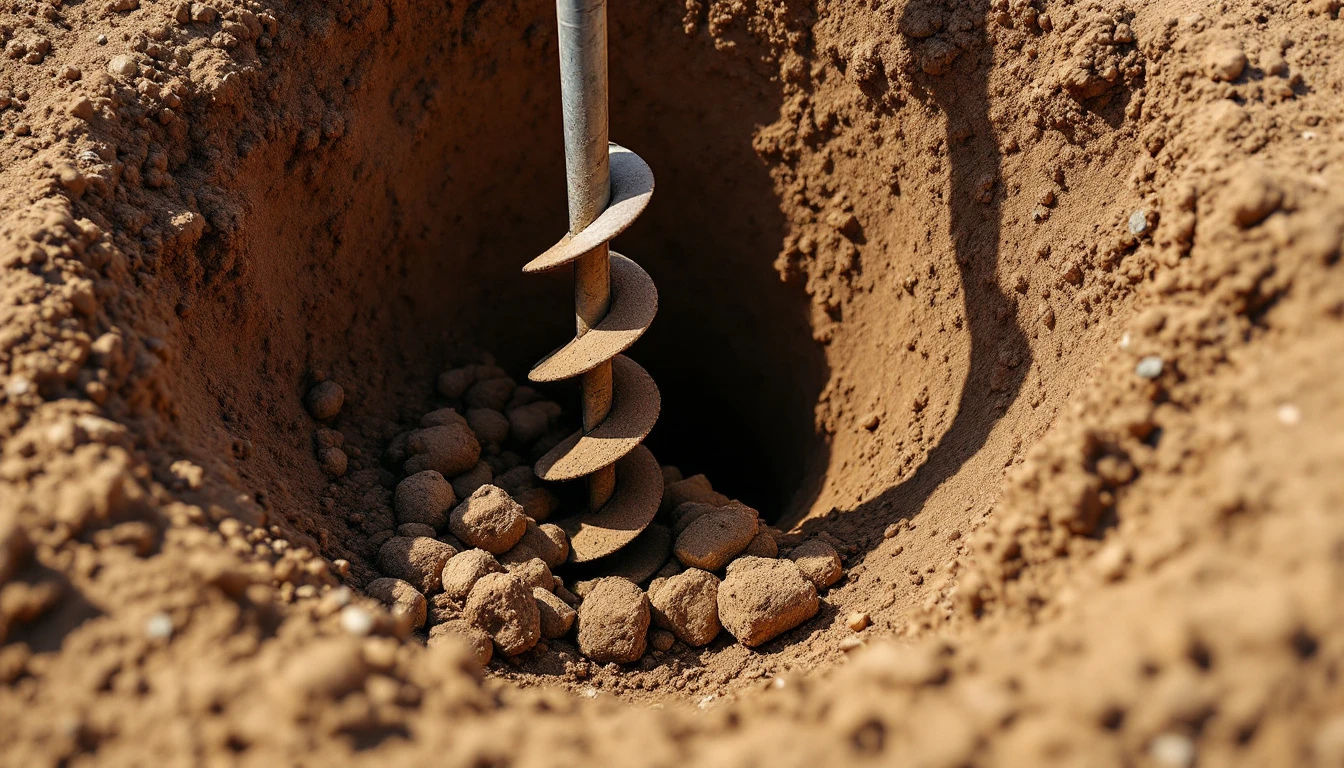
It's the process of checking out the ground where a driveway is going to sit before anyone breaks it. Depending on the site, a technician analyzes the property by taking soil samples, sending them off to a lab, or running on-site measurements of strength and density.
The point isn't just slapping a label, "this is clay" or "this is sandy loam." An engineer or contractor really tests and analyzes how that soil is going to respond once it's dealing with the weight of vehicles, shifting moisture through the seasons, and whatever weather the region throws at it.
Why This Step Matters
Cars and trucks roll across the surface, but it's the subgrade doing the heavy lifting underneath. If you skip the investigation for weak, wet, or poorly compacted soil, and you can end up with problems no amount of quality asphalt or concrete will fix on its own.
Can the Ground Hold the Load?
Not every driveway sees the same kind of traffic. A driveway that only ever sees a sedan and a minivan is a very different problem than one that regularly hosts a boat trailer, an RV, or a contractor's work truck. Testing can show whether the methods used found soft, wet, or loose ground for the vehicles you expect. It does not guarantee the soil will carry that load.
When the soil results weak, dig out the weak material and replace it, improve what's there, thicken the aggregate base, or bring in stabilization or reinforcement techniques suited to the site.
Not All Dirt Behaves the Same Way
Soil reacts to water and weight in wildly different ways depending on what it's made of. Some clays swell and shrink as moisture changes, especially highly plastic clays. Other clays barely move. A soil name alone does not prove swell. Silty ground can bring its own drainage and stability issues. Loosely compacted fill has a tendency to settle once traffic starts putting repeated pressure on it.
That's exactly why eyeballing the yard isn't enough. Ground that seems perfectly solid during a dry spell can turn into something else entirely after a stretch of heavy rain.
Water Is Usually the Real Problem
Drainage that doesn't work properly can weaken the subgrade and chip away at the support the pavement structure is counting on. FHWA's highway guidance says excess moisture can make a pavement unstable if the materials become saturated. It does not rank one cause as the reason driveways fail, and it does not bind a residential project by itself.
A proper soil investigation can flag issues like standing water, a high water table, poor permeability, or spots on the property that just never seem to dry out. Knowing that ahead of time shapes decisions about grading, surface drainage, subsurface drainage systems, and how thick the supporting layers need to be.
Warning Signs That Your Site Needs a Closer Look
Testing earns its keep especially when a property has ground conditions that raise questions. Keep an eye for:
- Water that lingers on the future driveway area after it rains
- Soft, muddy patches in the yard
- Areas that have settled or dipped in the past
- Clay that's expansive or highly plastic
- Fill dirt that was brought in recently
- Ground disturbed by old construction or demolition work
- Slopes or nearby retaining walls
- Plans for a driveway that'll see heavy vehicle traffic
- An existing driveway already showing cracks, ruts, or settlement
- Soil conditions that vary noticeably across different parts of the property
For example, picture a homeowner planning an asphalt driveway over a spot where a shed used to stand. The ground might look perfectly flat and stable. But buried debris or loosely dumped fill underneath could be hiding a weak zone waiting to cause trouble. Catching that before paving starts saves a lot of grief later.
The Main Ways Soil Gets Tested
Which method makes sense depends on the property itself, what kind of driveway is planned, the soil you're dealing with, and whatever local codes should be followed.
On-Site Inspection and Sampling
A technician walks the site, picks spots to investigate, and pulls samples for evaluation. How many locations get checked and how deep should be based on the actual conditions of the property, not a one-size-fits-all checklist.
Dynamic Cone Penetrometer (DCP) Testing
This method drives a cone into the ground using repeated strikes, and the resistance it meets tells you something about subsurface strength. It's a handy way to spot changes in soil consistency across the planned driveway footprint.
Moisture-Density and Compaction Testing
Lab work can establish the spot between moisture content and how dense the soil can get when compacted. Field results are then measured against whatever standard the project calls for. Soil compacted to the moisture and density the project specifies usually moves less than loose fill. That is a construction target, not a guarantee.
Other Geotechnical Testing
Depending on what the site demands, an engineer might also look at grain size, plasticity, permeability, or compressive strength. There's no universal test that fits every driveway. The testing plan should match the site and the traffic it'll see.
How the Process Unfolds
It typically kicks off with a walk-through of the site, looking at where the driveway will run, the slope, how water moves across the property, any existing pavement, landscaping, and anything that already looks like trouble.
Before anyone starts digging or drilling, underground utilities get located. From there, the technician investigates the chosen spots, either pulling samples or taking field measurements directly.
If lab analysis is needed, the samples get labeled and shipped out. Once results come back, they're reviewed to figure out whether the existing ground is good to build on or needs work first.
Recommendations coming out of that review might involve removing unsuitable soil, bringing in fill, improving compaction, adjusting drainage, thickening the aggregate base, or adding stabilization and reinforcement.
How Test Results Shape the Build
A soil report shouldn't just get filed away and forgotten. It's meant to directly inform how the driveway gets built. If the report flags weak subgrade soil, then the contractor might need to remove that material and swap in properly compacted fill instead. In other cases, a geosynthetic layer for separation or reinforcement might make more sense. FHWA's highway geotech manual lists several possible treatments for unsuitable soils, including removal and replacement and, in defined cases, geosynthetics used with granular layers. The choice is site-specific, and that guidance is not a residential building code.
Drainage often becomes part of the fix too. Depending on what the site needs, adding drainage layers, edge drainage, or other measures to keep water from pooling inside the pavement structure itself.
Does Every Single Driveway Need a Full Investigation?
Not really, no. A site look and a full testing program are different. A modest residential driveway on stable, established ground probably doesn't need the same depth of investigation, a steep slope, poorly drained soil, or a site meant to handle heavy vehicles regularly.
Also, don't assume a small driveway automatically means testing isn't worth it. How much investigation makes sense really comes down to local ground conditions, what material you're planning to use, the loads you're expecting, and what your contractor or engineer recommends.
Even a gravel driveway leans on the subgrade underneath it. Lay gravel over soil that's weak or wet, and it can work its way down into the ground, rut out, or lose its shape well before it should.
Final Thoughts
A driveway that lasts starts with what's underneath it, not what's on top. Understanding the soil gives homeowners and contractors the information they need to make smarter calls about base prep, drainage, compaction, material choice, and any subgrade improvements that might be needed.
At Drivewayz USA, the goal is helping homeowners walk into their driveway project with real, practical information instead of guesswork. Whether you're leaning toward asphalt, concrete, gravel, or pavers, understanding your site's conditions is a core part of ending up with a driveway that holds up to daily traffic and whatever the seasons bring.
Frequently Asked Questions
It's the process of evaluating the ground under a proposed driveway to understand its strength, makeup, moisture levels, compaction characteristics, and anything else that could affect how the driveway performs.
It depends heavily on your site. It's especially worth doing when the soil conditions are unclear, drainage is questionable, there's fill on the property, the ground has settled before, or the driveway will see heavy vehicle traffic.
Yes. Knowing how permeable the soil is, what the moisture and groundwater situation looks like, and how the site is profiled overall can flag potential drainage problems early and guide how the driveway drainage gets designed.
Not as a blanket rule. A gravel driveway still depends on the ground under it. Testing is worthwhile when that ground is soft, wet, poorly compacted, or already rutting. Results help decide prep and aggregate for that site.
There's no single reliable price that applies everywhere. Cost depends on your location, how many test points are needed and how deep they go, the field and lab work involved, and whether a formal engineer's report is required. It's best to get a quote specific to your site rather than trusting a flat number you find online.