
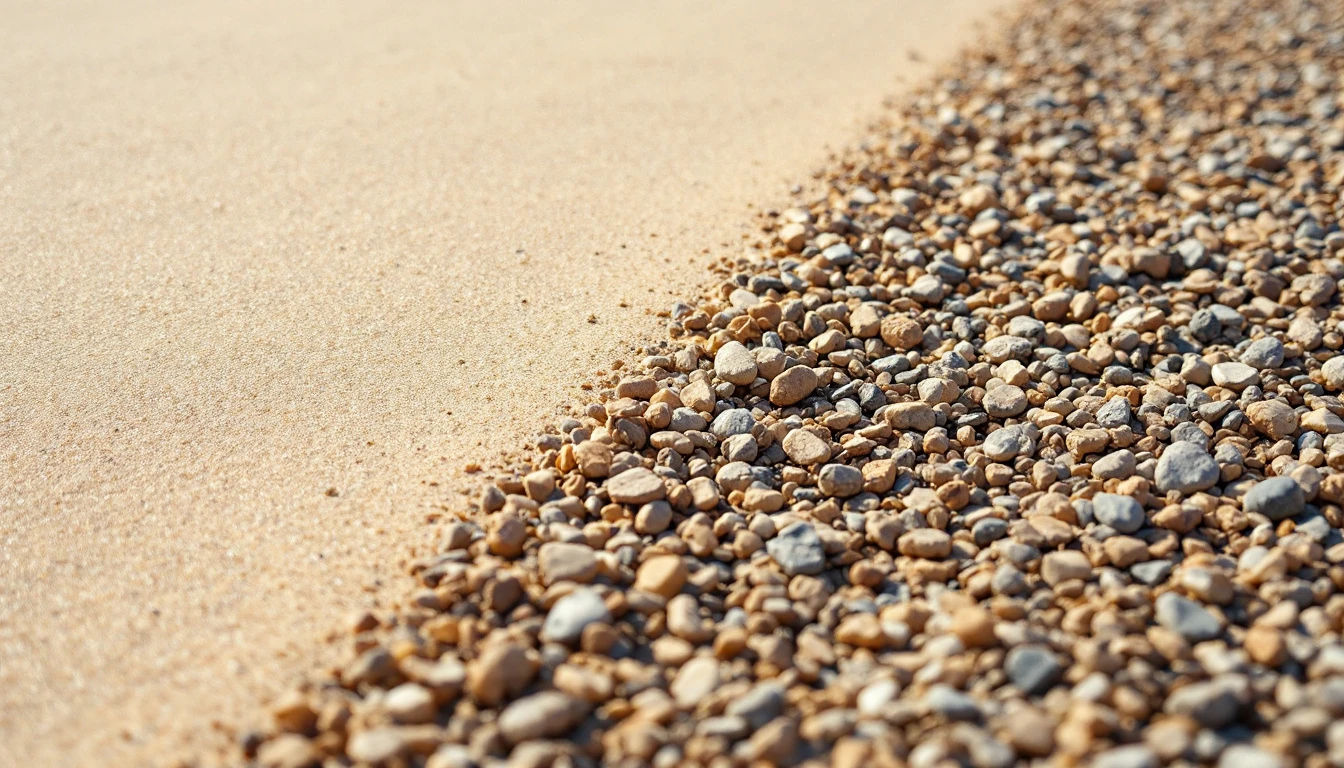
If you've got sandy soil on your property, picking a driveway material isn't just about looks or price. Sand drains fast, but it also shifts around, erodes, and loses its grip once cars start rolling over it day after day. Get the base wrong, and even a top-shelf surface will eventually show ruts, sink spots, cracks, or crumbly edges. Sandy soil can absolutely hold up a great driveway. You just need the right combination of base prep, drainage, and surface material working together. Doesn't matter if you're building fresh, tearing out an old driveway, or fixing up a rural access road, it all comes down to the foundation you build before anything else goes down.
Why Sandy Soil Needs a Different Approach
Sand doesn't act like clay or regular compacted soil. Because the particles are bigger, water passes through quickly. But loose sand won't hold itself together the way denser soils do, so it tends to shift under the weight of vehicles or wherever water pools up.
Build straight on top of loose sand and you'll likely start seeing tire tracks dig in over time. Heavy storms can also wash fine sand out from under the edges or beneath the driveway itself. That's the whole reason sandy-soil driveway work centers on three things: stabilizing the soil, compacting a solid aggregate base, and managing water properly.
Example
Picture a homeowner with a 200 foot driveway on a sandy lot. Dump gravel straight onto the sand and it might look fine on day one. But give it a few months of traffic and rain, and that gravel starts working its way down into the sand underneath. The driveway thins out, ruts show up, and suddenly it looks nothing like it did at installation. A properly built sub-base is what prevents that slow decline.
What to Look for in a Sandy-Soil Driveway Material
The best materials for this kind of ground depends on a foundation engineered specifically for sand. Before choosing anything, consider
- How well it resists shifting and rutting
- Whether it can take regular vehicle weight
- How it pairs with drainage
- Edge stability
- Ongoing maintenance
- Your local freeze-thaw cycle
- Upfront cost versus long-term cost
Start with a soil evaluation. Depending on what a contractor finds, you might need excavation, compaction work, geotextile fabric, geogrid reinforcement, or simply a thicker aggregate layer.
Driveway Materials Worth Considering
No single material wins for every property, it depends on traffic patterns, budget, slope, local climate, and how well the ground underneath can be prepped.
Concrete Driveway
Concrete is hard to beat for longevity, but on sandy soil, its success hinges almost entirely on what's underneath the slab. A well-compacted aggregate base spreads out the load and cuts down on settling. Reinforcement bars and well-placed control joints help keep cracking in check too.
People like concrete because it looks clean, lasts a long time, and doesn't demand much upkeep once it's in. It costs more going in than a basic gravel driveway, but if you're planning to stay put for years, that upfront spend often pays off. Don't pour concrete straight over loose, unprepared sand and expect it to hold. That subgrade prep step isn't optional.
Interlocking Pavers
Pavers do particularly well on sandy ground because they're made of individual pieces, which flex with minor ground movement far better than one solid slab can. A typical setup involves prepping the subgrade, laying geotextile fabric where needed, compacting an aggregate base, adding bedding material, and locking everything in with edge restraints.
The Upside
If a section sinks or gets damaged, you pull those pavers up and reset them instead of tearing out the whole driveway. That repairability makes pavers a smart pick when looks and long-term flexibility both matter to you. But, pavers run more expensive to install than basic aggregate.
Asphalt Driveway
Asphalt gives you a smooth ride and, unlike rigid pavement, can flex a bit with minor ground shifts. On sandy soil, that flexibility only works if there's a properly compacted aggregate base underneath. And in spots where the sand is especially unstable, extra stabilization might be worth the investment.
It's a solid pick if you want a conventional, smooth driveway without paying premium prices for decorative paving. Just know you'll likely need crack repairs and sealcoating periodically, depending on your climate.
Gravel
For long rural driveways, gravel is still one of the most sensible options. But don't just dump loose stone on sand and call it done. That approach rarely holds up.
Lay down a separation layer like geotextile fabric first, and it'll stop the aggregate from mixing into the soil beneath it. Go with angular crushed stone rather than smooth decorative stone, since angular pieces lock together better under weight.
A solid compacted base and well-defined edges matter a lot here too. Skip either one, and the gravel will start migrating into the sand or sliding off toward the sides.
Gravel wins on upfront cost and how easy it is to patch up. The tradeoff is ongoing maintenance, expect to grade it and top it off with fresh aggregate every so often.
Permeable Paving
If managing stormwater is a priority on your property, permeable pavers or similar drainage-friendly surfaces are worth a look. Sandy soil already lets water soak in quickly, but that doesn't mean you can skip designing the driveway assembly properly.
Being permeable doesn't remove the need for a structurally sound base. The layers underneath still need to carry vehicle loads while letting water pass through. It's also worth checking local drainage rules before you commit, since they vary a lot by location.
Building a Driveway That Actually Holds Up on Sand
Choosing a good material is only half the job. How it's installed often matters more than what it's made of.
Prep and Compact the Subgrade First
Any loose or disturbed sand needs proper grading and compaction before the aggregate base goes down. And that compaction should happen in layers, not all at once in one deep pass. A contractor can tell you if your site needs extra stabilization based on soil type and expected traffic.
Think About Geotextile Fabric
It creates a barrier between the native sand and the aggregate layer above it, cutting down on mixing and migration. It won't replace proper compaction or a well-designed base, think of it as one more layer of insurance, not a shortcut.
Get the Aggregate Base Right
This layer carries most of the structural weight, so its thickness should reflect your soil, drainage situation, expected traffic, and local climate. A driveway that only sees passenger cars needs a different design than one handling delivery trucks or heavy equipment regularly.
Manage Water Around the Driveway
Sandy soil drains well, but concentrated runoff can still cause erosion problems. Don't let water wash across the edges or tunnel underneath the structure like proper grading, swales, or drainage channels can prevent a lot of headaches depending on your slope and rainfall.
What Does This Actually Cost?
There's no single price tag that applies everywhere. Costs shift based on location, driveway size, how much excavation is needed, material availability, local labor rates, drainage work, and the condition of your existing ground.
Generally, gravel tends to be the cheapest option upfront, asphalt sits somewhere in the middle, and concrete or pavers usually require the biggest initial investment, though they often deliver a more finished, durable result. A driveway needing heavy excavation, stabilization fabric, extra aggregate, drainage work, or edge restraints can cost far more than a straightforward job on stable ground.
Your best bet is having a qualified driveway contractor assess your specific property before you budget anything.
Final Thoughts
The surface material alone doesn't determine how well a sandy-soil driveway performs. What really matters is the stable subgrade underneath, a properly sized aggregate base, solid drainage, and well-supported edges. Those elements are what let concrete, asphalt, pavers, or gravel actually do their job over the long haul.
Gravel tends to be the budget-friendly route once it's properly stabilized. Asphalt gives you a smooth, no-frills surface. Concrete and pavers lean toward long-term durability and a more finished appearance. Which one's right for you really comes down to your soil, your traffic, your climate, your style preferences, and what you're willing to spend.
Before you commit to any material, get the ground evaluated first. Trying to fix a bad foundation after the fact almost always costs more than doing it right from the start. A well-built base is what actually determines how long your driveway lasts.
Drivewayz USA helps homeowners work through driveway material choices, installation questions, and cost planning. Contact us for more driveway guidance and practical project information.
Frequently Asked Questions
There's no one-size-fits-all answer. Concrete, asphalt, interlocking pavers, and well-built gravel can all perform well on sandy soil. What matters most is a properly prepared, compacted foundation underneath.
Technically, yes, but loose gravel sitting straight on unstable sand tends to mix in, sink, and rut over time. A prepared base and geotextile separation helps prevent it from damage.
It can work very well, as long as it's poured over a properly prepared and compacted base. Pour it straight onto loose or poorly prepped sand, though, and you're looking at a higher risk of settlement and cracking down the line.
Not usually, sand tends to let water soak through quickly. But concentrated runoff can still erode the edges or undermine the base if grading and drainage aren't handled properly.
It can definitely help separate the sandy subgrade from the aggregate layer and improve overall stability. Whether you actually need it depends on your soil, traffic levels, and drainage. It's really a decision to make as part of the full site plan, not something to add or skip on its own.