
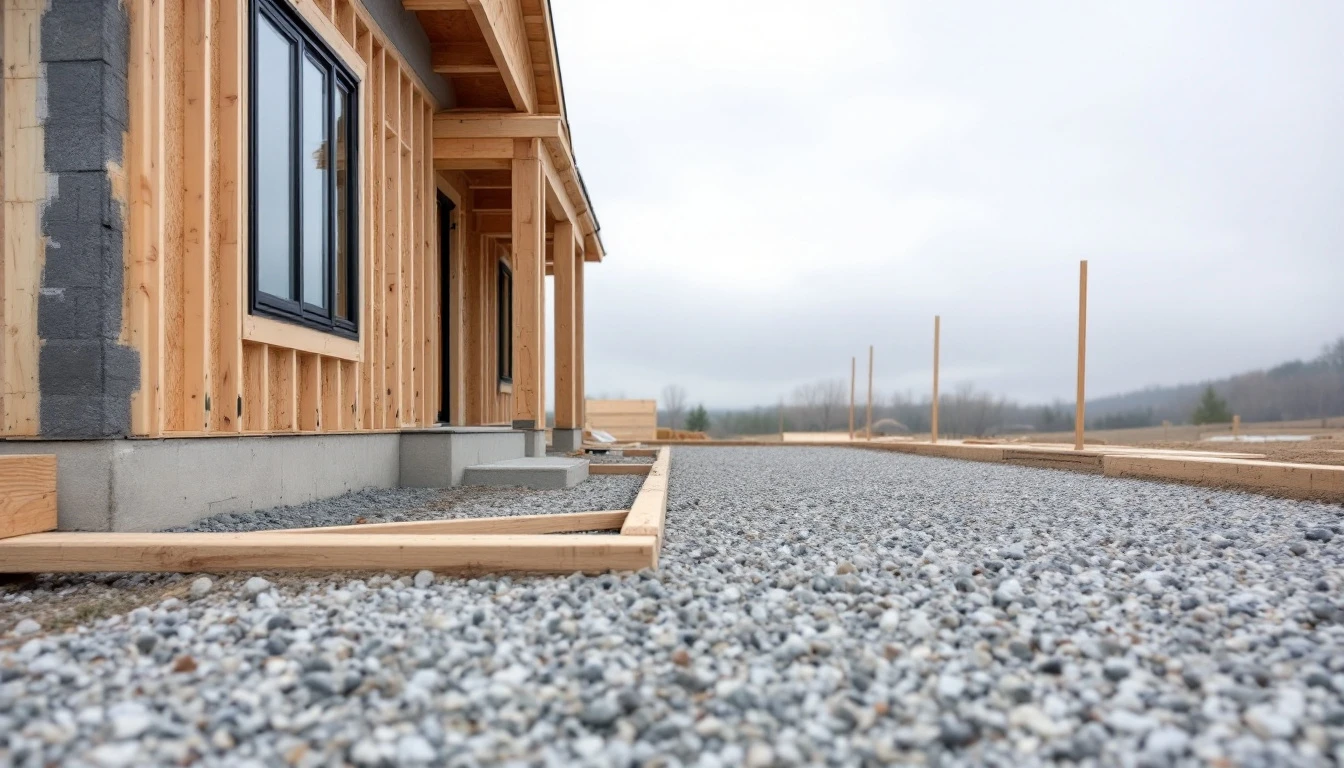
Most people picture the driveway as the last thing that happens on a new house, a tidy strip from the street to the garage. But it ties into a lot more than that. Where it sits, how high it is, where the water goes, and what's under it all have to fit with the rest of the lot.
Get the timing wrong in one direction and you've got fresh pavement getting chewed up by cement trucks. Get it wrong in the other and you're dealing with mud, bad access, and drainage headaches.
Plan the driveway early, but install the permanent surface after the heavy digging, underground utilities, and most of the grading are done. The details shift depending on the material, the site, the weather, and who's building.
Why the Timing Matters
Pavement is only as good as what's under it. The soil and base need to be graded, compacted, and ready before anything permanent goes down.
Site preparation, grading, drainage, utilities, compaction, and sequencing all shape how a pavement performs. FHWA's highway pavement manual says plans should include corrective action when weak, soft, wet, or yielding material turns up. It's written for highways, not homes, but the principle is the same. That's why paving right after the foundation is poured isn't the smart move it might seem to be.
For example, take concrete. Once it's down, it looks finished, and delivery trucks, excavators, and concrete rigs will happily drive across it. The driveway may be done, but the house is nowhere near it.
Working Through the Sequence
1. Plan It Before the Ground Is Broken
Think about the driveway during site planning, not when the house is almost done. Its position has to work with the garage, property lines, street connection, grading, drainage, landscaping, and local rules. Know where the utilities run before anyone starts excavating. FHWA's utility guidance for highway projects stresses identifying utility conflicts early, since cutting or uncovering lines nobody knew were there causes delays. Before anyone digs, contact 811 or your local utility locator. Also settle the material and rough elevation now. That gives the builder and the driveway contractor a shared reference while the site keeps changing.
2. Finish the Underground Work
Water, sewer, electric, gas, communications, and drainage lines should all be in before the final surface. Tearing up new pavement to run a utility connection is a mistake you can easily avoid. Drainage works the same way. If the driveway needs a culvert, trench drain, inlet, or edge drain, build it into the schedule instead of bolting it on later.
3. Wrap Up Major Grading and Prep
Once the big earthwork is finished, you can bring the driveway area close to its final elevation. The ground underneath needs to support the pavement evenly. FHWA's pavement manual warns that grades that are too flat, local depressions from soft areas, and ruts from equipment can pond water under the pavement and cost it support. This is also when surprises show up. If digging uncovers soft, soggy, organic, or poor soil, deal with it now, before pavement goes on top.
4. Keep It Away from Construction Traffic
This is the biggest reason to hold off. Over the course of a build, concrete trucks, lumber deliveries, roofing supplies, dumpsters, and sometimes a crane all cross it. They put real loads on whatever route they use. A temporary construction entrance or access surface can handle that stretch. The permanent driveway should wait until the heavy traffic has mostly stopped.
Can You Pour Concrete Before the House Is Done?
Sometimes, yes. A contractor may place concrete before every last detail inside the house is finished. What matters is how much work is still left outside. Concrete needs careful placement, finishing, and curing. The American Concrete Institute's guide to concrete floor and slab construction, written for commercial and institutional floors, emphasizes site preparation, materials, workmanship, finishing, and curing. If trucks and equipment are still going to cross the new slab, you risk damage and staining.
For example, imagine a house where framing is done, but the brick or stone exterior, the landscaping, and several big deliveries are still on the calendar. Pouring the driveway then invites conflicts that waiting would have avoided.
What About Asphalt?
Asphalt needs the same solid foundation. Major grading and underground work should be done before the final surface goes down, and the paving should be scheduled for conditions that suit the material.
Don't assume the ground is ready just because it looks flat. A good contractor will check the subgrade and base first. In the meantime, a temporary access route can stay in use while the permanent driveway area gets prepared.
Think About Drainage from Day One
The slope should carry water toward a sensible discharge area and away from the garage and foundation. FHWA's pavement manual says the required grades under the pavement have to be built and kept in place right up until paving to maintain positive drainage. Good drainage helps prevent saturated subgrades and the failures that can follow. A driveway can look flawless and still be a failure if it sends stormwater toward the garage.
Don't Forget Landscaping and Hardscaping
Landscaping usually comes near the end of a build, so it needs to be scheduled around the driveway. Equipment rolling over a finished driveway can wreck new plantings. On the flip side, plants installed too soon may have to be torn out to make room for the paving crew. The same goes for walkways, retaining walls, fences, and irrigation. A coordinated schedule saves you from repairing work that was already finished.
When Is the Right Time?
For most new residential projects, the permanent driveway goes in once these things are true:
- Major excavation and grading are mostly finished
- Underground utilities and drainage are handled
- The subgrade and base can be prepared properly
- Heavy construction traffic is largely over
- Garage and surrounding elevations are set
- Weather and material conditions are suitable
Treat this as a guideline, not a hard rule. Your builder and driveway contractor should settle the real schedule based on your lot.
How Weather Plays In
Weather affects both scheduling and quality. Wet soil is hard to compact and can leave an unstable subgrade. In highway work, FHWA notes that weak, wet, or yielding material may need correcting before paving starts.
Concrete and asphalt each have their own installation requirements, so a contractor should judge whether current conditions work instead of rushing to hit a date. If heavy rain has saturated the area, fixing the ground is better than paving over it.
What Will It Cost?
There's no dependable universal number. Cost swings with driveway size, material, excavation, base requirements, drainage, site access, labor rates, local requirements, and soil. A simple driveway on a ready site is a very different job from one that needs heavy grading, bad-soil removal, drainage structures, retaining walls, or a long run to the public road.
When you compare quotes, ask each contractor what's actually included: excavation, aggregate base, grading, drainage, paving, finishing, cleanup, and other site work. And don't pick a contractor on the lowest price per square foot alone.
Final Thoughts
Good timing prevents damage, rework, and drainage trouble. Plan the driveway early, but wait to install the permanent surface until the underground work, grading, and heavy traffic are behind you.
A lasting driveway is built from the bottom up: subgrade, base, grading, drainage, material choice, and timing all matter. At Drivewayz USA, you'll get practical guidance on driveway construction, materials, maintenance, drainage, repairs, and planning.
Frequently Asked Questions
Usually after major excavation, underground utilities, drainage work, and most grading are done, and once heavy construction traffic has wrapped up. The exact timing depends on your site and the material.
Sometimes, depending on what work remains. If heavy trucks, equipment, utility work, or major exterior work are still coming, a temporary construction entrance is often the more practical choice until the permanent driveway can be protected.
Drainage should be planned as part of the driveway and site design. Anything that sits under or beside the driveway should generally be installed and coordinated before the final pavement goes down.
Either can work. The choice depends on site conditions, look, budget, maintenance expectations, and climate. Whichever you pick, the subgrade, base, drainage, and installation quality matter most.
Keep heavy construction traffic off the permanent driveway. A well-planned temporary access route protects it until the major work is done.