
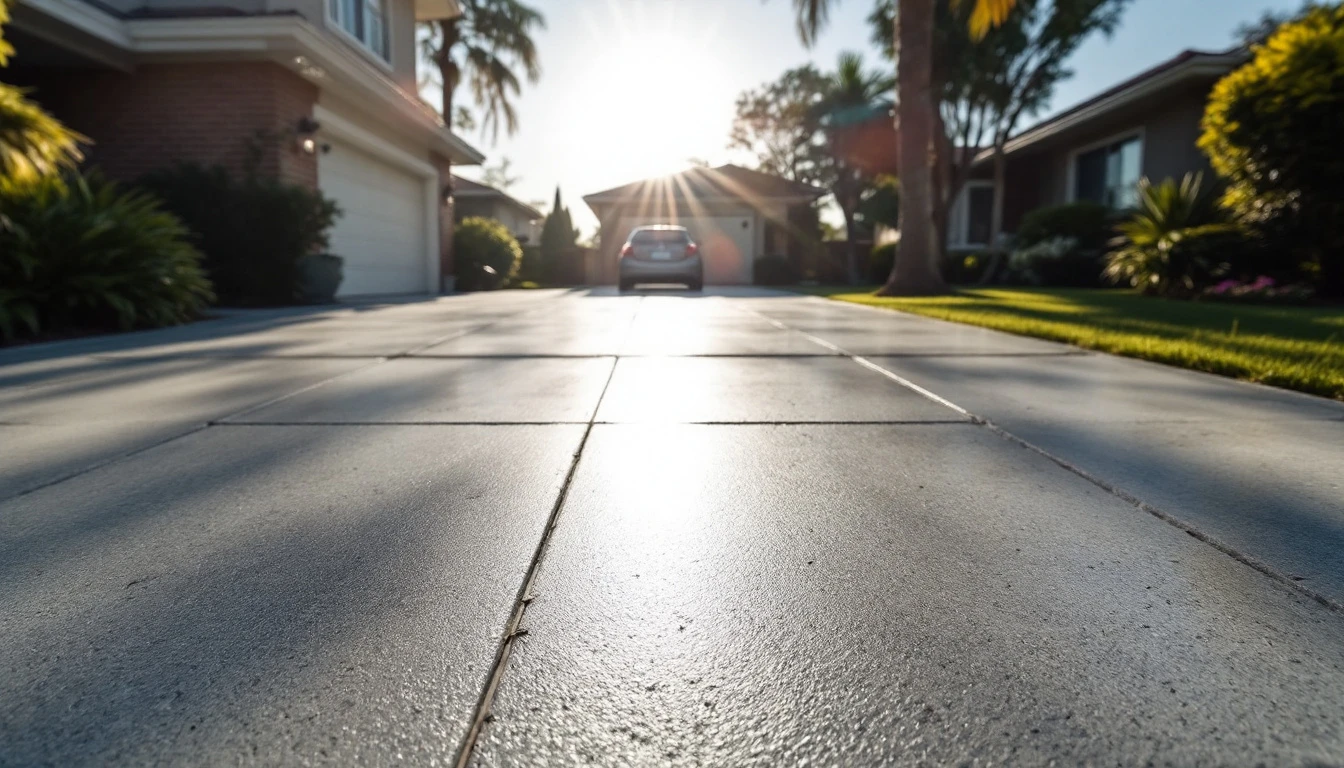
If you've ever walked barefoot across a driveway in Phoenix in July, you already understand why this decision matters more here than almost anywhere else in the country. Pavement surfaces in the Valley can climb past 140°F on a summer afternoon, and that kind of heat doesn't just make walking uncomfortable. It also works on a material year after year until cracks appear, colors fade and edges start to crumble. Picking a driveway surface in Arizona isn't really about which one looks best in a showroom photo. It's about which one is still doing its job in ten years without a stack of repair invoices behind it.
Why the Desert Conditions Are Harder on Driveways
Three things conspire against your driveway out here:
- Relentless UV exposure: The sun doesn't just heat surfaces, it breaks down the chemical bonds holding some materials together over time.
- Wild temperature swings: A surface that hits 140°F at 3 p.m. might drop 40 or 50 degrees by early morning. That expansion-and-contraction cycle, repeated for months on end, stresses rigid materials in particular.
- Shifting desert soil: Arizona's ground isn't static. Dry conditions and occasional clay content mean the earth beneath your driveway moves more than homeowners in wetter climates ever have to think about.
Get the material wrong, and you're often looking at visible damage within a handful of summers rather than decades.
Concrete Driveway: Solid, but Only When It's Done Right
Concrete remains a go-to for a reason. It's strong, handles heavy vehicles well, and lasts a long time under the right conditions. But "right conditions" is doing a lot of work in that sentence.
Where It Shines
A concrete slab poured with proper control joints and expansion gaps can absorb a lot of thermal stress without cracking. Going with a lighter shade also helps, since pale concrete reflects more heat than dark mixes do, keeping surface temps a bit more manageable.
Where It Falls Apart
Skip the reinforcement or rush the curing process, and Arizona's dry heat will pull moisture out of the slab too fast, leading to cracks that show up sooner than they should. Most concrete driveway failures in the desert trace back to installation shortcuts, not the material itself.
Drive through an established Phoenix suburb and you'll see the difference firsthand. Homes with reinforced slabs and proper joints tend to look nearly the same after several summers, while older driveways poured without those details often show stress lines running through them.
Asphalt Driveway: Cheap and Flexible, but It Has a Ceiling
Asphalt's biggest selling point is its adaptability. Because it isn't rigid, it can flex slightly as the ground beneath it shifts, which helps it dodge some of the cracking that afflicts stiffer materials.
The catch is heat. Arizona's summer temperatures can soften asphalt enough that it takes on tire marks or slight surface deformation. Over years of sun exposure, the oils that keep the material pliable start to dry out, and the surface turns brittle instead of flexible.
That doesn't rule asphalt out entirely, it's still cheaper up front and quicker to install than most alternatives. It just tends to work better in shadier spots, or for homeowners willing to keep up with regular sealcoating.
Pavers Driveway: The Desert's Favorite for Good Reason
Ask around in Scottsdale or similar upscale desert neighborhoods, and you'll find a lot of interlocking paver driveways. There's a practical reason for that beyond looks.
Because pavers are individual units rather than one continuous slab, each piece can expand and contract on its own. That independence is exactly what prevents the large, ugly cracks that plague solid surfaces. It also means the driveway can tolerate a bit of ground movement without any structural drama.
The other advantage is repairability, if one paver cracks or stains, you pull it and swap in a new one instead of patching or repouring an entire section. Combined with the range of colors and patterns available, pavers tend to hold up visually for years with very little upkeep. They cost more initially, but for homeowners thinking in decades rather than dollars-per-square-foot, that math often works out.
Gravel Driveway: The No-Frills, Budget-Conscious Option
There's something almost stress-free about gravel from a heat-durability standpoint, it simply doesn't crack or buckle the way solid surfaces can. Loose material has nowhere to build up thermal stress. It also handles Arizona's occasional monsoon downpours well, draining quickly instead of pooling.
The tradeoff is upkeep of a different kind. Without solid edging, gravel migrates, it spreads into lawns, gets tracked onto walkways, and needs periodic raking to stay level. For long rural driveways or properties where budget matters more than curb appeal, though, it's hard to beat the price.
Stamped Concrete : Looks Custom, Performs Like Concrete
Stamped concrete lets you get the visual texture of flagstone, brick, or tile while keeping the structural properties of a poured slab. In Arizona, that means it inherits both concrete's strengths and its installation sensitivities. A properly sealed stamped surface resists sun damage and holds its pattern well, but the same shortcuts that crack ordinary concrete will crack this too.
A lot of Arizona homeowners lean toward earth-tone stamped patterns specifically because they blend into the surrounding desert landscaping rather than fighting against it.
What Actually Matters When You're Choosing
Before settling on a material, it helps to weigh a few things against your specific situation:
- How much heat can it actually take? Not every surface handles 140-degree pavement the same way.
- What's the maintenance reality? Asphalt wants regular sealcoating. Gravel wants periodic re-leveling. Pavers mostly just sit there looking good.
- What's your soil like? If you're on shifting or clay-heavy ground, a segmented option like pavers will likely outperform a single rigid slab.
- What does it cost over 15 years, not just on install day? The cheapest option upfront isn't always the cheapest option over time once you factor in repairs.
The Truth Behind Materials
Concrete offers strength and longevity but leans heavily on quality installation. Asphalt is budget-friendly and flexible but struggles the most with raw heat. Pavers strike arguably the best balance of durability and looks, even at a higher price point. Gravel wins on cost and simplicity for larger or rural lots where appearance isn't the top priority. For most homeowners weighing all of this, pavers and properly poured concrete tend to be the two options that age best under Arizona conditions.
Final Thoughts
There's no single "correct" driveway material for every desert home. It really comes down to your budget, your soil, and how much maintenance you're willing to do. But whatever you choose, treating Arizona's heat as a serious design constraint, rather than an afterthought, is what separates driveways that last from ones that need repair within a few years.
You can find more detailed, region-specific guides at Drivewayz USA. Reach out to us, if you're planning a new install or considering an upgrade.
Frequently Asked Questions
Pavers and well-installed concrete tend to come out on top, mainly because they hold up best against sustained heat.
It can, but expect it to soften somewhat in peak heat, and plan on regular sealcoating to keep it from drying out and cracking.
For most homeowners, yes, their ability to flex individually with heat and soil movement means far fewer cracks over time.
Usually it comes down to installation, without proper joints and adequate curing time, the rapid heat and moisture loss common here causes premature cracking.
It's one of the most affordable and heat-tolerant options, particularly for rural or long driveways, though it does require occasional maintenance to stay tidy.