
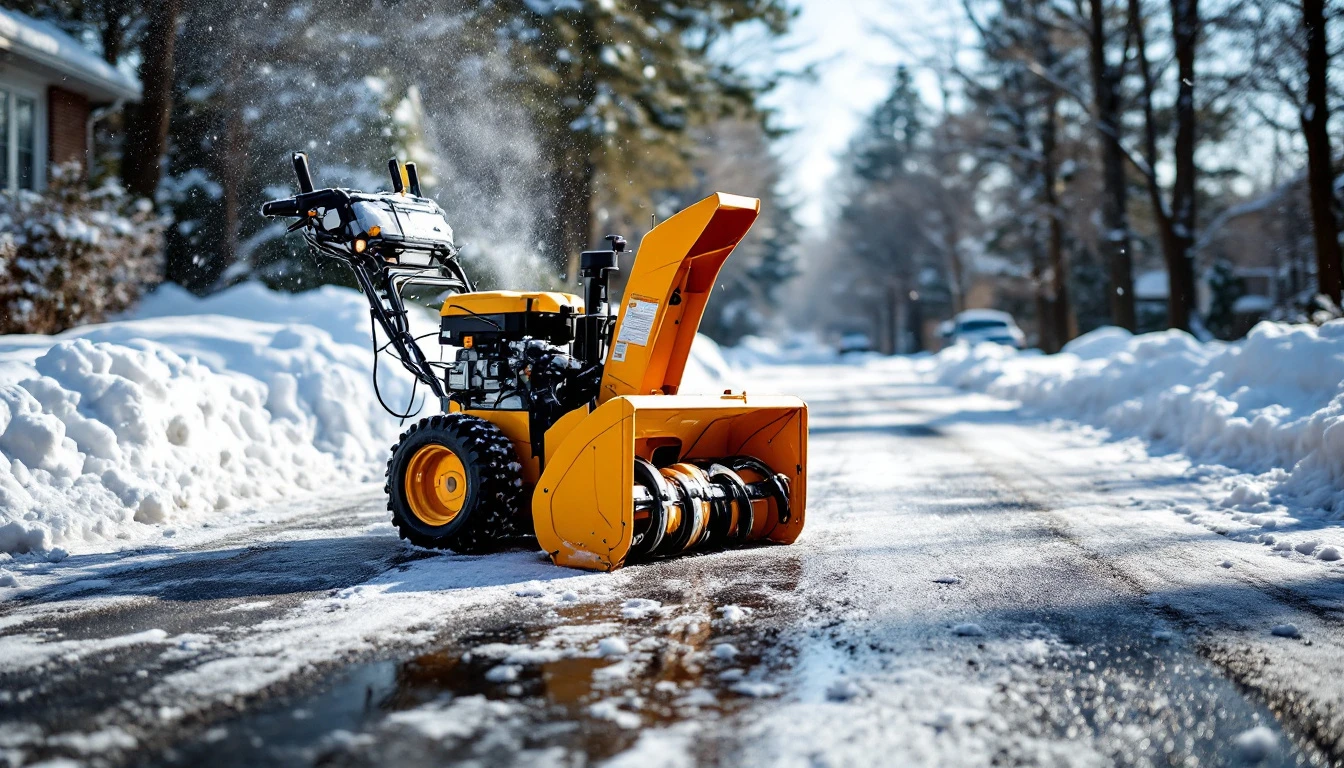
Not every driveway needs the same gear. A short strip of pavement outside a city rowhouse might only ever need a decent shovel, while a quarter-mile gravel driveway in snow country practically demands a machine or a phone call to a plowing service. What actually determines the right choice isn't the size of the worst storm you can remember, but the everyday reality, your driveway's surface, its slope, how much snow typically falls where you live, where you can store equipment, and how much shoveling your back can take. Blowers, plows, and shovels each solve a different kind of problem, and knowing which works for you saves money, time, and a fair amount of frustration.
Why the Equipment You Choose Matters
Snow that sits on a driveway doesn't just sit there quietly. Cars driving over it pack it down into something closer to ice, and once temperatures dip, any melt that refreezes turns your driveway into a hazard. On top of that, the wrong tool for the job can chew up the surface itself.
Therefore, plan around your typical winter, not the freak blizzard you're still telling stories about. Someone with a flat two-car asphalt driveway that gets the occasional dusting is working with a completely different problem than someone maintaining a long gravel driveway in a lake-effect snowbelt. Worth thinking through before you buy anything:
- How much snow you typically get, and how deep a single storm usually gets
- The length, width, and slope of your driveway
- Whether you're working with asphalt, concrete, pavers, or gravel
- Where the cleared snow is actually going to go
- How much garage or shed space you have for storage
- What your body can realistically handle
- Whether your town has rules about pushing snow into the street
When a Shovel Is the Right Call
Don't underestimate the shovel. It's cheap, it stores in a corner, and nothing beats it for precision, working around a garage door, along a flower bed, or on narrow steps where a machine would just be in the way.
There's a real difference between shovel styles, too. A scoop shovel is built for lifting and carrying snow away. A push shovel is meant for driving snow forward without hoisting it, easier on the back if your driveway is flat enough to allow it. Curved or bent handles help too, since they cut down on how far you have to hunch over.
A shovel makes the most sense on a short driveway, in light snow, or for finishing touches like sidewalks and stairs. Even people who own a snow blower usually keep a shovel around. Because no machine handles the tight spots near a doorframe or a parked car quite the same way.
Wet snow gets heavier fast than people expect. The repeated lifting-and-twisting motion is genuinely hard on the body. OSHA's winter-weather page says shoveling can lead to exhaustion, back injuries, or heart attacks. Take frequent breaks in warm areas, warm up first, scoop small amounts, push snow instead of lifting it when you can, and if you lift, keep your back straight, lift with your legs, and do not twist.
Snow Blowers
A snow blower earns its keep by cutting down drastically on manual lifting. Single-stage and two-stage describe the mechanism. On a single-stage machine, the auger both pulls snow in and throws it out the chute. On a two-stage machine, the auger feeds a separate impeller that throws the snow.
Single-stage machines are the usual fit for lighter snow on smooth pavement. Two-stage machines are the usual step up for deeper snow and rougher conditions, and for bigger driveways. Gas, battery, and cord are power sources, not another name for the stage. Corded blowers and handheld power shovels are smaller-job options.
Picking the Right One
Engine size alone is a poor way to shop. What actually matters is clearing width, how deep your typical snowfall runs, your driveway surface, how well you can aim the discharge, and again where you're going to store it.
A flat paved driveway and moderate snow is the usual fit for a compact single-stage machine, gas or battery. A long driveway and frequent heavy, wet snow is the usual reason to look at a two-stage machine. Clearing width, surface, and the manual's limits matter more than engine size or battery voltage.
Gravel driveways deserve special caution. Follow the manufacturer's setup instructions closely. Know that power shovels in particular usually aren't meant for gravel, their augers sit low enough to grab loose stones and fling them.
If the chute clogs, follow that machine's manual. Shut it down and isolate power the way the manual directs, wait until every moving part has stopped, and clear the clog with the clean-out tool specified for the machine. Never put hands or feet into the auger or chute.
The Plow Ridge at the End of Your Driveway
If there's one part of driveway snow removal that trips people up, it's the dense wall of snow a municipal plow leaves behind at the end of the driveway. Fresh, loose snow is usually no trouble for a blower. That compacted plow ridge is a different problem entirely, often half-frozen and packed solid.
Consumer Reports' plow-pile article says to break a crusty mound into smaller chunks with a shovel, especially with an undersized machine, and to take smaller passes so the blower is less likely to clog. It's a small adjustment, but it saves real time and keeps your machine from clogging or stalling out.
Plows: Built for Big Driveways and Serious Snow
A plow doesn't throw snow, it pushes it. You'll see plows mounted on trucks, ATVs, UTVs, tractors, and similar equipment, and they can clear a lot of ground fast, which is why they're standard for large properties or commercial lots.
But a plow isn't just the blade. There's the vehicle it mounts to, the hydraulics, the mounting hardware, storage space, and ongoing maintenance, all of which add up in ways that a shovel or blower simply doesn't.
Plowing Comes with Its Own Risks
Push too hard or too fast and you can damage driveway edges, pavers, landscaping, or uneven pavement. You also have to think ahead about where the snow ends up, piling it over a drainage inlet, for instance, sets up a mess once things start to melt.
For a typical residential driveway, hiring a plow service usually makes more sense than buying a plow setup that spends eleven months of the year taking up space in the garage.
Comparison
| Equipment | Best For | Main Advantage | Main Drawback |
|---|---|---|---|
| Snow shovel | Small driveways, light snow | Cheap, precise | Physically demanding |
| Snow blower | Mid-size to larger residential driveways | Clears snow fast | Cost, storage, upkeep |
| Snow plow | Large driveways, frequent heavy snow | Moves a lot of snow quickly | Higher cost and complexity |
No single option covers every situation, that's really the takeaway here.
Protecting Your Driveway While You Clear It
Before winter hits, walk your driveway and check for loose pavers, raised edges, cracked asphalt, potholes, and drainage issues. Marking the edges ahead of time also helps, once snow covers everything, it's easy to lose track of where the pavement actually ends.
If you've got a decorative surface, stick to the manufacturer's guidance on skid shoes, cutting edge height, and surface clearance, and avoid ramming a blade or auger straight into a raised edge. And unless local rules say otherwise, don't push snow into the street. It can create hazards for traffic and get in the way of the town's own plowing.
Keeping Your Equipment Ready
Good maintenance matters just as much as buying the right machine in the first place.
At the end of each winter, look over your blower or plow for wear, damage, or rust, and follow the manufacturer's instructions on fuel storage, lubrication, battery care, and seasonal servicing. For a blower, that means checking the scraper bar, skid shoes, belts, auger, tires, and discharge chute. For a plow, focus on the cutting edge, mounting hardware, hydraulics, and the connection points to your vehicle. Nothing's worse than finding out a part has failed after the first big storm of the season has already buried your driveway.
Final Thoughts
The best snow removal equipment setup isn't necessarily the biggest or most powerful one you can buy. It's whatever actually fits your driveway, your typical snowfall, your surface type, your storage space, and what you can safely operate.
For more on driveway materials, winter protection, and repairs, see the related Drivewayz USA guides.
Frequently Asked Questions
It really comes down to your driveway size, typical snowfall, surface, and how much physical effort you want to put in. Shovels suit small areas and light snow; blowers are usually more efficient for bigger residential driveways; large properties often do better with plowing.
Some two-stage blowers can handle gravel if you set them up correctly, with enough clearance so loose stones don't get picked up and thrown. Check your owner's manual before trying it.
It cuts down on lifting and clears snow faster, but it costs money to buy, store, and maintain. A shovel still earns its place for small jobs and detail work.
Break it up with a shovel first, then run the blower through it in smaller passes rather than trying to force the whole thing at once.
Yes, aggressive plowing, hitting raised edges, wrong equipment settings, or scraping uneven surfaces can all cause damage. Careful technique, clearly marked edges, and properly adjusted equipment go a long way toward preventing it.