
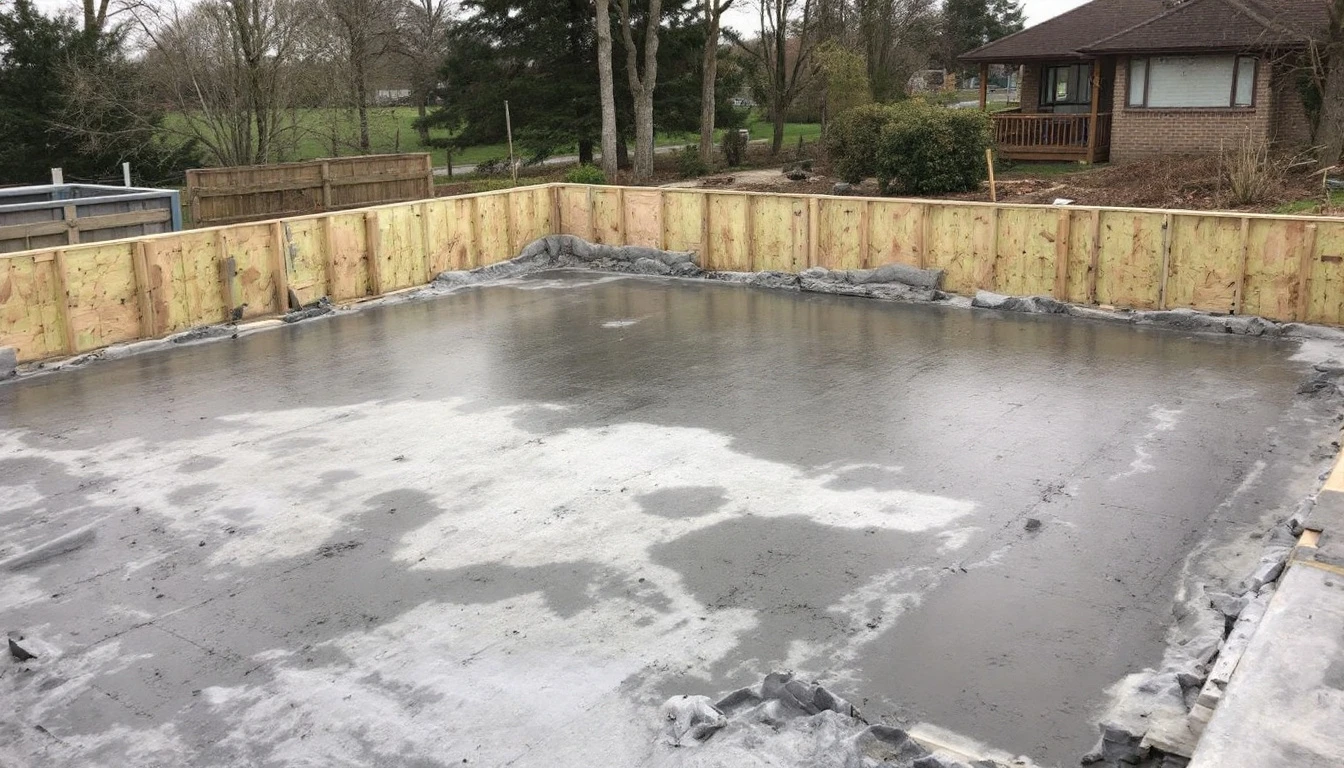
Installing a new driveway isn't cheap, and most homeowners only do it once or twice in their lives. So it's worth asking a simple question before any contract gets signed: what happens if the crew packs up and the job isn't quite finished? That's exactly the problem a driveway holdback is designed to solve. A holdback (some people call it retainage) is a slice of the total payment that you don't hand over until the contractor wraps up the last bit of work and meets the conditions you both agreed to. It's not a trick to avoid paying someone fairly for their labor. It's a way to make sure the driveway you end up with actually matches what you paid for. The last stretch of any driveway job (drainage, grading, edging, the final surface finish, cleanup, curing time) tends to be where things get skipped when a crew is in a hurry to move to the next job.
What Is a Driveway Holdback?
Think of it as an amount of money that sits on the sidelines until specific requirements are met.
If you hire someone to pour a new concrete driveway, your contract spells out the dimensions, the reinforcement, the finish, the grading, all of it. Rather than paying the full balance the moment the concrete truck leaves, you and the contractor agree upfront that a certain percentage stays unpaid until you've done a final walkthrough and any punch-list items are handled.
This needs to be settled before the crew shows up, not negotiated on the fly once work is already underway. Mention it in the contract in simple language, so there's no confusion later about what triggers that final payment.
Why Bother with a Holdback at All?
It's easy to lose track of the small stuff at the end of a driveway project. A contractor might nail the main pour or paving but leave the edging half-done, skip a drainage fix they promised, or bail on cleanup. If you've already paid in full at that point, you don't have much leverage left to get them back out there.
A Holdback Keeps the Incentive Structure Simple
the contractor finishes what they agreed to, you check it over, and then the rest of the payment goes out. That's especially useful during peak paving season, when contractors are juggling five projects at once and yours might not be top of mind for a return visit.
It Keeps the Pressure on to Finish
Getting paid for completed work makes sense. A solid holdback clause ties that final payment to things you can actually check off, like:
- The full driveway area being paved or poured
- Grading and drainage done correctly
- Edging or border work finished as specified
- Debris and construction materials hauled away
- Punch-list items closed out
- Any required inspections or sign-offs completed
- Paperwork the contract calls for (warranties, receipts, etc.)
What counts on that list will look different depending on the job.
Is Withholding Payment Like This Even Legal?
There's no single federal rule dictating exactly how much a homeowner can hold back from a driveway contractor. This varies by state, by the type of contract, and sometimes by the size of the project itself. Therefore, don't assume a percentage you saw quoted online is automatically fine wherever you live.
Before you sign anything, look into what your state and local regulations actually allow, and make sure your payment schedule lines up with them. If the project is large or the contract terms are unusually complex, it's worth the cost of a quick consultation with a construction attorney. The safe move, regardless of location, is to agree on the terms before work starts, and get it in writing.
How Much Should You Actually Hold Back?
Some residential contracts use a modest percentage as retainage. Others set a flat dollar figure, or structure the final payment around specific milestones instead of a percentage at all.
Rather than grabbing whatever number seems popular on a forum somewhere, think about your actual project. A basic gravel driveway doesn't need the same completion checklist as a large concrete job with drainage upgrades, decorative finishing, or retaining walls involved. Also remember, the holdback shouldn't create a cash-flow squeeze for the contractor either. It's meant to protect both sides, not to be used as leverage to stall payment indefinitely.
What Should Actually Be in a Driveway Holdback Clause?
A good contract shouldn't leave you guessing about the payment terms. At minimum, the holdback clause needs to spell out:
- How much (or what percentage) is being held back
- Exactly what work has to be finished before it's released
- Whether any inspection or approval is required
- How punch-list issues get resolved
- The timeline for final payment once work is complete
- What payment method is acceptable
- Any documents the contractor needs to hand over first
A set portion of the balance stays due until the agreed scope is complete, punch-list items are resolved, and the homeowner signs off on the finished work per the contract. Whatever wording you use, it's worth double-checking against your state's rules before signing.
Is Escrow Worth Considering for a Driveway Job?
Escrow is another option, particularly if both sides want a neutral third party managing staged payments. It can work well for disputed or higher-stakes situations. Also, escrow services come with fees and their own set of terms, so read the fine print before committing to one.
For a standard residential driveway job, a clear contract and a sensible payment schedule usually does the trick. Bigger, more complicated, or higher-risk projects are where professional guidance starts to pay for itself.
The Bigger Picture: Why This Protects Your Investment
A driveway is more than a flat surface you park on. How it performs over the years comes down to prep work, grading, drainage, material choice, and how carefully the final steps were handled.
Example
a homeowner pays for a full driveway replacement and later notices water pooling in a spot that was supposed to drain away from the foundation. If correcting that drainage issue was part of the original scope, a clearly written final-payment condition gives them a real, practical way to get it fixed rather than just hoping the contractor calls back.
That doesn't mean every puddle, hairline crack, or color variation is a defect worth fighting over, plenty of that is just normal material behavior. The real question is always whether the finished work matches what the contract and standard workmanship expectations call for. A holdback only works as well as the expectations you set at the start.
Final Thoughts
A driveway holdback isn't about being difficult or refusing to pay a contractor what they've earned. It's a built-in checkpoint between "mostly done" and "actually done."
Before your project kicks off, make sure your contract nails down the scope of work, the payment schedule, what counts as completion, how changes get handled, warranty terms, and the conditions for final payment. Keep your record of payments, emails, texts and write down anything left unfinished during your final walkthrough.
Whether you're going with asphalt, concrete, gravel, or pavers, a little extra care in the contract stage saves a lot of headaches down the road.
At Drivewayz USA, you'll find practical guides covering driveway planning, materials, installation, maintenance, repairs, and everything in between. Contact Drivewayz USA to get started on your project.
Frequently Asked Questions
It's a portion of your driveway payment that stays unpaid until agreed completion requirements are met. The amount and the conditions for releasing it should be spelled out in your written contract.
There's no single percentage that works everywhere. It depends on your state's rules and what you negotiate in the contract. For larger or more complicated jobs, a quick check with a construction attorney can be worth it.
If your contract ties final payment to specific completion conditions, you likely have grounds to delay payment until those are met. Just make sure you're following what the contract and local law actually say, rather than withholding payment arbitrarily.
Yes. It should cover the scope of work, materials, price, payment schedule, completion requirements, how changes are handled, and warranty terms. A written agreement holds up a lot better than a verbal promise if something goes wrong.
Compare the finished work against your contract, dimensions, surface finish, grading, drainage, edges, cleanup, and anything else specific to your project. If something's still unfinished, write it down and get it in writing with the contractor before you release that last payment.