
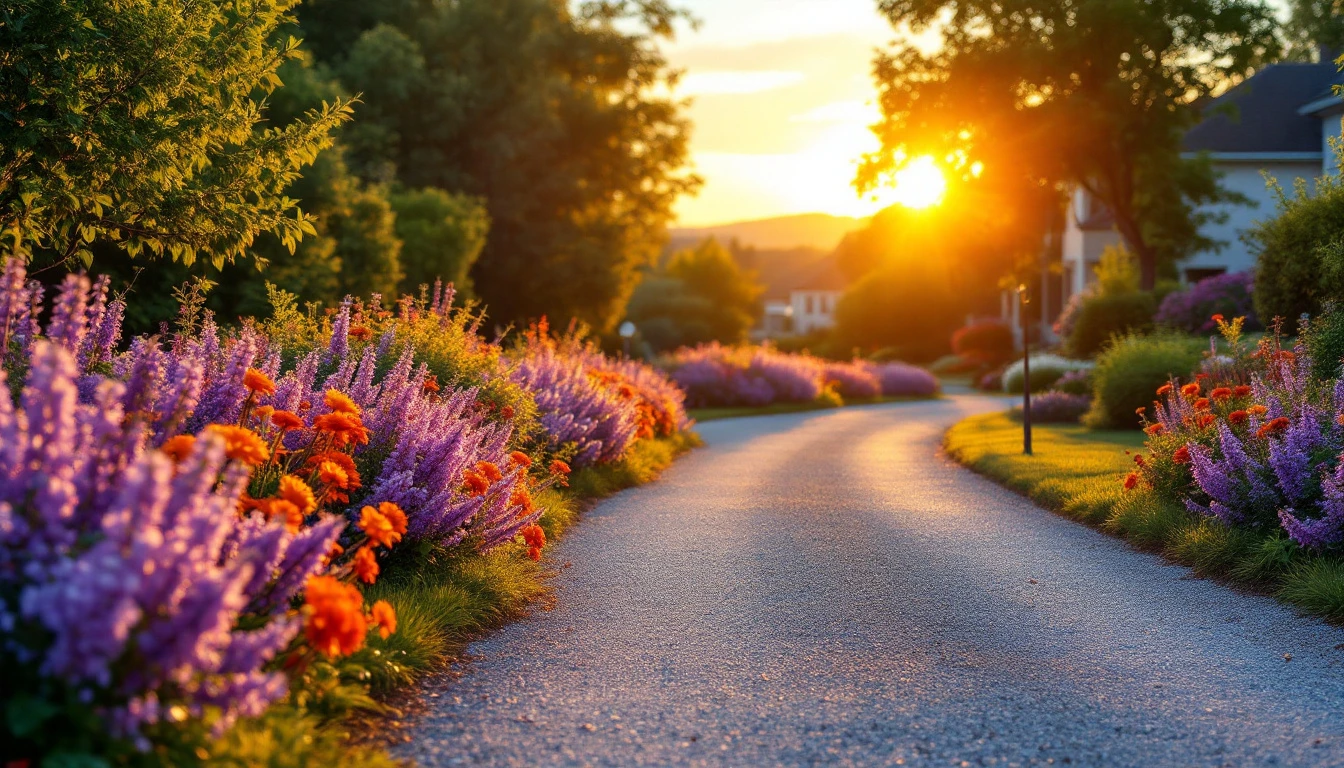
A driveway and a garden can sit right next to each other and still get along well. But only if someone actually plans the space in between. If you skip the step, and you're eventually dealing with water runoff, shifting soil, invasive roots, tire traffic, and whatever the season throws at you. Good driveway-garden design treats both sides of that line as one connected system, not two separate projects that happen to touch. It's not just about making the edge look nice. It's about managing water, protecting the pavement, giving your plants what they need to actually grow, and keeping the whole thing from turning into a maintenance headache. It doesn't matter if you've got concrete, asphalt, gravel, or permeable pavers that strip right beside the driveway deserves more thought than most people give it.
What Do We Mean by "Driveway Garden Adjacent Design"?
Basically, it's planning the driveway edge and whatever's growing next to it, lawn, planting bed, landscape strip as a single system instead of two afterthoughts. The driveway wants a stable base and a clean edge. The garden wants healthy soil, drainage, sunlight, and room for roots to spread out. When those two needs pull in different directions, that's usually where problems start.
Example
Imagine someone plants a big shrub right against a concrete driveway because the spot looks bare. Fast forward a few years, and the roots have expanded, the irrigation's soaking the base, and the soil's shifting. Or flip it around, a garden with poorly directed runoff keeps washing dirt onto the driveway every time it rains. A well planned setup avoids both of these headaches from day one.
Why the Boundary Between Driveway and Garden Matters
That narrow strip between pavement and plants deals with stuff the rest of your yard never has to. Rain runs off the driveway straight into the soil. Cars kick up water, dirt, and the occasional drip of automotive fluid toward the beds. If you live somewhere cold, deicing salt adds another layer of trouble. The University of Minnesota Extension points out that salt can injure turf and plants growing close to driveways, and recommends salt-tolerant species along with proper setbacks for trees and shrubs. On top of that, this edge takes a beating from foot traffic, mowing, snow removal, and general compaction. That's the whole reason it's worth designing this transition on purpose, rather than letting it happen as a vague line where the pavement ends and the grass begins.
Planning the Driveway and Garden Together
Figure Out Where the Water Actually Goes
Go outside during a rainstorm and watch. Where does water leave the driveway? Where does it pool? Is it heading toward your garden bed?
You don't want a driveway dumping concentrated runoff into a bed that can't absorb it. Depending on your property, the fix might involve regrading, drainage channels, swales, or other stormwater features built into the planting area itself.
Vegetated swales and bioretention areas are a well-established way to slow down and manage runoff. The EPA points to vegetation, grading, healthy soils, permeable pavement, and similar green infrastructure as effective tools against erosion and excess stormwater.
Think About What the Driveway Is Made Of
Your driveway material changes how the edge next to it should be built. Concrete and asphalt need stable, well-drained edges. Gravel needs something to keep it from spreading into the garden bed. Permeable pavers need a properly built base and regular upkeep so they don't clog over time. This matters even more when you're mixing surfaces. A garden border shouldn't undercut the driveway's foundation or create a spot where water just sits against the pavement.
Pick Plants That Belong There
Not everything that looks good at the nursery belongs beside a driveway.
Choose based on your local climate, how much sun the spot gets, the soil, how big the plant will eventually get, and whether it'll be exposed to road or driveway salt. Lower-growing plants tend to work well here. They keep sightlines clear and make for a cleaner-looking transition.
If deicing salt is part of your winters, keep sensitive evergreens away from the pavement's edge. Extension guidance consistently points toward salt-tolerant options and adequate spacing wherever heavy salt exposure is likely.
And Here's the Thing People Forget
it's not the size of the plant when you buy it that matters, it's the size it'll be in ten years. A tiny tree sapling looks completely harmless next to a brand-new driveway until its canopy and root system catch up.
Edge Solutions That Protect the Garden
Concrete Mow Strips
These create a clean, defined line between the driveway and lawn, and they give mowing equipment a clear boundary so grass isn't growing right up against the pavement. Just make sure the strip is built into the overall drainage plan, not just poured on top of loose soil and left to fend for itself.
Metal or Landscape Edging
This gives you a tidy separation between gravel, mulch, soil, and planted areas, especially handy anywhere loose material could otherwise drift onto the driveway. It has to be installed correctly, though. Cheap or poorly secured edging tends to shift, bend, or become a tripping hazard.
Gravel or Stone Drainage Borders
A properly built stone border defines the edge while still letting water pass through. But don't lean on decorative stone as a stand-in for real drainage if your property has a genuine water problem, it won't hold up. On a sloped lot, it's usually worth bringing in a landscape professional to talk through a swale, drain, or some other way to slow and redirect runoff.
Could Permeable Pavers Help the Transition?
If stormwater management is a real priority for your driveway, permeable pavement is worth a look.
The EPA describes several permeable systems like interlocking pavers, porous asphalt, pervious concrete, that let water pass through the surface into the layers underneath, where it can either soak into the ground or drain off through an underdrain, depending on the site.
A narrow strip of permeable pavement between your regular driveway and the garden can sometimes double as both a water-management tool and a visual break between the two zones. It's not a universal fix. Soil infiltration rates, slope, groundwater levels, drainage needs, and how well it's built all affect whether it actually works. The EPA is pretty clear that the layers underneath and the site conditions matter just as much as the surface itself.
Don't Let Irrigation Undo Your Work
Your sprinklers or drip lines shouldn't be constantly soaking the driveway's edge. Overwatering contributes to soil shifting and unnecessary runoff. It's an easy thing to overlook. Dial in your irrigation based on the specific plants, soil type, climate, and how exposed the bed is.
Drip irrigation tends to be the better choice for beds near a driveway, since it puts water right at the plant instead of spraying it across pavement. Just check it periodically for leaks or clogged emitters, they're easy to miss. If you deal with winter salt, good drainage becomes even more critical, since salt tends to build up in the soil as snow and meltwater cross the property.
Getting the Garden Bed Ready
Whatever bed you're building next to the driveway needs enough soil depth and drainage to support what you're planting. Don't pile soil up against the driveway surface, and don't regrade in a way that traps water against the pavement. That's a mistake that shows up later as cracking or heaving.
Before you plant anything new next to an existing driveway, check for compacted soil, drainage issues, buried utilities, and old roots still lurking underground. If the compaction is bad, a thin layer of fresh topsoil isn't going to fix the underlying problem, you'll need to address it directly. The goal here is a stable transition where water moves the way it's supposed to, instead of washing your garden soil onto the driveway.
What Materials Work Well Together
The right combination depends on your climate, driveway type, how much maintenance you're willing to do, and what you want to grow. For most residential setups, that usually looks like:
- Concrete or asphalt for the main driveway surface
- Permeable pavers where stormwater control is a priority
- Metal or concrete edging to separate zones
- Decorative gravel or stone for defined borders
- Organic mulch where it makes sense for the bed
- Salt-tolerant plants if you're in a region that uses deicers
Pick materials based on how the whole system works together, not just how it looks on install day.
Keeping It Up Through the Seasons
Spring - walk the driveway edge and look for cracking, settling, displaced gravel, or erosion. Check your irrigation before the growing season really kicks in.
Summer - stay ahead of weeds before they get established, and keep an eye out for water pooling after rain or watering.
Fall - clear leaves and debris out of drainage areas and off permeable pavement. Organic material builds up fast and can clog permeable systems if you let it sit.
Winter - use deicing products carefully, and follow the label. If salt-sensitive plants are nearby, try to keep salt buildup out of the beds, and manage snow piles so repeated plowing doesn't chew up the garden edge.
What Does This Cost?
There's no single number that works nationwide. It really comes down to the size of the area, the driveway material, drainage needs, soil condition, plant choices, edging, local labor rates, and your regional market.
A basic border might be a small job. Fixing drainage, rebuilding a driveway edge, or installing permeable pavement is a much bigger undertaking. Get a site-specific estimate rather than trying to guess based on a per-square-foot average you found online, especially if drainage or structural work is involved.
Signs It's Time to Redesign the Boundary
Worth calling in a professional if you're noticing:
- Water running from the driveway straight into the garden bed
- Soil washing onto the pavement
- Puddles that keep coming back beside the driveway
- Crumbling or settling edges
- Gravel creeping into the lawn
- Plants that keep dying along the pavement, no matter what you plant
- Roots fighting with the driveway
- Drainage getting worse after every heavy rain
It's almost always more cost-effective to fix the root cause than to keep replacing dead plants, scattered gravel, or damaged edging over and over.
Final Thoughts Bringing the Driveway and Landscape Together
A solid driveway-garden design is about more than a pretty edge. The driveway, the garden, the soil, the drainage, the plants, and the edging all have to function as one system. Because they're going to be sitting next to each other for years.
There's no universal answer here. A flat driveway next to a small lawn calls for a different approach than a sloped driveway next to a big planting bed. A gravel driveway needs different edging than concrete or permeable pavers. Get the planning right at the start, and the driveway stays functional while the garden actually thrives instead of constantly needing repair.
If you're planning a new driveway, replacing an old one, or just want the landscape around it to work better, Drivewayz USA can help you think through the project with the driveway itself in mind. Check out their driveway services, guides, and location resources to get started.
Frequently Asked Questions
Concrete mow strips, properly installed metal edging, stone borders, and well-planned planting strips can all work well. Which one's best depends on your driveway material, garden layout, drainage situation, and how much upkeep you want to deal with.
Yes, if their mature root systems end up growing under or right against the pavement. Choose trees and large shrubs based on their full-grown size and how they'll behave in your specific conditions, not how they look as a sapling.
Go with salt-tolerant species, keep a reasonable distance between larger plants and the salted area, and avoid letting salty meltwater pool in the bed. The University of Minnesota Extension backs this up directly, recommending salt-tolerant plants and proper spacing around salted pavement.
Often, yes, particularly if stormwater is a concern. But how well they perform depends on soil infiltration, the base design, slope, and ongoing maintenance. Design them around your site's actual conditions, not just how they'll look.
Definitely. Figure out drainage before you add plants, mulch, edging, or stone. Understanding where the water goes saves a lot of headaches down the road.