
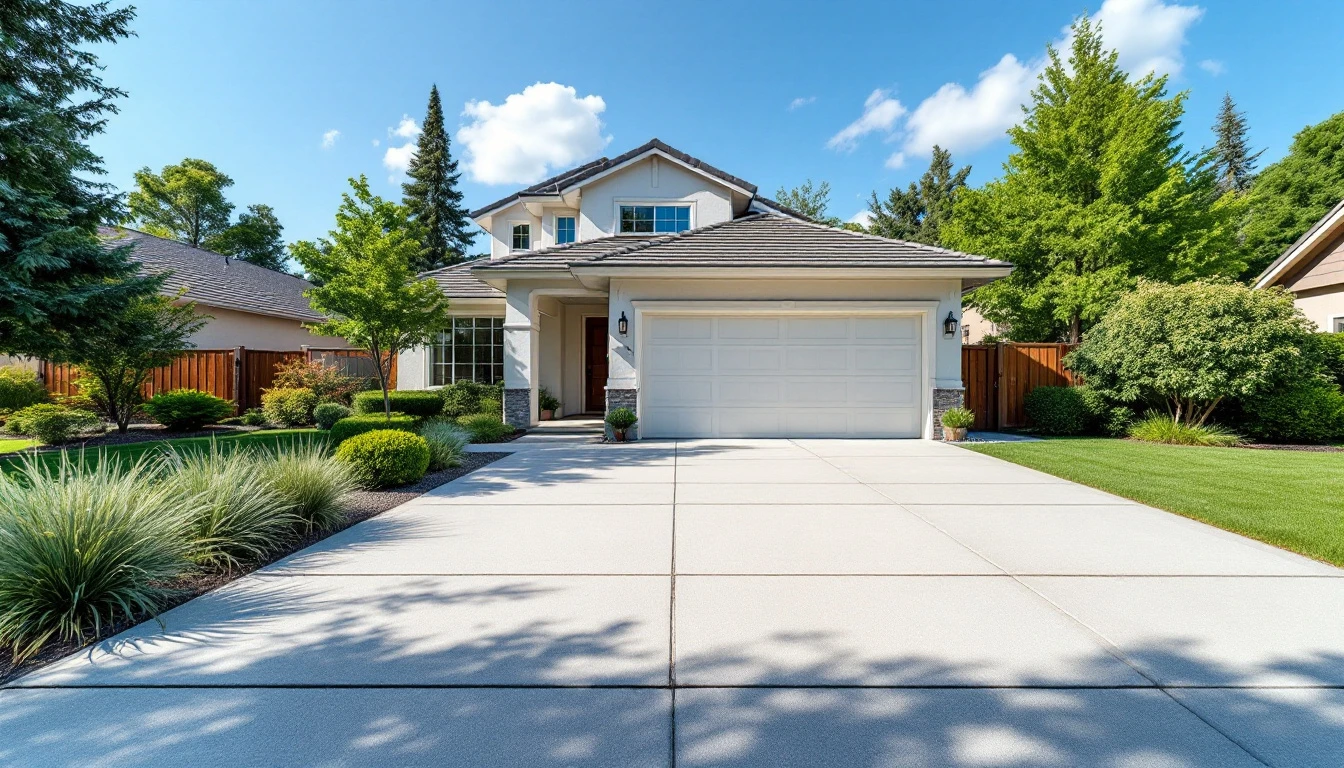
Self-driving cars get a lot of attention for their sensors, software, and split-second decision-making. A car can be loaded with the most advanced driving system on the market, but it still has to find its way onto your property and into a garage or parking spot. That's really what this comes down to, your driveway is part of the trip too, and it's worth thinking about now rather than scrambling later. The good news is that getting ready for this doesn't mean buying gadgets or ripping out your pavement. Mostly, it comes down to clear sightlines, a driveway that's actually wide enough, water that drains where it should, and edges.
Why Your Driveway Matters Here
Not all "self-driving" technology is the same. The National Highway Traffic Safety Administration breaks automation into levels, and there's a real gap between them. Level 2 systems still need a human paying attention behind the wheel, while the more advanced levels can take over more of the driving under certain conditions. Level 4, for instance, can drive itself without a person at the controls but only within a defined area or set of conditions. It means the handoff between public streets and your private driveway is a real transition point, not just a formality.
Example
Picture a car that handles your neighborhood streets just fine on its own, then hits your driveway. The entrance is narrow, the pavement's cracked, there's no light out there at night, or the turn into the garage is not smooth. None of the fancy tech onboard fixes a driveway that wasn't built to work.
So instead of getting caught up in whatever new vehicle feature is being announced, it makes more sense to just build a driveway that works well. That part doesn't really change.
Five Things Worth Thinking About
Leave Room for the Car to Move Freely
Cars still need physical space to turn around, pull in, park, and back out, automation hasn't changed the laws of physics. If anything, a tight entrance or an awkward transition can be more of a problem for a system following a planned route than for a person who can just correct as they go.
If you're designing or redoing a driveway, think through the size of the vehicles you own (or might own), where the garage sits, how cars will park, how wide the entrance needs to be, and how much room there is to turn.
Example
Say you're upgrading from a single-car driveway to a two-car layout, it usually works better to plan the parking and turning space as one system, rather than just tacking extra pavement onto the entrance and calling it done.
The Federal Highway Administration points to a similar list when it comes to access design. The driveway geometry, width, how vehicles turn, the grade of the slope, and the length of the driveway before it meets the road.
Make the Edges Obvious
A driveway with clear, defined boundaries is just easier to deal with for people and for vehicle systems alike.
Overgrown bushes, edges that have crumbled or blurred into the yard, stray landscaping rocks, anything poking into the driving path, all of that creates friction it doesn't need to. Keeping a clean line between pavement and lawn, garden beds, or walls also just makes your life easier when it's time to mow or shovel.
Reflective house numbers help. So does decent lighting at the entrance. Don't assume there's some universal sign, sticker, or QR code that every autonomous vehicle is looking for, different manufacturers use different mapping and sensing setups, so there's no single standard yet. The real goal is simpler than people make it to be, make your entrance obvious, consistent, and easy to spot.
Picking a Surface That'll Last Longer
There's no official "best material" for a self-driving-car-friendly driveway. Concrete, asphalt, and pavers can all do the job well, as long as they're installed properly and keep up. What actually matters is whether the surface stays solid, stays reasonably even, and doesn't develop major problems over time.
Concrete
Done right, from the good site prep, proper drainage, correct jointing, concrete gives you a firm, predictable surface that can last a long time. Lighter-colored concrete can look sharp against greenery too, though don't pick a color purely because you've heard it's better for sensors. That's not really established.
Asphalt
Still a solid, practical option for most homes. Just don't let cracks, potholes, dips, or crumbling edges sit there and get worse. A self-driving car rolling up to a badly deteriorated driveway runs into the exact same physical problems a person would.
Pavers
These can look great and hold up well over time, as long as they're set on a proper base. The main thing to watch is uneven settling, keep the surface stable and you're generally fine.
Whatever material you go with, maintenance is really the deciding factor long-term. A driveway that's cared well beats an expensive one that's been left to fall apart, every time.
Drainage Still Matters More
None of this autonomous-vehicle stuff changes basic engineering. Standing water, erosion, ice, and runoff that isn't controlled can wreck pavement and make driving conditions genuinely rough. Grading and drainage need to be part of the plan from day one, not an afterthought. The FHWA lists drainage and surface type among the things worth factoring into driveway design and access planning.
If your property slopes, you'll likely need careful grading so water doesn't head straight for the garage. Depending on the site, that might mean the right slope angle, a drainage channel, a trench drain, a catch basin, or a permeable surface. What actually fixes the problem depends entirely on your property, not on what kind of car you drive.
Lighting Makes a Bigger Difference
Decent lighting makes a driveway easier to navigate after dark and helps everyone either human or machine to pick out the entrance, the edges, and anything (or anyone) in the way.
Keep landscaping and decorative touches from blocking sightlines, and aim for lighting that actually illuminates the space without blinding anyone with glare. The FHWA also flags lighting and clear markings as part of good driveway visibility.
Go Easy on the "Smart Driveway" Tech
Smart gates, cameras, outdoor Wi-Fi, vehicle-detection systems, connected lighting, expect to see more of this as connected and autonomous vehicles become more common. But don't buy something just because the box says "autonomous vehicle ready."
Tech moves fast. The gate system you install this year might not talk to the car you buy in five years, and even two current models might not use the same connectivity standard. It's a moving target.
A Smarter Approach
Get the physical driveway right first. If a useful technology comes along later, you can add it on top without tearing out and rebuilding everything you just paid for.
The Point Where Your Driveway Meets the Street
This might be the most overlooked piece of the whole puzzle, where your driveway connects to the road.
Driveways are natural conflict points. Cars, pedestrians, cyclists, all crossing paths in a small space. The FHWA recommends weighing sight distance, exact location, geometry, spacing from other access points, and how vehicles turn when planning that connection.
And this holds true no matter who or what is driving. A driveway placed too close to an intersection, or one with blocked sightlines, is a safety issue regardless of automation. It's also worth checking with your city or county before you move or widen an entrance, permits and access rules vary a lot by location.
Getting Your Current Driveway Ready, Without Rebuilding It
You don't need to tear out a perfectly good driveway just because autonomous vehicles are becoming more common. Start with the basics:
- Fix major cracks, potholes, settling, and damaged edges
- Keep plants and landscaping from creeping into the driving path
- Add lighting where visibility is genuinely poor at night
- Make sure house numbers are visible and legible
- Confirm water drains away from the garage and house, not toward it
- Check that there's actually enough room to enter, turn, and park comfortably
- Keep any gates or access controls in working order
- Look into local rules before widening or relocating anything
Do You Need an "Autonomous-Ready" Driveway?
For most people, the honest answer is no. What actually helps is a driveway that's well designed, properly graded, visible, durable, and easy to maintain. If you're already planning a replacement anyway, that's a good moment to think ahead about vehicle sizes, parking layout, turning space, lighting, drainage, and whatever tech upgrades might make sense down the line. But if your driveway's already in solid shape, there's probably no reason to overhaul it just because the cars on the road are getting smarter.
Final Thoughts
Autonomous vehicles will probably change a few things about how people come and go from their homes over time. But the fundamentals of a good driveway are enough space, solid pavement, working drainage, clear visibility, and safe access to the street.
Rather than trying to guess exactly what future vehicles will need, the smarter move is to build and maintain a driveway that's safe, durable, and easy to get in and out of. That kind of driveway works today, and it'll keep working no matter what's driving the car.
If you're planning a new driveway or thinking about an upgrade, Drivewayz USA can help you walk through the options and figure out what actually makes sense for your property.
Frequently Asked Questions
No. There's no single material or design that every autonomous vehicle requires. A stable, well-maintained surface with good access, visibility, and drainage is really the whole foundation.
Not particularly. Both work fine when they're installed and maintained properly. The condition and layout of the driveway matter a lot more than which material you pick.
Only if there's an actual space or maneuvering problem right now. Before you do, think through vehicle size, parking needs, turning space, property lines, drainage, and any local rules that might apply.
Not really, no. Gates, cameras, Wi-Fi, and connected lighting might become more useful down the road, but they're not necessary for most homes today. Get the physical driveway right first.
Keep it smooth and well maintained, make sure there's enough room to maneuver, control drainage, keep the edges clear, add lighting where it's needed, and check local rules before making any major changes. None of it requires expensive tech, it's just decent upkeep.