
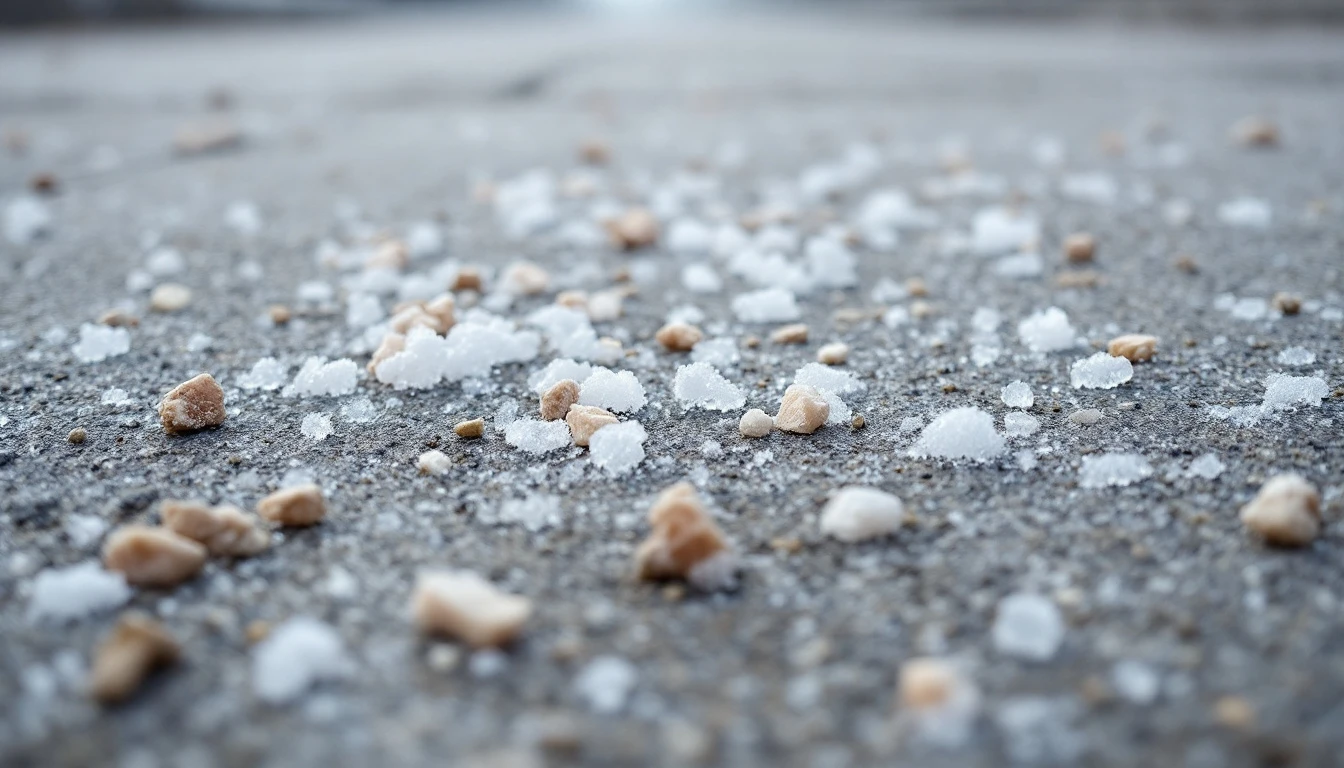
Winter weather can quickly turn your driveway into a slippery and hazardous surface. Ice buildup not only makes walking and driving dangerous but can also damage your driveway over time. That’s why choosing the best de-icing products for driveways is essential for safety, durability, and long-term maintenance.
There are three primary categories of de-icing solutions: salt-based products, chemical ice melts, and natural alternatives. Each comes with its own advantages and drawbacks, depending on your climate, driveway material, and environmental concerns.
What Is De-Icing and How Does It Work?
De-icing is the process of removing ice or preventing it from forming on surfaces like driveways, sidewalks, and parking areas. Most de-icers work by lowering the freezing point of water, which causes ice to melt even in cold temperatures.
Some products also generate heat when they come into contact with moisture, speeding up the melting process. Choosing the right method ensures both effective ice removal and surface protection.
Types of De-Icing Products for Driveways
When it comes to winter driveway maintenance, de-icing products generally fall into three main categories:
- Salt-based de-icers
- Chemical ice melt products
- Natural and eco-friendly alternatives
Understanding how each type performs will help you make a smarter and safer choice.
Salt-Based De-Icers (Rock Salt)
What Is Rock Salt?
Rock salt, or sodium chloride, is one of the most commonly used de-icing materials. It works by dissolving into water and forming a brine that melts ice and prevents it from refreezing.
Benefits of Using Rock Salt
Rock salt remains popular for several reasons:
- Easy to store and apply
- Widely available and affordable
- Effective in moderate winter conditions
Because of its low cost, it’s often the first choice for homeowners managing large driveway areas.
Drawbacks of Rock Salt
Despite its popularity, rock salt has some limitations:
- Can cause damage to concrete and asphalt over time
- Becomes less effective in very low temperatures
- Harmful to plants, soil, and nearby water systems
- Can irritate pets’ paws
Overuse can accelerate wear and tear on your driveway, leading to cracks and surface deterioration.
When Should you use Rock Salt?
Rock salt is best suited for mild to moderately cold climates where temperatures don’t drop too far below freezing.
Chemical De-Icers for Driveways
Chemical de-icers are designed to perform better than traditional salt, especially in colder environments. They are widely used when faster and more efficient ice melting is required.
Common Types of Chemical De-Icers
Calcium Chloride
Calcium chloride is one of the most effective ice-melting products available.
- Produces heat, speeding up the melting process
- Works in extremely low temperatures
- Requires smaller quantities for effective results
Magnesium Chloride
This option is considered slightly safer for the environment.
- Effective at lower temperatures than rock salt
- Less damaging to plants and soil
- Safer for pets compared to traditional salt
Potassium Chloride and Acetate-Based Products
These are often used in areas where environmental protection is a priority.
- More eco-friendly than other chemicals
- Commonly used in sensitive zones
Advantages of Chemical De-Icers
Chemical ice melts offer several benefits:
- Perform well in extreme cold conditions
- Faster action compared to rock salt
- More efficient, requiring less product
Disadvantages of Chemical De-Icers
However, they are not without downsides:
- Higher cost compared to salt
- Potential for surface damage if overused
- Some products may still affect pets and vegetation
When to Choose Chemical De-Icers
Chemical de-icers are ideal for regions with harsh winters where temperatures drop significantly and quick ice removal is critical.
Natural and Eco-Friendly De-Icing Alternatives
If you’re looking for a safer and more environmentally responsible solution, natural alternatives are worth considering.
Popular Natural De-Icing Options
- Sand or gravel for improved traction
- Using kitty litter is an effective way to gain temporary grip on icy or slick areas.
- Baking soda or vinegar mixtures
- Wood ash or coffee grounds
Benefits of Natural Alternatives
These solutions are appealing because they:
- Do not corrode concrete or metal surfaces
- Are safe for pets, plants, and soil
- Are easy to find and inexpensive
Limitations of Natural Solutions
Natural methods are not as powerful as chemical options:
- Require frequent reapplication
- They do not melt ice as effectively
- Often improve traction rather than remove ice completely
When are Natural Options Best?
Natural alternatives work best for light ice conditions or as a supplement to other de-icing products.
Salt vs Chemical vs Natural De-Icers: A Clear Comparison
Performance
Chemical de-icers outperform others in extremely cold conditions, while rock salt works well in moderate temperatures. Natural options provide minimal melting but improve traction.
Cost
Rock salt is the most budget-friendly option. Chemical de-icers are more expensive but deliver better performance. Natural alternatives are low-cost but less effective.
Environmental Impact
Natural solutions are the most eco-friendly, followed by certain chemical options. Rock salt has the highest environmental impact due to runoff and soil damage.
Surface Protection
Natural alternatives are the safest for driveways. Chemical de-icers pose moderate risk, while rock salt can cause long-term surface damage if used excessively.
How to Choose the Best De-Icing Product for Your Driveway
Selecting the right de-icing solution depends on your specific situation. Consider the following factors:
Climate Conditions
If you experience mild winters, rock salt may be sufficient. For extremely cold temperatures, chemical de-icers are more reliable.
Driveway Material
Concrete, asphalt, and pavers react differently to de-icing products. Choosing a less corrosive option helps extend the lifespan of your driveway.
Environmental Concerns
If you have pets, plants, or nearby landscaping, eco-friendly or pet-safe de-icers are a better choice.
Budget and Usage
Frequent use may justify investing in more efficient chemical solutions, while occasional use may make rock salt or natural options more practical.
Best Practices for Safe and Effective De-Icing
Using de-icing products correctly can significantly improve results while minimizing damage.
- Avoid repeated heavy applications
- Always remove excess snow before applying de-icer
- Apply a thin, even layer instead of overusing the product
- Store de-icing materials in a dry place
Proper usage not only improves effectiveness but also protects your driveway and the surrounding environment.
Reliable Driveway Care with Drivewayz USA
For homeowners looking to maintain durable and long-lasting driveways, Drivewayz USA is a trusted resource for expert advice and quality solutions.
Choosing the best de-icing products for your driveway comes down to balancing effectiveness, cost, and environmental impact. Rock salt offers affordability, chemical de-icers deliver powerful performance in extreme conditions, and natural alternatives provide a safer, eco-friendly option.