
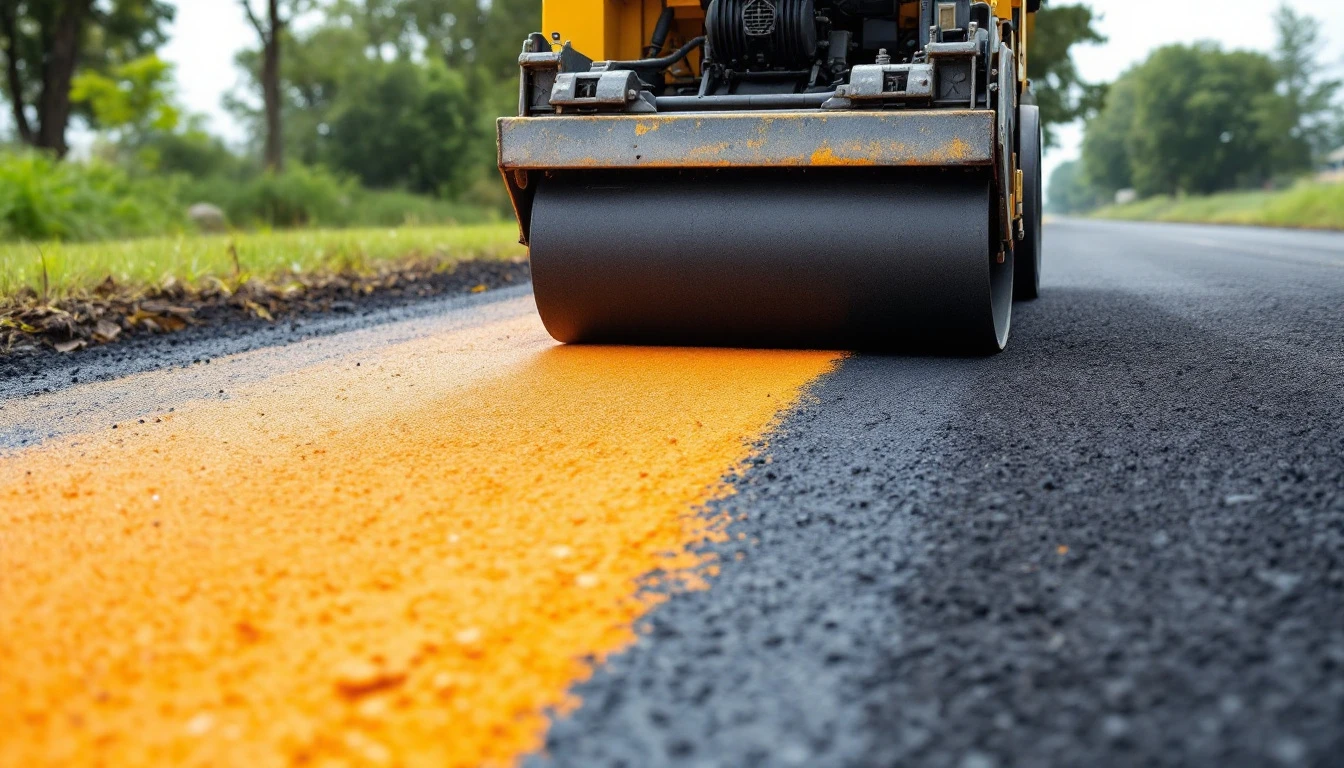
Picking a good asphalt mix for your driveway is only half the battle. The part that really decides whether your driveway holds up or starts cracking and sinking within a year or two is compaction. If you skip proper compaction, even premium asphalt won't save you from ruts, cracks, and an uneven surface down the road. Here's a practical look at the tools, techniques, and lessons learned that go into a driveway built to last.
Why Compaction Is a Big Deal
Compaction squeezes the air pockets out of asphalt layers so you end up with a dense, solid surface instead of a loose, porous one. Get it right, and you're looking at:
- Better load-bearing strength
- Less water getting in and causing damage
- A smoother finish
- A driveway that simply lasts longer
If you skip this, or do it poorly, water finds its way into the surface. Once that happens, the structure starts breaking down from the inside, and cracks or potholes aren't far behind. Homeowners often notice the damage within the first year or two, sometimes even sooner.
Example
someone installs a new driveway but the crew doesn't roll it properly. A few months later, tire tracks and low spots start showing up, especially once the summer heat sets in.
The Main Tools Used to Compact Driveway Asphalt
Which tool gets used comes down to the size of the job, how thick the asphalt layer is, and what the site looks like.
Vibratory Rollers
These are the workhorses of driveway compaction. They combine sheer weight with vibration to pack asphalt down evenly.
- Best suited to medium and larger driveways
- Delivers consistent density across the surface
- Handles both base and top layers well
Most contractors switch between static and vibratory settings depending on the stage of the job, so they get the density they need without tearing up the surface.
Plate Compactors
For smaller jobs or spots a big roller can't reach, plate compactors do the trick.
- Great for edges, corners, and tight spaces
- Light enough to maneuver easily
- Works well on thinner asphalt layers
You'll often see these used around garage entrances or along the borders of a driveway, anywhere a roller just won't fit.
Pneumatic Rollers
Instead of steel drums, these use rubber tires, which spread pressure more evenly across the surface.
- Smooths out surface texture
- Squeezes out more trapped air
- Leaves a tighter, more finished look
Crews typically bring these in as a final pass, after the heavier compaction work is already done.
Hand Tampers
Simple, manual, and limited to small-scale work.
- Handy for patch repairs
- Useful in spots equipment can't reach
- Not a substitute for compacting a full driveway
They won't do the heavy lifting, but for touch-ups and small fixes, they're indispensable.
Techniques That Make or Break the Result
Having the right equipment doesn't count for much if the technique behind it is off. A few things matter more than people realize.
Keeping an Eye on Temperature
Asphalt has to be compacted while it's still hot enough to work with.
- Too hot, and it can shift or deform under the roller
- Too cold, and compaction barely does anything
Crews usually start rolling right after the asphalt is laid and keep going until it drops out of the workable temperature range. Wait too long, and you end up with soft spots that never fully bond.
Compacting Layer by Layer
Rather than trying to compact one thick slab, professionals build the driveway up in stages:
- A base layer for overall structural strength
- A binder layer to spread the load
- A surface layer for the finished look and durability
Each layer needs to be properly compacted before the next one goes down. Rushing this step is one of the fastest ways to weaken the whole driveway.
Rolling in a Consistent Pattern
An even, deliberate rolling pattern is what gives you uniform density from edge to edge.
- Work from the outside edges inward
- Overlap each pass a little
- Keep a steady, consistent speed
Sloppy or inconsistent rolling leaves behind weak spots that tend to fail first.
Not Overdoing It
More rolling isn't always better. Push it too far and you can actually damage the asphalt:
- Aggregate starts crushing under the pressure
- Cracks begin to form on the surface
- The material loses flexibility
Experienced crews watch the surface as they go and know exactly when to stop.
Mistakes That Show Up Later
Even good materials can't make up for these common missteps.
Skipping Proper Base Prep
If the base underneath isn't stable, graded, and compacted first, nothing built on top of it will compact evenly.
Using the Wrong Equipment for the Job
A big driveway compacted with nothing but hand tools rarely holds up, the density just isn't consistent enough.
Waiting Too Long to Start Compacting
The longer asphalt sits after it's laid, the harder it becomes to work with, and the harder it is to hit proper density.
Uneven Spreading
If the asphalt isn't laid at a consistent thickness to begin with, compaction will be uneven too, leaving weak points scattered across the surface.
A Real-World Comparison
Picture two neighboring homes getting driveways installed around the same time. One crew does it right like vibratory rolling, layered compaction, the works. The other cuts corners and skips proper rolling patterns altogether.
A year later, the rushed driveway is already cracking and developing low spots. The properly compacted one still looks smooth and solid. Same basic materials, completely different outcomes, all because of technique.
Material and the Installation Process Matter Too
Good asphalt is still worth choosing carefully. A few things to keep in mind:
- The right aggregate mix for durability
- Enough binder content to keep the surface flexible
- Thickness that matches how the driveway will actually be used
- Skilled, careful compaction throughout
Materials and installation go hand in hand, one without the other won't get you a driveway that lasts.
Final Thoughts
Compaction is really the foundation everything else depends on. Get the tools and techniques right like proper temperature control, layered application, consistent rolling and you end up with a driveway that holds up for years. Cut corners anywhere in that process, and it shows up sooner than you'd think.
At Drivewayz USA, we connect homeowners with contractors who take this seriously, people who understand that a great driveway comes down to both good materials and the skill to install them properly. Whether you're planning something new or replacing an old, worn-out driveway, getting the compaction process right is what will make it hold up over time.
Frequently Asked Questions
Vibratory rollers and plate compactors do most of the heavy lifting. Together, they help achieve consistent density and a clean, smooth finish.
Asphalt needs to be worked while it's still within its optimal temperature range. Once it cools too much, compaction stops being effective, the material just won't pack down the way it should.
Yes. Poor compaction is one of the most common causes of cracking, potholes, and an uneven surface, and it can seriously cut down how long a driveway lasts.
Most driveways are built in three layers: base, binder, and surface. Each one needs proper compaction before the next goes on.
Small issues can sometimes be patched, but serious compaction problems usually mean the driveway needs to be resurfaced or rebuilt from scratch.