
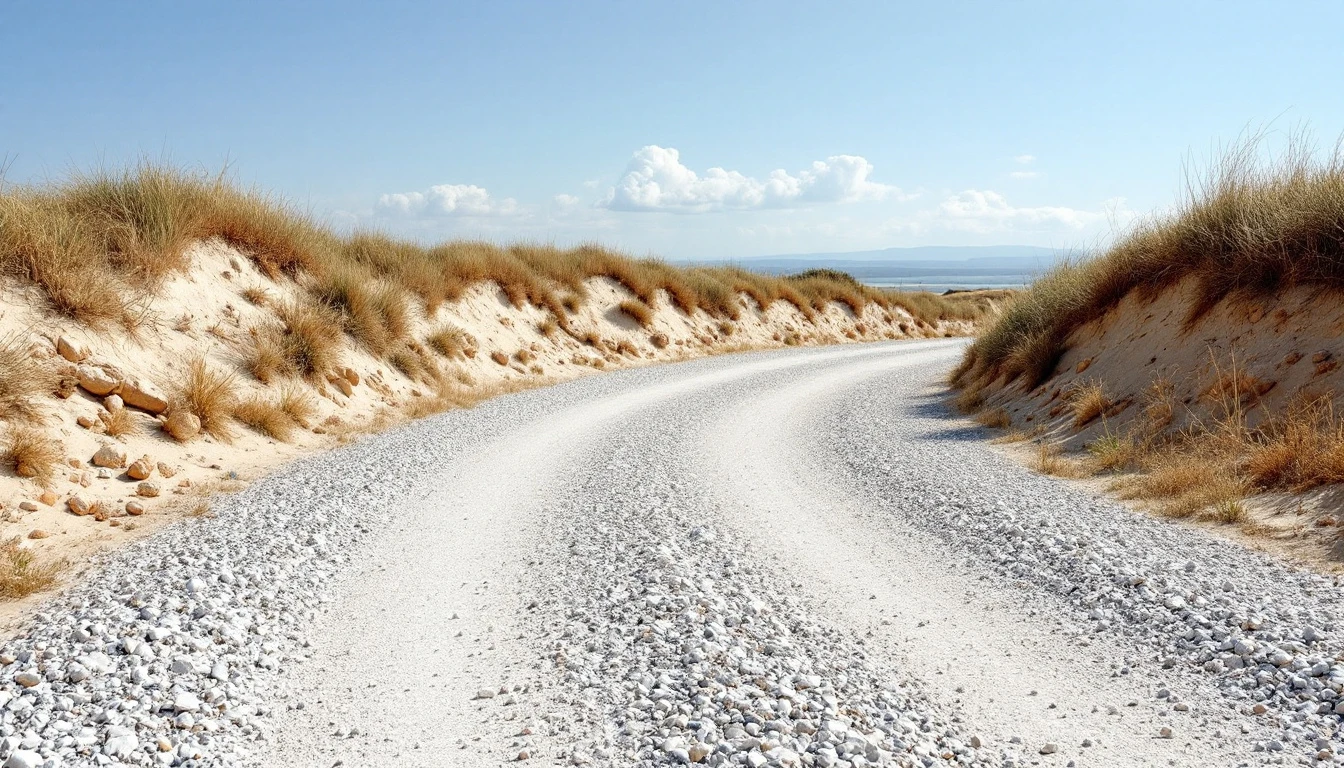
If you've driven through a coastal town in the Southeast, you've probably seen pale, crunchy driveways that look like they belong right next to the water. That's an oyster shell driveway, made from crushed oyster shells, and you'll see it most in places where shell is easy to get locally.
The shell isn't concrete or asphalt. It's a loose aggregate, so how well it holds up comes down to how you grade it, what's underneath it, how big the pieces are, where the water goes, and how much attention you give it afterward. Do those things right and you get a good-looking, practical surface. Skip them, and you'll be raking and refilling more than you'd like.
What Is an Oyster Shell Driveway?
It's a driveway where the top layer is cleaned, crushed oyster shells. The pieces are usually fairly small so they can be spread over a prepared area and settle in.
Shell isn't quite the same as gravel. It's mostly calcium carbonate, and it has that pale color and rough texture you can spot from the street. With traffic, the pieces gradually pack down and lock together.
You'll see these driveways most often across the southeastern U.S. and other coastlines with local shell supplies. The color varies. Some are bright white, others lean cream or light gray, depending on where the shell came from, how it was processed, how long it's weathered, and what kind of soil surrounds it.
Why Choose an Oyster Shell Driveway?
People usually come to shell because they don't want asphalt or concrete, and a few things make it appealing. Looks come first. Shell gives a laid-back coastal feel that suits beach houses, cottages, traditional homes, and Southern-style landscaping. It can also let more water through than solid pavement, depending on the soil, base, and grading underneath.
Oyster Shell vs. Gravel for Driveways
Both are loose aggregates, but they don't act the same.
Gravel comes in lots of grades, colors, and rock types, so you have plenty of options. Shell is more distinctive-looking and makes the most sense if you can buy it nearby.
The shell also wears down over time from traffic and weather. That can actually help the surface settle, but it means you'll probably need to top it up now and then.
Which one is better? That depends on what's available where you live, how your property drains, how much traffic you expect, the look you want, and how much upkeep you're willing to do.
Preparing the Site
The shell on top is only the finish. What happens underneath matters more. Start by clearing vegetation and anything unsuitable from the area. Then grade it so water drains the way you want, and compact it properly.
How thick the base should be varies with your soil, traffic, drainage, and the design itself. No single depth works everywhere, so be wary of anyone who quotes one like it does. A compacted aggregate base gives you far better footing than shells dumped over grass or loose dirt.
Deal with Weak Soil First
Soft, organic, or slow-draining soil won't be fixed by covering it with shell. The problem will just show up later as ruts and sinking. Depending on the site, you might need to dig out the bad material and replace it, stabilize the ground, or build up the base. This matters even more if pickups, trailers, or other heavy vehicles will use the driveway regularly.
Grade for Drainage
Loose aggregate and standing water don't mix. Slope the surface so rain moves away from buildings and toward a spot where it can safely flow. Low areas hold water, soften the ground underneath, and turn into ruts. Don't think of a shell driveway as a drainage plan. It isn't one.
If a downspout empties right onto one stretch of the driveway, even if the rest is fine, that section will wash out or shift. Rerouting the water usually solves it far better than replacing the same shell over and over.
How to Install an Oyster Shell Driveway
- Set the base: Prepare and compact the ground beneath according to what your site needs. It should be even, supportive, and sloped correctly.
- Spread the shell: Lay the crushed shell evenly over the base. Watch for thin patches, since the base can show through quickly there.
- Compact and settle it: Compacting helps the shell pack down and interlock. The equipment and method should suit both the material and your driveway design. After that, regular driving will keep consolidating the surface.
Once it's down, walk the driveway and look for low spots or places where shells are piling up or drifting.
How Much Oyster Shell Do You Need?
It depends on length, width, how deep you want the shell, and the material's density. Your contractor or supplier can work out the volume from your actual measurements. Order too little and you'll have thin spots. Order too much and you've paid for waste. Calculate from your planned driveway area instead of relying on a generic number of bags or truckloads.
Oyster Shell Driveway Maintenance
Upkeep is fairly easy, but it's not zero. Shell tends to creep toward the edges, especially on slopes or where cars turn a lot. A rake and a little time will move it back where it belongs. After a big storm, take a look for washouts or spots where runoff pushed the shell around. Fill those dips early, before they grow.
Keep an eye on weeds too. They'll take root wherever soil and debris collect. Eventually you'll likely need to add more shells to refresh thin areas.
Can an Oyster Shell Driveway Handle Heavy Traffic?
For ordinary household vehicles, a well-built and well-kept shell driveway works fine. It just isn't in the same league as engineered concrete or asphalt. Heavy trucks in and out often will cause rutting, shifting, and more maintenance.
If you regularly get heavy equipment, delivery trucks, commercial vehicles, or big trailers, plan for that from the start. You'll probably need a stronger base and a more robust aggregate setup.
Oyster Shell Driveway Cost Considerations
Shell availability is the biggest swing factor. A property near a dependable supplier will pay very differently from one where the shell has to travel a long way. Other things that affect the total include driveway size, clearing and excavation, base material, soil conditions, drainage work, shell supply, delivery, labor, and ongoing maintenance.
Because of that, treat any cost-per-square-foot number you find online as a rough starting point, not a quote. Ask for a site-specific estimate that breaks out prep work, base construction, shell, delivery, installation, and drainage separately.
Are Oyster Shell Driveways Environmentally Friendly?
It depends on where the shell comes from and how it's produced. Local recycled or reclaimed shells can put a byproduct to good use that might otherwise need disposal. But not all shells are sourced or processed the same way, so ask your supplier where it comes from and whether it's prepared for construction use. Some coastal programs collect recycled shell for oyster reef restoration, and groups like the Chesapeake Bay Foundation ask people to return shell for restoration rather than use it in landscaping. Stormwater is worth thinking about as well. Loose aggregate lets water pass between the pieces, but how well the driveway actually drains still depends on your soil, grading, and overall site design.
Final Thoughts
An oyster shell driveway can give you real coastal character along with the practical perks of loose aggregate. But a nice material alone won't make a lasting driveway. Good site prep, a solid base, proper drainage, careful shell placement, and regular upkeep are what make the difference. Before you order anything, think about your soil, slope, traffic, climate, and how close you are to a shell supplier.
Drivewayz USA offers practical guidance on choosing driveway materials, designs, installation, maintenance, and repairs.
Frequently Asked Questions
It can be, for normal household traffic, if it's prepared well. It does need more upkeep than solid pavement, though. Heavy vehicles, steep slopes, poor drainage, and weak soil all raise the odds of ruts and shifting shells.
In general, yes. A properly prepared base is key to stability. Shells spread over grass, loose soil, or poorly compacted ground tend to sink, rut, and drain badly.
They can move if concentrated runoff hits them, especially on slopes or in poorly drained spots. Good grading, drainage control, and enough shell depth all help keep them in place.
There's no set schedule. Check it after major storms and every so often during regular use. Rake displaced shell back, fix low spots, keep weeds down, and add material when needed.
Not always. Cost depends on local shell supply, delivery, site prep, base work, drainage, labor, and size. A local quote for your specific site is a better guide than assuming a shell will come in cheaper.