
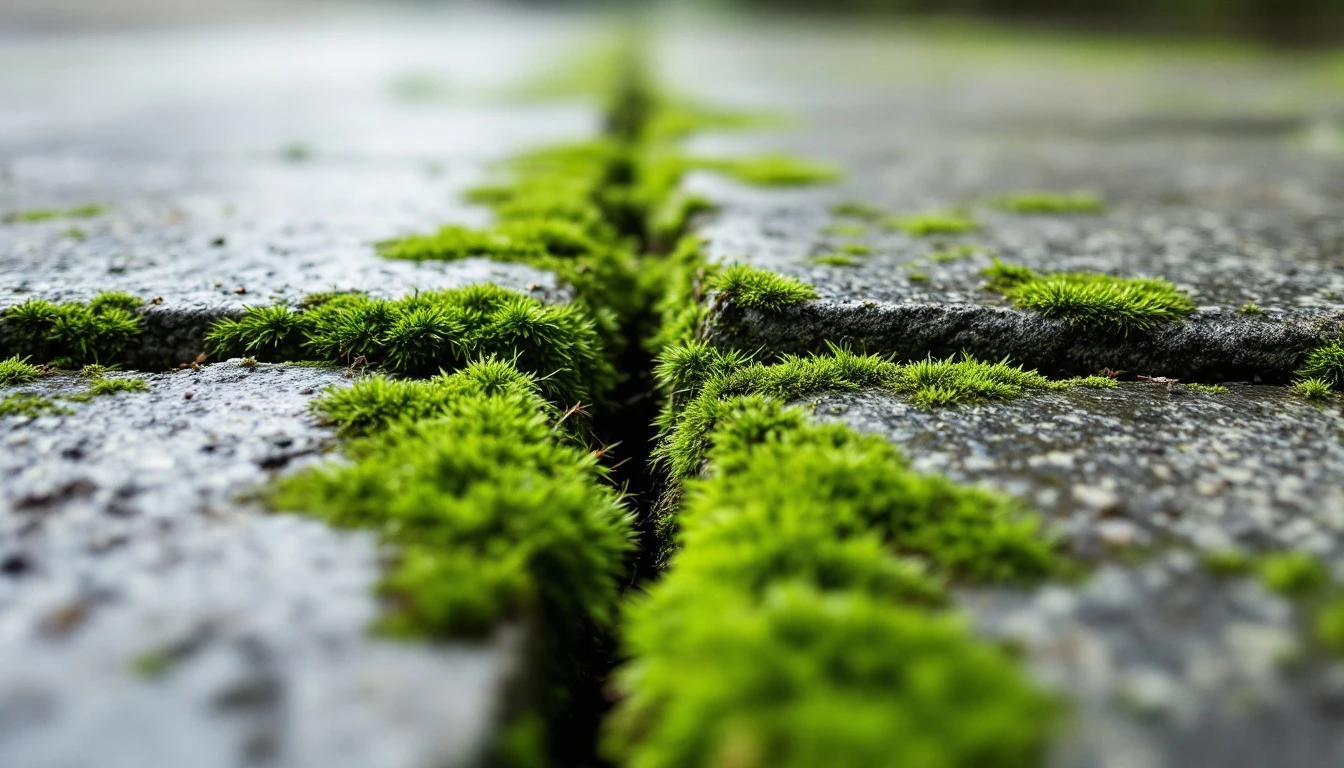
A little green on the driveway is easy to shrug off. Most people ignore it until it spreads, turns slick, and someone nearly slips on the walk to the front door. Moss and algae show up on concrete, asphalt, pavers, and just about any outdoor hard surface, especially where things stay damp, shaded, or covered in leaf litter. This kind of growth tends to appear wherever a surface stays damp.
The fix has two parts. First, get the growth off without hurting the pavement. Second, deal with whatever made the spot so inviting in the first place. Better drainage, more sun, and improved airflow go a long way.
Why Moss and Algae Take Hold
It always comes down to water. A driveway that dries out quickly after a storm rarely stays green for long. One that stays wet for days is a different story. Shade, poor drainage, low spots, nearby plants, and piles of fallen leaves all keep moisture around. Moss tends to settle into damp, shady patches. Algae is the thin green or dark film that builds up on surfaces that rarely get a chance to dry.
For example, picture a concrete driveway running beneath a big tree. The shade feels nice in summer, but the leaves and lack of sun keep parts of the pavement wet. After a few rainy weeks, a green layer creeps in along the edges and in spots where water drains slowly. If you scrub the green away but leave the dampness, you'll probably be scrubbing again soon.
Is It Dangerous?
A thin film looks harmless, but wet moss and algae are slippery. That matters most on sloped driveways, on steps, and along the path people take between the car and the house. Wet growth is a slip hazard, and rain makes it worse. If people walk across the affected area regularly, treat cleaning as routine upkeep. Don't wait until the whole surface has turned green.
How to Remove Moss and Algae from a Driveway
The right approach depends on your pavement type, how bad the growth is, and what shape the surface is in.
Begin with a Brush
For light growth, clear off leaves, dirt, and loose debris first. Then go over the area with a stiff outdoor brush to break up the moss and surface grime. Resist the urge to scrub hard, because too much force can harm older concrete, decorative finishes, joints, and worn asphalt.
Once you've loosened everything, rinse it away, but think about where that water is headed. EPA's stormwater guidance for homeowners advises sweeping driveways rather than hosing them down, so dirt and other pollutants stay out of storm drains.
Choose a Treatment That Fits the Surface
Heavier growth may call for a product labeled for driveways or similar hard surfaces. Read the label closely and follow its directions on dilution, weather conditions, contact time, protective gear, and any warnings about nearby plants or water.
The labels on EPA-registered products show why this matters. Some outdoor moss, mold, and algae products spell out exact mixing ratios, drying times, and what to do if rain is coming. Mixing a stronger batch won't clean better. Going outside the label can harm the pavement, the plants nearby, pets, people, and the stormwater system. EPA treats a pesticide label as legally enforceable, so using a product in a way the label doesn't allow isn't just risky, it's against the law.
Be Careful with a Pressure Washer
A pressure washer can clear away surface growth and built-up dirt, but turning up the pressure isn't always the answer. A powerful stream held too close can damage concrete, particularly if it's already weathered. Asphalt is touchy too, and aggressive cleaning can tear up the surface.
Match the equipment to the pavement, and don't blast directly into cracks or joints. If you're not sure how the surface will react, try a small, out-of-the-way patch first. Keep wash water and any treatment residue out of storm drains.
Concrete Driveways
Concrete is hard, but its age and condition still count. With light moss, brushing and a suitable cleaner may be all you need. Thicker growth might need a labeled treatment.
Look closely at expansion joints and cracks, since moss sticks to the places where moisture and debris collect. When you're done cleaning, inspect the slab. Cracks, dips, or spots where water always pools may be the reason the moss came back.
Algae on Asphalt Driveways
On asphalt, algae can look green, dark, or just slick. Clean asphalt gently, and skip high pressure. Older asphalt that has already lost some aggregate or shows other wear is easy to damage. If algae keeps returning to the same stretch, find out why. A leaking downspout, a poor slope, heavy shade, or runoff from a planting bed could be keeping that area wet.
Why It Keeps Coming Back
When growth returns again and again, the conditions haven't changed. Cleaning takes care of what you can see, but not the source of moisture. Walk the driveway after it rains and watch for:
- Puddles or areas that dry slowly
- Downspouts emptying right next to the pavement
- Thick vegetation casting dense shade
- Leaves and debris piling up along the edges
- Water running onto the driveway from nearby landscaping
- Low spots caused by settling
A driveway that stays wet because of poor drainage will grow the same green film all over again.
Keep Up with Light Maintenance
Prevention doesn't have to be complicated. Sweep off leaves, twigs, and soil before they build up. Keep drainage channels and inlets clear, and check around downspouts after heavy storms.
EPA's green infrastructure guidance notes that, like all infrastructure, these systems need regular inspection and maintenance to keep working. The same logic works at home: a few small chores are easier than dealing with a driveway that's already covered.
What About Bleach and Household Chemicals?
Just because something is in your cabinet doesn't make it a good choice. Bleach and similar chemicals can affect nearby plants, soil, metal, and stormwater, and they aren't right for every pavement. The correct product depends on the material and the job.
If you use a commercial moss or algae treatment, pick one whose label covers your exact use and follow the directions to the letter. And never mix cleaning products unless the instructions explicitly say you can. Some combinations create dangerous reactions.
When to Call a Professional
Bringing in a pro can make sense if growth covers a large area, the surface is hard to clean safely, drainage is part of the problem, or the pavement is already breaking down. A good contractor can also tell whether you have a simple cleaning job or something bigger.
If green growth keeps showing up around a sunken section of concrete, that dip may be holding water. Cleaning it fixes the look for a while, but correcting the drainage or settlement is what solves it for good.
How Much Does Removal Cost?
There's no dependable flat price for this work. A small patch on a short driveway may take little time or equipment. A badly affected driveway could need heavy cleaning, treatment, stain removal, or drainage repairs. Cost usually depends on driveway size, pavement type, how much moss or algae there is, access to the area, cleaning method, treatments needed and drainage or repair work. Be wary of flat-rate quotes you find online. If you hire someone, ask for a clear list of what the price covers.
Final Thoughts
Moss and algae are easiest to manage when you handle both the growth you can see and the conditions behind it. Remove what's there using a method suited to your pavement, skip the overly aggressive cleaning, and keep an eye on moisture, drainage, shade, and debris. If it keeps returning to the same spot, look for the reason instead of cleaning that spot over and over.
At Drivewayz USA, you'll find practical guidance on driveway maintenance, drainage, repairs, materials, cleaning, and long-term care.
Frequently Asked Questions
Clear away leaves and loose debris, then brush and clean in a way that suits your pavement. For stubborn growth, you can use a product labeled for your type of hard surface, following its directions. Avoid heavy pressure, and don't mix a stronger solution than the label directs.
Usually the conditions favor it: moisture, shade, poor drainage, or built-up organic debris. Cleaning gets rid of what's there, but fixing those conditions is what cuts down on repeat growth.
It can be, if you use the right equipment, pressure, distance, and technique. Too much pressure can damage weathered or deteriorated concrete. If you're unsure, test a small area first.
Keep the surface free of leaves and debris, improve drainage where needed, cut back excess shade or trapped moisture when you can, and check any spots that stay wet after rain. It works best when you deal with the source of the moisture.
Heavy or long-lasting growth can make the surface slippery and tends to concentrate around cracks, joints, and damp spots. The bigger concern is usually safety and the moisture behind the growth. Regular cleaning and prompt attention to drainage and pavement defects help keep the driveway in good shape.