
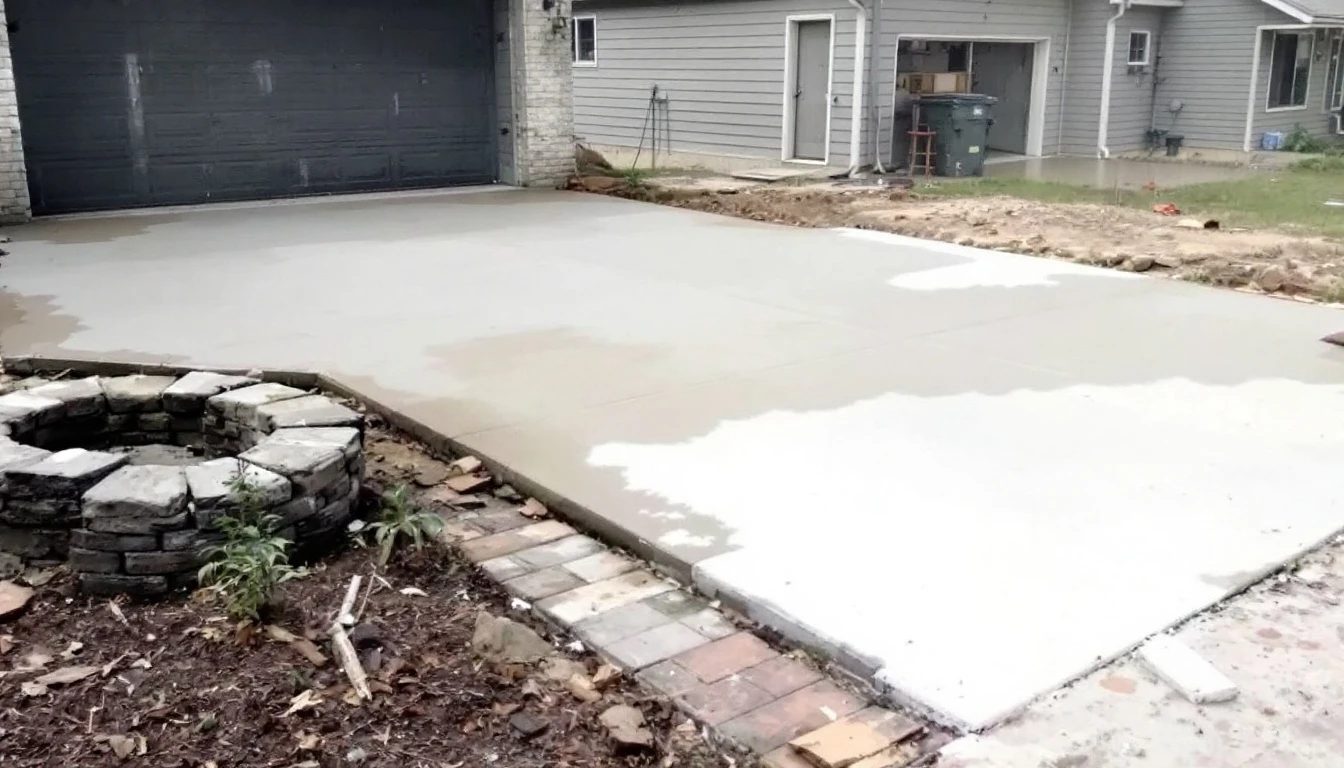
If your driveway is looking rough but the pavement underneath is still holding up, a budget between $5,000 and $10,000 can do a lot. You don't have to rip everything out. That money can fix visible damage, sort out drainage, refresh the surface, or just make the whole thing look better from the street.
But that budget doesn't promise any particular size, material, or finish. Your driveway's dimensions, local labor rates, how easy it is to get equipment onto the site, drainage needs, permits, and the shape of the existing pavement can all push the final number up or down. So the smart move is to figure out what's really wrong, then spend your money there.
What Does $5,000 to $10,000 Actually Cover?
It depends on the property. One homeowner might spend the whole amount on resurfacing. Another might need repairs and drainage work before a new surface even makes sense. Here's what typically falls in this range:
- Asphalt resurfacing or an overlay, where the existing pavement allows it
- Concrete repairs, including replacing slabs that are badly damaged
- Widening the driveway or adding a small extension
- Crack and joint repair
- Drainage fixes
- Regrading the ground around the driveway
- Rebuilding a gravel driveway
- Sealing or other protective treatments
- Small curb appeal upgrades near the driveway
Don't think of these as set packages. A good contractor will look at your driveway first and then tell you which combination is worth doing.
Start by Figuring Out Why It Looks Bad
Before you spend a dollar on looks, find out why the driveway is struggling. Hairline cracks, faded color, and slightly crumbling edges are usually normal wear. Sunken areas, deep structural cracks, pooling water, and soft soil are a different story and point to something deeper.
If the surface is tired but the base is solid, renovation is a good bet. If the base has broken down, a new surface will only hide the problem for a little while.
For example, picture an older asphalt driveway that's faded and covered in fine cracks but has no dips or major breakups. In that case, surface work will probably serve you better than tearing it all out and starting over.
Where Should the Money Go?
The right answer depends on your biggest problem.
Fix Structural Issues First
If parts of the driveway are sinking, cracking badly, or crumbling, deal with that before anything cosmetic. Fresh pavement on top of an unstable spot won't hold. The weakness underneath will show through eventually.
Deal with Drainage
Water is one of the most common causes of driveway damage. It erodes edges, soaks the base, and leads to settling and breakdown over time.
Watch what happens during and after a rainstorm. Does water sit in puddles? Does it run toward the garage? Are the edges chewed up where runoff leaves the pavement? Is a downspout dumping water right next to the driveway? Drainage work isn't glamorous, and nobody admires it from the sidewalk. But it's often the most valuable money you'll spend.
Upgrade the Surface
Once the structure and water are under control, focus what's left on the surface. Depending on what you have, that could mean an asphalt overlay, concrete work, another suitable resurfacing system, or rebuilding a gravel surface. The right choice depends on the material and condition of what's already there.
Renovating an Asphalt Driveway on a Mid-Range Budget
For an existing asphalt driveway, resurfacing can be a practical option. When the pavement underneath is in decent shape, an overlay gives you a fresh wearing surface and a much cleaner look.
It won't work for every driveway, though. Serious structural failure, widespread settling, major drainage trouble, or a weak base usually calls for deeper repairs first. Size matters too. Five thousand dollars goes a long way on a short residential driveway and not nearly as far on a long one with lots of pavement.
When you review a quote, ask whether prep and repairs are included. A cheap price per square foot can rise fast if the crew finds patching, excavation, or drainage problems after they've started.
Concrete Driveway Renovation Options
Concrete work covers a wide range, from patching damaged spots to replacing individual slabs to treating surface problems with a suitable product.
Cracks in concrete come from lots of places: weather, ground movement, settling, and sometimes mistakes made during the original pour. A crack doesn't automatically mean the whole driveway needs to go.
If only a few areas are in bad shape, replacing just those sections can stretch your budget further. The catch is that new concrete rarely matches old concrete. Years of sun and weather change how the surface looks, so a patch can stand out.
If you have $7,000 to spend, you'll probably get more out of fixing the failing sections and correcting drainage than chasing a brand-new look across every square foot.
Widening Your Driveway
Sometimes a mid-range budget leaves room for a modest expansion, whether you want extra parking or just easier turning with a bigger vehicle.
The key is building it properly. A new section needs to be a real pavement structure, not a thin layer of material spread over bare ground. That usually means excavation, grading, a compacted aggregate base, drainage adjustments, and a solid connection to the existing driveway. Before you start, check local rules on property lines, curb cuts, sidewalks, drainage, and permits.
Drainage Fixes Worth Considering
If rain is the reason your driveway keeps falling apart, make drainage a priority. What works depends on your property. Options include regrading, improving or adding a drainage channel, redirecting downspouts, installing an inlet, or dealing with water that's flowing in from a neighbor's yard or a slope above.
The goal is to figure out where the water starts and where it can safely go. Pushing it from one spot on your driveway to another doesn't fix anything.
Here's a common situation: a driveway keeps cracking along one edge, year after year, and it turns out a roof downspout is emptying right beside it. You can patch those cracks all day. Until the water goes somewhere else, they'll keep coming back.
How to Prioritize Your Budget
Rather than picking upgrades based on how they look, sort the work into three tiers.
Priority 1: Stop active damage. Fix drainage, unstable ground, erosion, and anything else that's still hurting the driveway.
Priority 2: Repair the pavement. Take care of major cracks, failed sections, potholes, settlement, and broken edges.
Priority 3: Improve appearance. Use whatever is left on resurfacing, sealing where it makes sense, edging, landscaping, or other visual touches.
This order helps you avoid a classic mistake: spending the whole budget on cosmetic work while the real cause of the damage sits untouched.
What Affects the Final Cost?
Treat $5,000 to $10,000 as a planning figure, not a price you can count on for your specific driveway. Final costs swing based on:
- Driveway size
- Current pavement condition
- Material choice
- Excavation needs
- Soil and base conditions
- Drainage work
- How easy the site is to access
- Local labor rates
- Permit requirements
- How much demolition and hauling is involved
That's why online averages shouldn't stand in for a real estimate. Two driveways with the same dimensions can need completely different amounts of work. Ask contractors for an itemized quote that breaks out prep, repairs, materials, drainage, labor, cleanup, and any extras.
Make Your Budget Work Harder
Spent carefully, $5,000 to $10,000 can change a driveway noticeably. The point isn't just to make it look newer. It's to improve its condition, control water, fix the defects that matter, and choose upgrades that suit your existing pavement and property.
Before any work begins, pin down what's causing the deterioration, decide which repairs are essential, and get detailed estimates based on a real look at your site.
Final Thoughts
At Drivewayz USA, our goal is to help homeowners understand the thinking behind driveway construction, repair, maintenance, materials, drainage, and renovation. Whether you're working with $5,000 to $10,000 or planning something bigger, start with the cause of the damage, then spend on the repairs that protect the pavement.
Frequently Asked Questions
It can pay for repairs, resurfacing, drainage improvements, a small extension, or other renovation work. What you actually get depends on the driveway's size and material, site conditions, labor costs, and the state of the current pavement.
Often, yes, especially if the base is sound and you only need localized repairs or surface work. If the structure underneath has failed, though, renovation won't last, and replacement may be the better choice.
If water is helping destroy the driveway, then yes. Fixing the water problem protects the pavement from repeat damage.
A modest extension may fit in that range. Cost depends on the added area, excavation, base prep, pavement material, drainage, permits, and local labor rates, so you'll need a site-specific estimate.
Start with problems that affect safety and structure. Get several detailed estimates and compare the actual scope of work, not just the bottom-line price. And don't pay for cosmetic upgrades until drainage, settlement, and failing pavement are handled.