
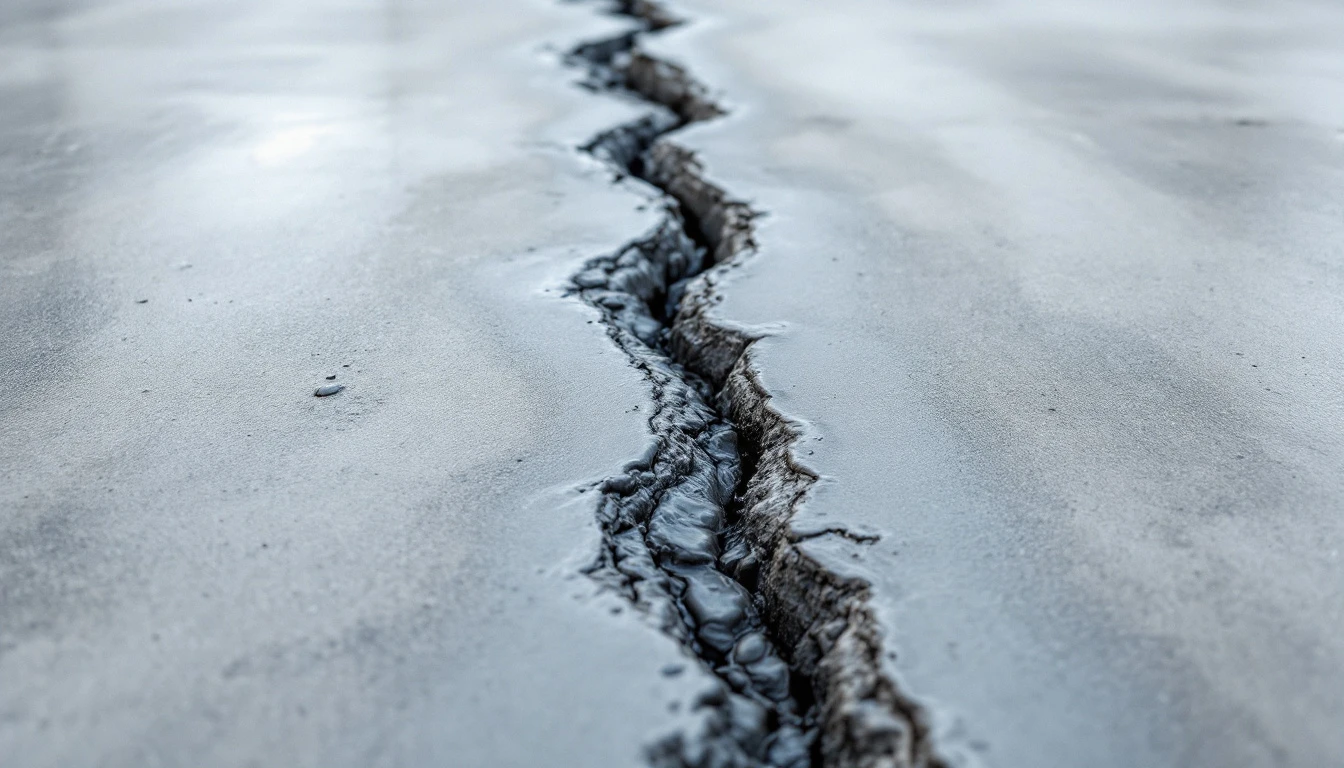
Not every damaged driveway needs a jackhammer and a fresh pour. In plenty of cases, the slab underneath is still solid. It's just the surface that's taken a beating. Cracks, flaking, stains, a rough patch here and there. These are often fixable, as long as the base beneath the concrete hasn't given out. The real work is figuring out why the damage happened before you pick a fix. Because the wrong repair on the right crack just means you're doing it again in two years. This guide walks through the realistic options like what you can handle yourself, what calls for a contractor, and how to keep the driveway from falling apart again after you've fixed it.
How Do You Know It's Time to Repair?
Driveway damage rarely shows up all at once. A hairline crack usually starts as nothing more than an eyesore, but once water finds its way in, it isn't the same anymore, especially somewhere that freezes and thaws through the winter. The Federal Highway Administration has pointed to moisture and deicing salts as contributors to concrete pavement breakdown and joint spalling. Most homeowners eventually notice, the crack that seemed harmless last spring is wider by fall. Watch for:
- Cracks, whether hairline or wider
- Flaking or chipped concrete
- Spalling near joints and edges
- Small potholes or broken chunks
- Slabs that have settled unevenly
- Puddles that don't drain
- Cracks that keep coming back after you've filled them
What Kind of Damage Are You Actually Dealing With?
Knowing which category your concrete driveway falls into changes everything about the repair.
Shrinkage Cracks
These show up as concrete cures, and on their own they're not usually a structural red flag. Still worth sealing so water doesn't turn a cosmetic issue into something bigger.
Cracks That Keep Moving
If a crack keeps widening, shows vertical movement, or comes with visible settling, something's happening below the surface. Patching it might look fine for a season, but it's not solving the actual problem.
Spalling and Surface Flaking
This is what happens when chunks of the surface break loose. Usually tied to freeze-thaw cycles, moisture, deicing chemicals, or a finishing job that wasn't done right the first time. According to FHWA guidance, partial-depth repair works for isolated spalls that fit the right profile, but anything deeper usually needs more than a patch.
Settled or Uneven Slabs
When part of a driveway has sunk because whatever was supporting it gave way, no amount of crack filler touches that. Depending on what's going on underneath, the fix might be slab lifting, a partial rebuild, or a full-depth repair.
Fixing Minor Damage Yourself
Some repairs are genuinely within reach for a homeowner with the right product and a little patience. Before anything goes into that crack, clear out the dirt, loose chunks, weeds, whatever's collected in there. Repair material won't bond to a dirty surface, full stop. For a crack that's narrow and not actively getting worse, here's roughly how it goes:
- Clean it out completely.
- Pull out any loose or crumbling material.
- Let it dry if the product calls for a dry surface.
- Apply a crack repair product rated for exterior use, following the label.
- Smooth or tool it as directed.
- Give it the full cure time before you drive over it.
Handling a handful of small cracks yourself will almost always cost less than calling in a contractor for cosmetic work. But that savings evaporates fast if you use the wrong material, or if there's a drainage or settlement issue hiding underneath that you just patched over instead of fixing.
When It's Time to Call a Professional
Bigger damage, damage that keeps returning, or anything that looks structural is where DIY stops making sense.
Resurfacing
This works when the slab itself is still sound but the surface has worn out. A new layer goes down over prepared concrete to deal with surface-level wear. It's not a fix for a slab that's unstable. Resurfacing over a bad foundation just means the same cracks show up again under the new layer.
Partial-Depth Repair
A contractor removes the damaged concrete down to solid material and replaces it with something compatible. FHWA frames this as appropriate for certain spalls, but stresses checking the depth and cause of the damage first, it's not a one-size-fits-all fix.
Full-Depth Repair
When deterioration runs through a big chunk of the slab, a shallow patch won't cut it. FHWA describes this as digging out the bad concrete all the way to the base, dealing with whatever's wrong underneath, and pouring a new section. Done right, in the right spot, it restores real structural strength.
Slab Lifting or Leveling
For a settled driveway, a contractor will look at whether lifting makes sense and that depends on why it settled in the first place, what shape the soil or base is in, how drainage is handled, and how much the slab has actually dropped. If the material underneath has a real problem, lifting the slab is just a temporary win.
What Does This Actually Cost?
There's no clean number here, pricing swings based on where you live, how big the driveway is, how bad the damage is, how easy the area is to access, local labor rates, and which repair method you end up needing.
DIY crack repair might run you the cost of a tube or two of filler. Professional work spans a much wider range, anywhere from a few hundred dollars for something small to several thousand for a bigger job. Resurfacing, leveling, partial-depth work, and full replacement all price out differently, so comparing them apples-to-apples isn't really possible without a quote in hand. Skip the national averages and get a local, itemized estimate instead. It should spell out:
- The area getting repaired
- The method being used
- Materials and how much of them
- Surface prep involved
- Labor
- Any drainage or base corrections
- Cleanup and hauling away debris
And don't assume the lowest number is the best deal. A contractor who just fills the visible cracks without touching the drainage or settlement issue underneath is setting you up to pay for the same repair again.
Repair or Just Replace It?
Generally, repair when the damage is contained and the rest of the slab is holding up fine. Replacement starts making more sense once cracking, movement, or deterioration has spread across the whole driveway. Bring in a professional for an honest look if:
- Big sections have shifted out of place
- Cracks are wide and still growing
- The driveway has noticeably settled
- Spalling shows up in multiple spots
- The base or drainage seems off
- Past repairs haven't held
The question isn't just "can this crack be filled." It should be "what caused it, and does this fix actually deal with that cause, or just hide it for a while."
Keeping It Good from Happening Again
Good driveway maintenance goes a long way, but it can't undo a bad base or a serious structural flaw that was there from the start. Stop water from pooling around the driveway repeatedly. Check your downspouts, the grading, and where water actually goes after a heavy rain. This matters more than people expect, concrete that stays saturated and then freezes is far more likely to break down, and deicing chemicals only add to the risk around joints. NIST research has documented specific ways calcium chloride can damage concrete under certain conditions, so it's worth being just as careful with it as with any other deicing product.
Walk the driveway now and then. Look for small cracks, joint damage, drainage trouble, or spots where water just sits. Catching something early is the difference between a quick fix and a much bigger bill later.
Final Thoughts
A cracked or damaged driveway doesn't automatically mean a full teardown. Catch problems early, match the repair to the actual cause, and a lot of driveways can keep working for years longer than you'd expect.
Drivewayz USA puts together driveway-focused resources to help homeowners weigh their options on repair, maintenance, materials, and replacement. If you're trying to figure out what your concrete driveway actually needs, Drivewayz USA is the right place to start sorting through the choices before you spend.
Frequently Asked Questions
In most cases, yes. Small, stable cracks and isolated surface damage are usually fixable. Replacement becomes the better option when the slab has widespread structural problems, major shifting, or a base issue that's too far gone.
For minor, stable cracks, yes, an exterior-rated crack repair product will usually do the job. Wider cracks, ones that keep moving, or ones that keep coming back deserve a professional look, since filling them might just mask a bigger issue.
It can, but only if the concrete underneath is structurally sound and the surface fits the resurfacing system you're using. It's not meant to hide major settlement or serious structural failure, it'll just crack again.
Normal shrinkage during curing, freeze-thaw cycles, moisture, poor drainage, settlement, heavy loads, or issues from the original construction. Sometimes it's one of these, sometimes a combination. Knowing the cause should shape which repair you pick.
When the damage is spread across the driveway, or there's serious structural failure, major settlement, repeated movement, or a base problem that repair just can't fix. A professional assessment is the most reliable way to figure out which side of that line you're on.