
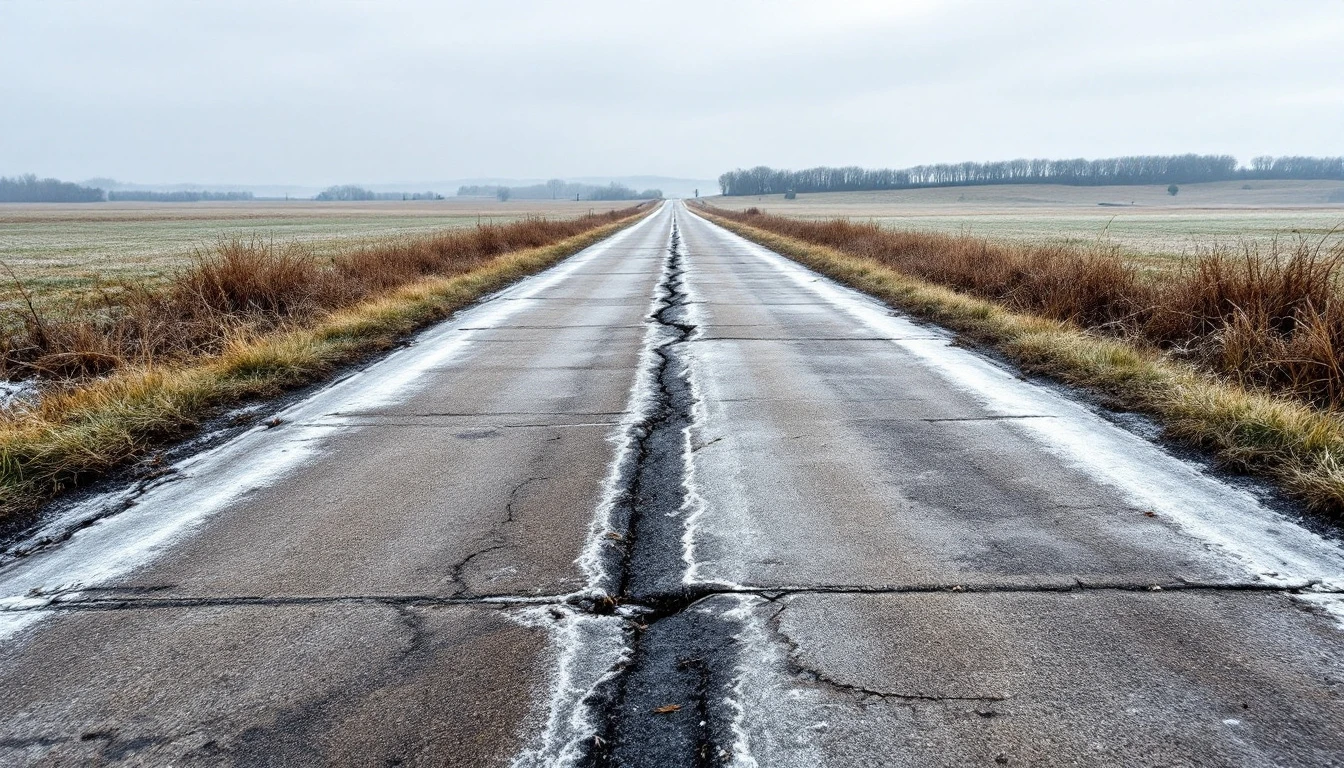
If you've ever watched a driveway crumble apart after just one Colorado winter, you already know: building at elevation isn't the same game as building at sea level. A slab that would hold up fine for decades in Denver can start cracking apart within a single mountain winter if it wasn't built for what altitude actually throws at it. Brutal freeze-thaw swings, months of snow load, and sun strong enough to bake asphalt even in January. If your driveway wasn't designed around those realities from day one, you'll end up paying for it later, usually sooner than you'd think.
Why Elevation Changes Everything
Once you're above roughly 5,000 feet, you're dealing with a different set of physics. Temperatures swing wildly between day and night. Snow piles up for months at a time. The sun is stronger than most people expect, even in winter. And a lot of mountain properties sit on slopes that make drainage genuinely tricky.
Put those together, and a driveway that would be totally fine in Denver's suburbs can fall apart within a couple of years up in the high country. The fix isn't more concrete, it's smarter planning around flexibility, water management, and surface texture.
The Climate Problems in Colorado That Affects the Driveway
Freeze-Thaw Cycling
This is a huge one. Water gets into hairline cracks, freezes, expands, and pries the surface apart from the inside. Do this dozens of times a winter and small imperfections turn into potholes fast. Proper sealing at installation, materials that can flex a little with temperature changes, and grading that actually moves runoff away instead of letting it pool.
Snow Load and Ice
Heavy, repeated snowfall wears down a surface over time, especially if you're out there with a plow or a shovel scraping it regularly. Ice is its own hazard on top of that both for the driveway material and for anyone trying to walk or drive on it. A driveway built for the mountains needs enough slope to help snowmelt drain, a surface tough enough to survive repeated shoveling and plowing, and some texture so it doesn't turn into a skating rink.
Picking the Right Material
There's no single "best" material, it always depends on your budget, your terrain, and how much upkeep you're willing to do.
Concrete Driveway
It is strong and looks great, but at altitude it needs to be done right: air-entrained mix so it can handle freeze-thaw stress, control joints placed to manage where cracks form, and a good sealant on top.
Asphalt Driveway
This tends to do well in cold climates because it flexes more than concrete does, it can absorb some of that expansion and contraction instead of cracking outright. The tradeoff is that it needs more regular sealcoating to fight off sun damage and moisture.
Gravel Driveway
It is the budget-friendly, low-maintenance option, and it drains well by nature. A rural property outside Colorado Springs went this route because of steep terrain and cost constraints. It's held up fine through heavy snow years, with the occasional regrading to keep it smooth.
Pavers Driveway
This costs more but looks better and handles ground movement gracefully, since individual units can shift slightly without the whole surface cracking. They're a common choice on higher-end mountain properties where appearance matters as much as function.
Drainage Is Where Most Driveways Actually Fail
If there's one thing that separates a driveway that lasts 20 years from one that needs replacing in five, it's drainage. Standing water is the enemy, it seeps in, freezes, and destroys the surface from below no matter how good the material is on top.
Good drainage design usually means a slight slope carrying water away from the house, permeable materials where the site allows for it, and something like a French drain or drainage channel to catch and redirect runoff before it becomes a problem.
Don't Skip the Base
A driveway is only as good as what's underneath it. Mountain soil can be wildly inconsistent, it may be rocky in one spot, loose and shifting a few feet away and skipping proper base prep is one of the most common (and most expensive) mistakes. That means clearing out unstable soil, laying down a properly compacted gravel base, and making sure the load is distributed evenly across the surface. A driveway near Boulder failed within two years because the base wasn't compacted properly; once it was rebuilt with a solid foundation, the problem went away for good.
Slopes and Access
Plenty of Colorado properties sit on hillsides, which is gorgeous until you're trying to get up your own driveway in an ice storm. Steep driveways need gradual grading rather than sharp pitches wherever possible, switchbacks on properties where the slope is unavoidable, and a non-slip surface finish for winter traction. If you skip any of this, you've got a driveway that turns into a hazard the first time it ices over.
Keeping It Alive Long-Term
Even a well-built driveway needs upkeep. The homeowners who get decades out of theirs tend to do a few simple things consistently like reseal concrete and asphalt on a regular schedule, clear snow promptly instead of letting it compact into ice, catch small cracks before they turn into potholes, and keep drainage channels clear of debris.
Final Thoughts
Building a driveway that survives Colorado's high country takes more than a standard construction checklist. Climate, soil, drainage, and material choice all have to work together, skip one and the rest won't matter.
If you're planning a project like this, it's worth working with contractors like Drivewayz USA, who've actually built at altitude before, since the mistakes here tend to be expensive to fix after the fact.
Frequently Asked Questions
Concrete and asphalt both work well when installed correctly. Gravel is a solid budget option, and pavers offer more durability and curb appeal if you're willing to spend more.
Water gets into small cracks, freezes and expands, then thaws and contracts, if that repeats enough times over a winter and you get widening cracks and eventually potholes.
Yes, they drain well, handle steep or remote terrain reasonably, and are cheaper to repair than paved surfaces.
Every few years is typical for concrete and asphalt, though it depends on sun exposure and how much traffic and weather it takes on.
Because standing water is what turns freeze-thaw cycling from a minor issue into a structural one, without somewhere for water to go, even the best materials eventually fail.