
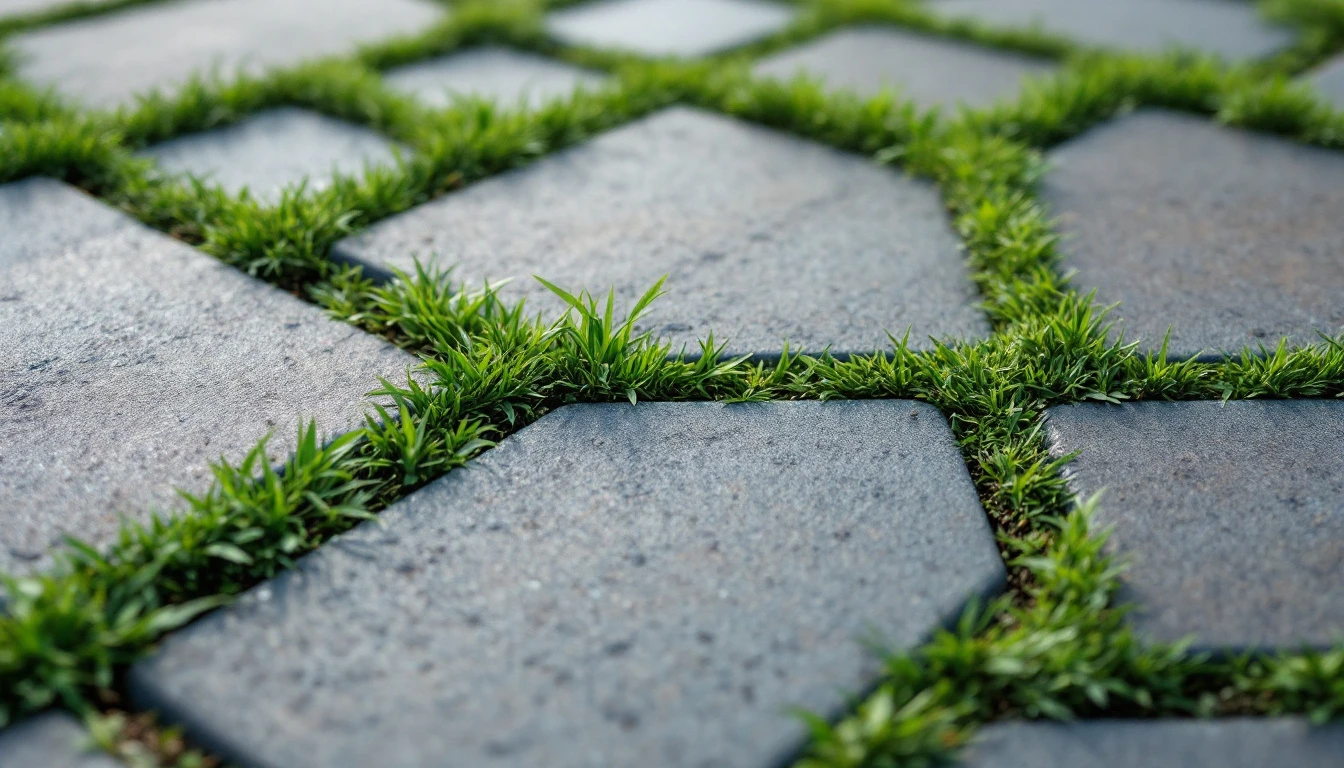
Picking a driveway material used to come down to two questions: how long will it last, and how much will it cost? These days there's a third question, what does it do to the water that lands on it? That's really what the grass pavers vs. permeable pavers debate is about. Both options let rain soak into the ground instead of sheeting off into the street, but they get there in completely different ways, and they're not interchangeable. Here's a straightforward look at how each one actually performs, so you can figure out which fits your driveway.
Why This Even Matters
A standard concrete or asphalt driveway is basically a slab that water can't get through. Rain has nowhere to go but sideways, and that creates a few predictable headaches:
- Runoff that overwhelms storm drains
- Puddling and localized flooding
- Erosion around the edges of the driveway
- Extra heat radiating off the surface on hot days
Anyone who's watched water collect by their garage after a storm knows how this plays out, eventually that standing water works its way into the base material, and sometimes into the foundation itself. Grass pavers and permeable pavers both exist to short-circuit that problem by giving water a way through instead of around.
Grass Pavers
Think of grass pavers as a reinforced skeleton for your lawn. They're rigid grids, usually concrete or heavy-duty plastic that get filled with soil and planted with grass. The grid carries the weight of a car, while the living grass on top handles water absorption and keeps the soil from washing away.
What They're Good At
- Looking like an actual lawn instead of a parking pad
- Soaking up rainwater efficiently
- Staying noticeably cooler than concrete in summer
- Handling everyday, lighter vehicle traffic
A Common Use Case
Homeowners with extra-wide driveways install a grass paver section off to the side for overflow parking, so guests have somewhere to park without turning half the yard into concrete.
Where They Fall Short
Grass pavers are essentially a lawn you drive on, which means they need lawn-level upkeep. Skip the watering or mowing and the grass thins out fast, especially in spots that get driven or parked on often. Hot climates and heavy daily traffic make it even harder to keep the grass looking full.
Permeable Pavers
Permeable pavers flip the concept. Instead of grass, you get solid units of concrete, brick, or natural stone laid with intentional gaps between them. Those gaps are packed with small aggregate stones, and that's what lets water pass through.
How the Water Actually Moves
Rain filters down through the joints and into a layered stone base underneath the driveway, which temporarily holds the water and lets it soak into the soil gradually instead of all at once.
What They're Good At
- Handling daily vehicle traffic without stress
- Draining efficiently, with no standing water
- Requiring far less upkeep than a living surface
- Coming in a wide range of styles and layouts
A Typical Scenario
Someone tearing out a cracked, water-damaged concrete driveway swaps it for permeable pavers. The pooling near the garage disappears, and because water isn't sitting on the surface, the new driveway doesn't develop the same freeze-thaw cracking over time.
Where They Fall Short
They won't give you that green, natural look. Even with a nice pattern, it still reads as a built surface rather than landscaping. And permeable systems only work long-term if the base underneath is prepped correctly. If you cut corners there, it might result in poor drainage performance.
The Real Differences, Side by Side
Environmental Role
Grass pavers add living vegetation to your property like, better air quality, less heat buildup, an actual ecosystem. Permeable pavers skip the greenery angle entirely and focus on moving water efficiently.
Drainage Style
Grass pavers let water soak straight into soil through the roots and grid. Permeable pavers route it through joints into an engineered stone base. In places with serious rainfall, the structured base of permeable pavers tends to handle volume more predictably.
Upkeep
Grass pavers need watering, mowing, and occasional reseeding, it's lawn care, just on a grid. Permeable pavers mostly need the joints kept clear of debris so water can keep passing through. If low-maintenance is high on your list, permeable pavers win this one easily.
Weight and Traffic
Permeable pavers are built for daily, heavier vehicle use. Grass pavers are happiest with lighter, less frequent traffic. Think secondary parking areas rather than the main driveway you use every day.
Look and Feel
Grass pavers blend into the landscaping and soften the whole property. Permeable pavers read as intentional and architectural, with patterns and finishes you can customize.
Which One's Actually Greener?
It depends on what you mean by "greener".
Chasing living greenery and lower surface heat? Grass pavers win here. Because they're the only option that puts actual plant life back into the driveway footprint.
Chasing smart water management and a surface that'll hold up for years? Permeable pavers are the safer bet, and they're still doing real environmental work by keeping runoff out of the storm system.
A practical way to decide:
- Go with grass pavers for low-traffic driveways or secondary parking where looks matter as much as function
- Go with permeable pavers for the main driveway, where you need something durable that handles daily use without babysitting
Plenty of homeowners don't pick just one, permeable pavers on the main path where the car goes every day, grass pavers along the sides for extra parking or visual softness. You get the durability where you need it and the greenery where you want it.
Don't Skip the Installation Details
Whichever route you take, the material only performs as well as the installation underneath it. Pay attention to:
- How the base is graded and prepped
- Whether the drainage layers are built correctly for your soil type
- Local climate conditions
- How much weight and traffic the driveway will actually see
A permeable driveway with a poorly built base will clog and stop draining. A grass paver system installed without proper support can sink or shift under vehicle weight. Neither problem shows up on day one, they show up a year or two in, which is exactly why it's worth having someone experienced to handle the install.
Final Thoughts
There's no universal winner in the grass pavers vs. permeable pavers comparison. It comes down to what you actually need from your driveway. Grass pavers bring nature and visual softness into the mix. Permeable pavers bring durability, low maintenance, and dependable drainage for everyday use.
At Drivewayz USA, you can dig into driveway options that balance performance with sustainability, whether you're patching up an old surface or planning something new from scratch. The right material now saves you headaches and money down the road.
Frequently Asked Questions
It'll handle vehicles, but it's built more for light-to-moderate traffic. If you're parking multiple cars daily, permeable pavers are the more dependable choice.
They can, if debris builds up in the joints and nobody clears it out. A regular cleaning or occasional vacuuming keeps water moving through as intended.
Permeable pavers, generally the engineered base underneath gives them more consistent drainage performance during downpours.
Yes, expect the same routine as lawn care: watering, mowing, and reseeding as needed to keep it looking full and functional.
Definitely. It's a common approach, permeable pavers for the main path, grass pavers along the sides, that balances looks, durability, and drainage across the whole space.