
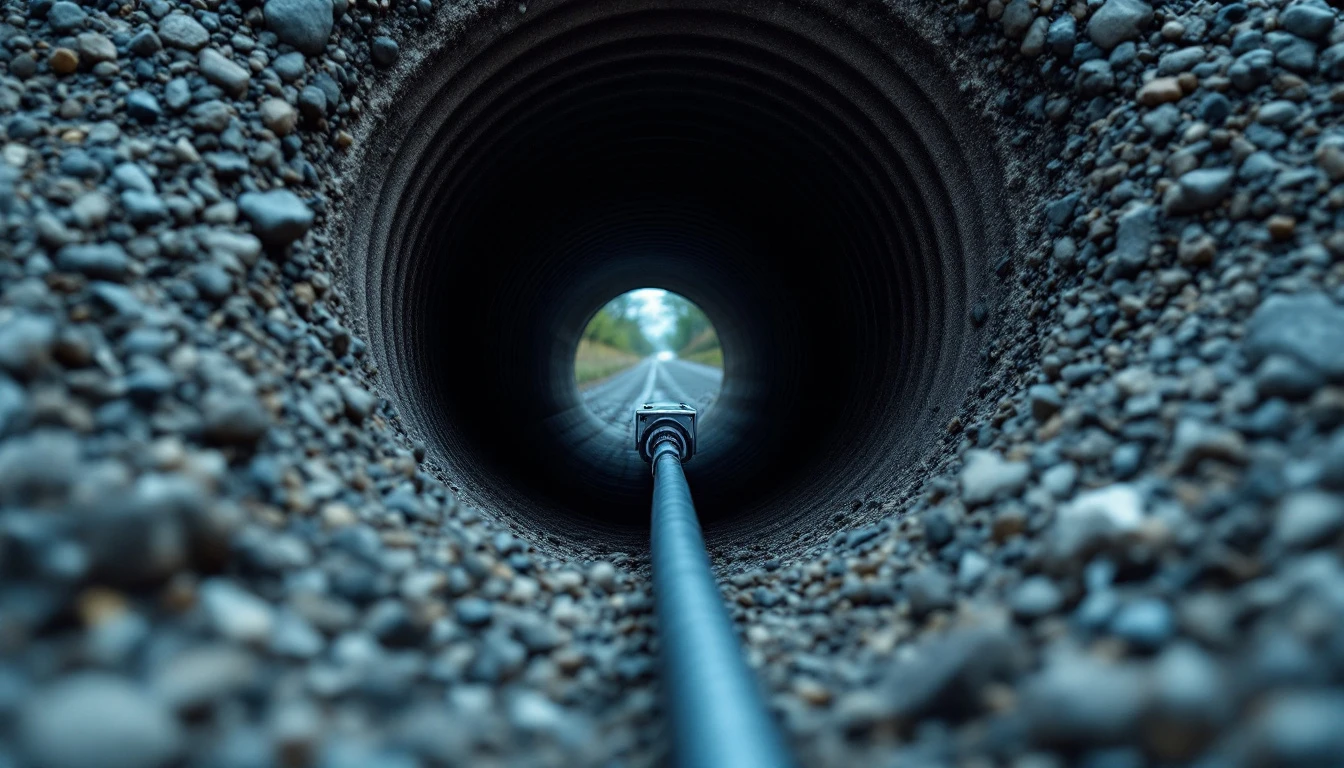
Driveways can look completely fine on top while something falls apart underneath. Water finds its way through a cracked pipe or a clogged culvert, quietly washes out the soil that's holding everything up. Before you realize it, the driveway can develop soft spots, sinking, or cracking. That's where a video pipe inspection comes in. Rather than tearing up the driveway to go looking for trouble, a technician can run a waterproof camera straight through the drainage pipe and see the inside of the pipe where the camera can travel and the picture stays clear. This is basically the same CCTV pipe inspection technology used across the plumbing and municipal drainage world. It's good at spotting roots, cracks, debris, shifted joints, and other visible defects. For driveway work specifically, this kind of look-before-you-dig approach can save a lot of money and second-guessing down the road.
What Is a Driveway Video Pipe Inspection?
A small camera, mounted on a flexible push rod (or, for bigger pipes, a remote-controlled crawler unit), gets fed into the drain through whatever access point is available such as a cleanout, a catch basin, a culvert opening, whatever exists.
From there, the technician watches the footage live as the camera works its way through the line, recording as it goes. Some equipment can even track the camera's position from above ground, which can help estimate where a problem sits. Accuracy depends on the locator, the operator, and the site. What can that footage actually show you? It shows
- Roots growing into the pipe
- Sediment or debris buildup
- Cracked or broken sections
- Joints that have shifted or separated
- Pipe deformation
- Standing water or a sagging low point
- Blockages
- Pipe material that's deteriorating
- Trouble spots around connections or laterals
But the camera only shows what's visible from inside the pipe. It can't see through the pipe wall into the surrounding soil, and heavy sediment, standing water, or a serious clog can block the view entirely.
When Does It Make Sense to Check Your Underground Drains?
Before You Sink Money into a Big Driveway Repair
Planning to repave, replace, or install pavers? Check the drainage first.
For example, a homeowner sees cracks forming near the edge of the driveway and assumes it's just a surface issue. A camera inspection, though, reveals a damaged stormwater pipe leaking underneath. Patching the asphalt over that would just mean redoing the work later.
When Water Keeps Pooling in the Same Spot
Standing water isn't just annoying to look at. If it keeps showing up in the same place, that's usually a sign the drainage system isn't moving water the way it should. A camera can help figure out whether it's a clog, damage, or built-up sediment causing the backup.
After a Bad Storm or Flooding
Heavy rain has a way of exposing weak points. Culverts and French drains especially can fill up with debris fast. If your driveway starts showing new dips, soft patches, or odd puddling after a storm, it's worth a look before things get worse (and pricier).
When You Notice Sinking or a Sinkhole Forming
Not every dip in a driveway is drainage-related, settlement has plenty of causes. But if there's a known drainage line running nearby, a video inspection can show a defect that is visible in the section the camera can travel. It cannot, by itself, rule out a leak through the pipe wall, missing soil support, or a void outside the pipe.
If the pavement is sunken, cracked open, or you suspect a void, stay off it. Florida's geological survey tells homeowners not to drive or walk over a fresh depression, and not to stand at the edge of an open hole. Do not enter a pipe, culvert, catch basin, or chamber. OSHA treats pipelines, manholes, vaults, and pits as confined spaces that can hold dangerous air. If a buried line may be involved, contact that utility. The U.S. Geological Survey notes that a depression can come from a leaking pipe or an old excavation, and that it does not inspect private yards.
How the Inspection Works
- Finding the access point: First, the technician figures out where they can actually get into the pipe such as a cleanout, catch basin, culvert, or similar structure. No usable access means no easy inspection, so this step matters more than people expect.
- Sending the camera in: A waterproof camera goes in on a push rod (or a crawler for larger lines), streaming live video the whole way through.
- Reading the pipe's condition: The technician is watching for the same red flags mentioned earlier, including cracks, roots, sediment, shifted joints, deformation, blockages. Distance readings help show how far into the line a defect sits, and some setups use a sonde (a small locating transmitter) to mark the spot from the surface.
- Documenting what was found: A solid inspection isn't just someone glancing at a screen and shrugging. You want recorded video, still images, measurements, and written notes, something concrete that shows what was found and where the inspection estimated it. That documentation is what lets a contractor decide whether the fix is a simple cleaning, a spot repair, or something bigger.
What Kinds of Problems Show Up?
Every drainage system ages differently depending on its material, how it was installed, what's growing nearby, and how much traffic and weather it's dealt with over the years.
Root Intrusion
Roots are opportunists. They'll work their way into any existing crack or loose joint. Once inside, they cause recurring clogs that keep coming back no matter how many times you clear them.
Cracks and Breaks
How much these matter depends on the size of the crack, where it is, what the pipe's made of, and how it's affecting flow. Not every crack is an emergency.
Shifted or Separated Joints
Ground movement and settling can nudge pipe sections out of alignment over time, which can restrict flow or open up a gap where soil and water start interacting with the pipe.
Sediment and Debris
Leaves, dirt, gravel, it all finds its way in eventually. The camera shows where it's piling up and whether the line needs a good cleaning.
Low Spots Holding Water
When a section of pipe settles out of its proper grade, it can trap water instead of letting it flow through. The footage might catch that standing water, though figuring out why it's there usually takes more digging.
Can You DIY This?
Honestly, sometimes, sort of. Consumer-grade inspection cameras can handle basic, easily accessible plumbing situations just fine. But driveway drainage tends to be tougher because of longer runs, tight bends, bigger culverts, awkward access, sediment, buried lines you can't easily reach.
And there's more to it than just owning a camera. A big part of the value is having someone who actually knows how to read the footage, figure out where a defect is physically located, and explain what it means for your driveway, not just point a lens down a pipe.
Picking the Right Contractor
Before you hire anyone, make sure they can clearly answer:
- Which drainage lines are being inspected
- Where the camera goes in
- Whether the footage gets recorded
- Whether they can locate defects from the surface
- What kind of written report you'll get
- Whether the pipe needs cleaning before the camera goes in
- What extra work would cost if they find something
And obviously, check that they're properly licensed and insured for your area. Please don't let anyone hand you a video and call it a diagnosis. Ask what they actually saw, where they saw it, what the inspection couldn't tell them, and what evidence is backing up whatever repair they're recommending.
Final Thoughts
A driveway is only as solid as the ground and drainage underneath it. Patch the surface without checking what's happening below, and you might just be covering up a problem that's still growing.
A video pipe inspection shows the inside of the pipe the camera can travel. That record helps you and a contractor decide whether to clean, repair, investigate further, or leave the line alone.
Use the footage and inspection report to discuss the next step with a qualified contractor, especially when drainage problems or settlement remain unexplained.
Frequently Asked Questions
Depends on the pipe, such as length, access, how many lines, whether cleaning's needed first. A simple job might wrap up quickly; a more complicated system takes longer.
Yes, for visible breaks within the accessible section. It won't catch everything outside the pipe wall, though, and murky water or debris can limit what the camera picks up.
If a drainage line runs under or near where you're working, especially with an older system or any signs of drainage trouble, it's worth doing. Better to find a problem now than bury it under a brand-new driveway.
Most professional setups can estimate the camera's position fairly well, though accuracy depends on the equipment, the operator, and the site itself.
Not necessarily. It depends on how bad the defect is, what the pipe's made of, and what repair options actually fit the situation.