
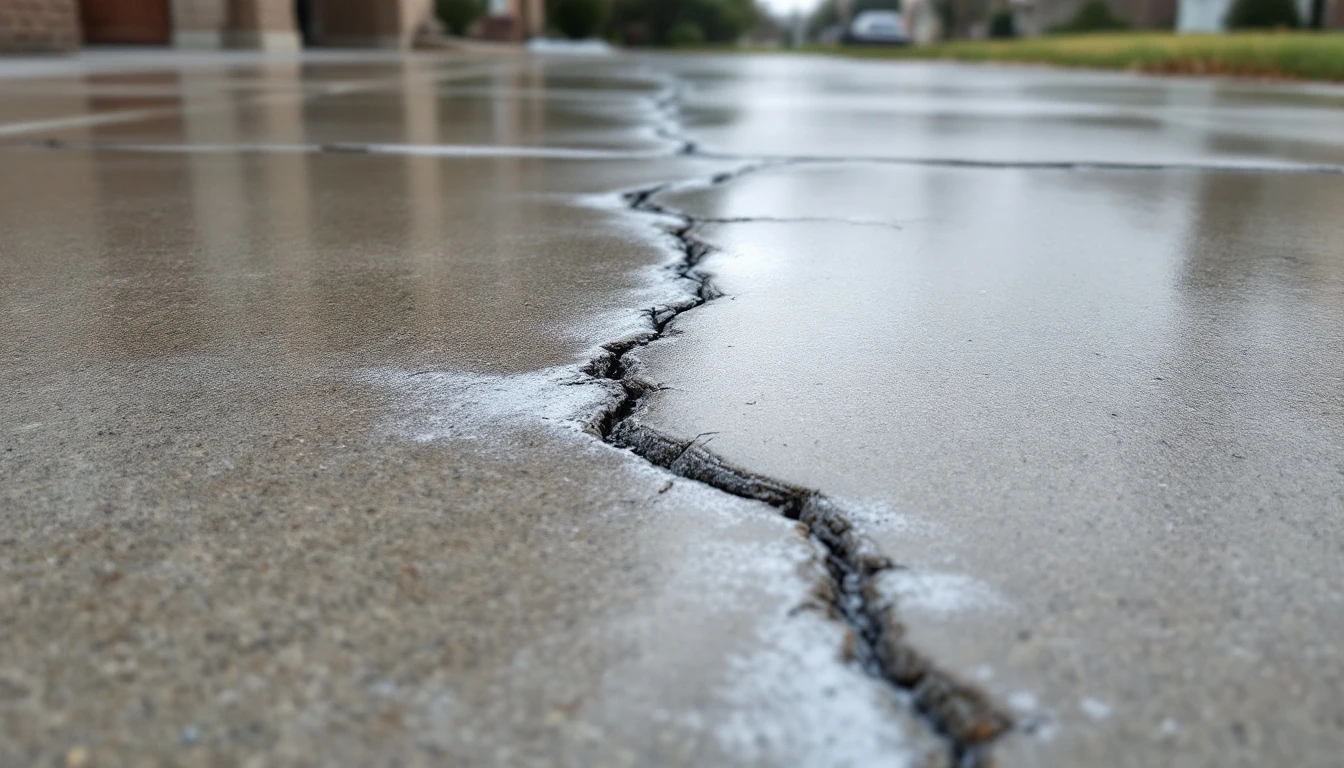
Your driveway might look great from the porch. But winter has a way of doing damage that doesn't show up until you're standing right on top of it. Freeze-thaw cycles, plow blades, rock salt, pooling meltwater, heavy tires, all of it works on the surface and everything underneath it. A spring walkthrough is your chance to catch that damage while it's still cheap to fix. Don't just scan for the obvious potholes. Check the cracks, the edges, the drainage, the surface texture, any staining, and anything specific to your driveway's material. The whole point is catching small stuff before it turns into a big one and figuring out what you can handle yourself and what needs a professional.
Why Spring Is When You Notice the Damage
Once the snow, ice, and leftover road salt clear out, the damage winter caused is finally visible. That's really the main reason spring works so well for this.
Freeze-thaw cycles do most of the heavy lifting here. Water sneaks into a crack or a porous patch, freezes, expands, and pushes outward on everything around it. Gradually cracks widen, asphalt loosens up, pavers shift out of place, concrete starts flaking.
Drainage is worth a close look too, and spring is a good time for it. Melted snow and spring storms will show you exactly where water's pooling or running toward your house. A spring check helps you:
- Catch cracks before they widen
- Spot potholes and low spots
- Confirm water is draining where it should
- Notice loose or crumbling edges
- Gauge how much damage salt and plowing caused
- Get repairs scheduled before contractors get booked solid
Before You Start: Safety and What to Bring
You don't need anything fancy for this. Wear shoes with real traction, throw on some eye protection if you're brushing off debris or running a pressure washer. Grab a tape measure, some chalk, a straight board or level, a ruler, a flashlight, and your phone for pictures. That's really all you need.
Photograph anything significant before you touch it. If you shoot the same spots every year, you build a record that tells you whether a crack is actually getting worse or just sitting there. And resist the urge to fix the damaged pavement with a screwdriver or crowbar to "test" it.
Spring Inspection Checklist
Clear the Surface First
Sweep off leaves, sticks, leftover sand, loose gravel, whatever's sitting there. You genuinely can't spot surface problems through a layer of winter debris.
Once it's clean, look for loose asphalt chunks, exposed aggregate, flaking concrete, chipped pavers, or any spot where the top layer is coming apart. Surface flaking or raveling shows the surface is wearing. It does not, by itself, prove the base or subgrade has failed. Moisture, freeze-thaw, de-icing chemicals, and traffic can all mark the surface. If the damage is widespread, identify the cause before choosing a repair. Sealcoat is a surface treatment with its own product limits.
Walk the Edges
Both sides, where the driveway meets grass, soil, the curb, or your garage. Edges take a beating because they usually have less support than the middle of the slab or pavement.
Watch for crumbling, sinking, or chunks that have come loose. Damaged edges also give water a path down to the base, which just makes drainage problems worse down the line.
Don't Just Look at Cracks, Map Them
Cracks aren't all created equal. Note roughly how wide and long the major ones are, and whether they're isolated or connected, straight or branching, forming a spiderweb pattern or not.
A handful of narrow, isolated cracks in asphalt? Probably fine with basic crack sealing. But if you've got a whole network of connecting cracks and the surface feels spongy or unstable underfoot, that's usually a base problem, not a surface one, and it needs more than filler.
Hunt for Potholes and Dips
Walk it slowly. Look for depressions, actual potholes, spots that sit noticeably lower than everything around them. A level or straight board laid across the surface will expose dips you might otherwise miss.
After it rains, go back out and see where the water's still sitting. A pothole that keeps refilling after every storm is a bigger deal than a shallow dent that dries out fast, standing water just keeps feeding the problem.
Trace the Drainage
This deserves real attention during a post-winter check. Watch where rain actually goes during or right after a storm. It shouldn't be collecting next to your garage, sitting along the edges, or angling toward your foundation.
Check your downspouts while you're at it, one dumping straight onto the driveway can quietly erode and settle the surface over time. And if drainage turns out to be the real problem, patching cracks and potholes is just going to be a temporary fix.
Look for Salt Damage, Oil, and Discoloration
Repeated use of de-icing products leaves marks like white residue, scaling, discoloration, spots that feel unusually soft or crumbly.
Oil stains matter especially on asphalt, since petroleum can actually break down the binder holding the pavement together. Clean stained spots with something made for your driveway material. Don't seal over a contaminated patch without prepping it properly first, it won't hold.
Check Joints and Paver Movement
Control joints and expansion joints are built into the slab on purpose. A control joint is often an open saw cut, and an empty joint is not automatically a defect or something that must be filled. Look for crumbling edges, spalls, or joint filler that the slab was built with and that has fallen out. Fill or seal a joint only when the joint design and the product instructions call for it.
Paver Driveways
check for units that have shifted, sunk, cracked, or left wide gaps between them. Also look for weeds coming up and joint sand that's washed away. Catching a paver that's just starting to shift is much easier than dealing with it after its neighbors start moving too.
What Spring Damage Looks Like, by Material
Asphalt
Expect cracks, potholes, raveling (loose surface aggregate), rutting, and possibly alligator cracking. A few scattered cracks are different from widespread, interconnected alligator cracking, which can be associated with weak support and is a reason to investigate. It is not a finished structural diagnosis, and it needs more than a surface patch.
Concrete
Check for cracks, scaling, spalling, settlement, and pop-outs. A slab that's slightly uneven might mean something's shifting underneath. Surface deterioration can come from several directions like moisture, freeze-thaw, de-icing chemicals. So whatever repair you pick should actually match the cause.
Pavers
Look for units that have moved, joints that have eroded, missing sand, damaged edge restraints, and settled spots. The upside with pavers is you can usually pull and replace individual damaged units without touching the rest of the driveway.
Gravel
Winter traffic and runoff cause potholes, ruts, washouts, and a flattened crown. Redistribute and compact loose material where needed. If water keeps carving the same channels through your driveway, fixing the grading and drainage matters more than just dumping on more gravel.
DIY vs Professional
Cleaning, documenting, clearing minor debris, swapping out paver joint sand, tackling small surface fixes with the right product, all reasonable DIY territory.
Call a professional when you're seeing major settlement, widespread alligator cracking, serious drainage issues, significant edge failure, large potholes, or concrete that's deteriorating across a big area.
Also, don't treat a structural problem like it's cosmetic. Sealing over an unstable base might make it look better for a while, but it won't fix what's actually wrong underneath.
Final Thoughts
This isn't about making your driveway look flawless the moment winter ends. It's about figuring out what actually changed and which of those changes need real attention.
A clean surface, documented cracks, checked drainage, inspected edges, and a look at what's specific to your driveway's material. That combination catches problems while they're still small. The real goal is finding the cause, not just patching whatever's visible on top.
At Drivewayz USA, we put together practical guidance on driveway maintenance, repair, materials, drainage, and long-term care. Asphalt, concrete, pavers, gravel, whatever you've got, a thoughtful spring check can help you protect it and plan the right work for the season ahead.
Frequently Asked Questions
Once the snow and winter debris have cleared enough to inspect safely. Exact timing depends on your local weather and what your driveway's made of.
Cracks, potholes, settlement, drainage, edges, surface wear. Pay extra attention to water, it's usually what makes everything else worse over time.
Yes, for minor, stable cracks with the right product and proper prep. Anything wide, growing, interconnected, or displaced should get a professional look.
Water gets into existing defects, freezes and thaws repeatedly, and weakens the pavement around it. Then traffic finishes the job by breaking away what's already compromised.
Not automatically. Sealants have their own requirements for temperature, moisture, and surface prep. Check the manufacturer's instructions, and make sure the driveway's clean, dry, and actually ready before you apply anything.