
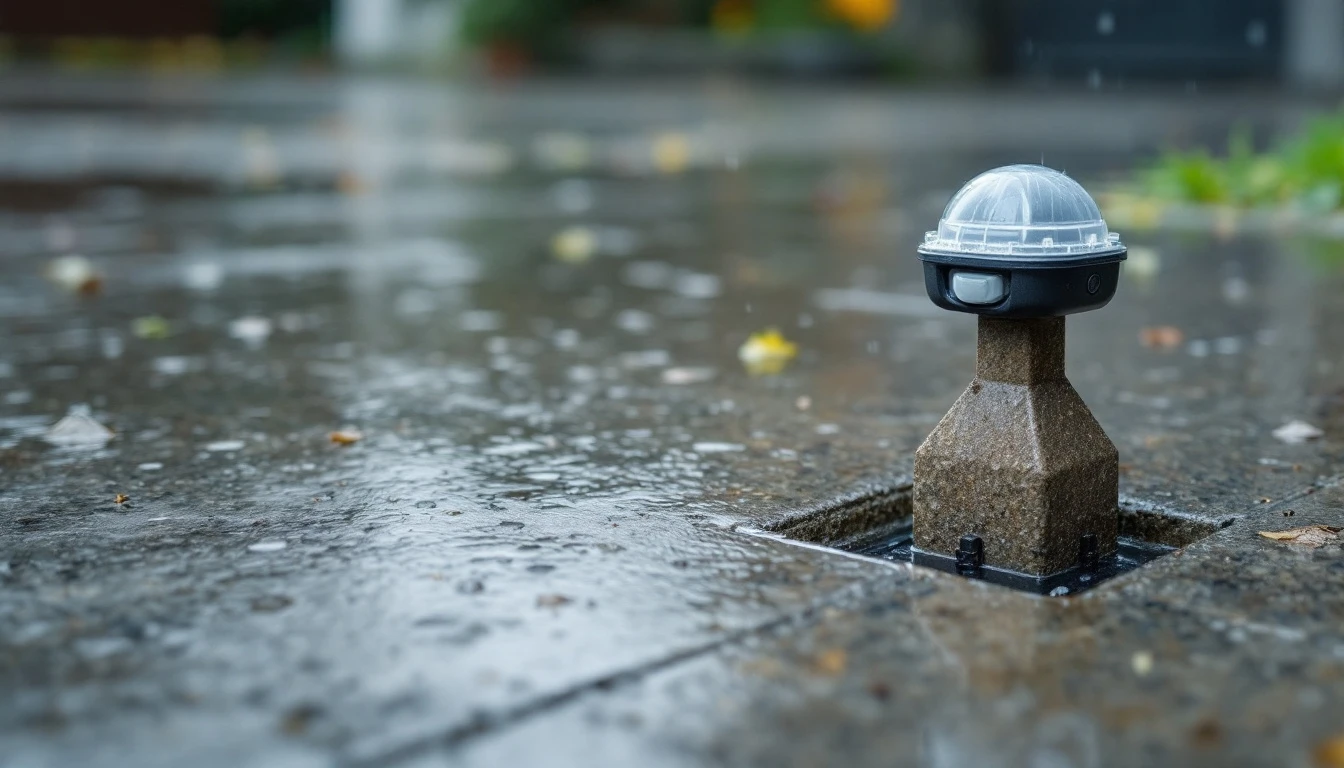
If your sprinklers ever click on the morning after a downpour, you already know the problem a rain sensor solves. It's a small add-on that stops your irrigation controller from running a scheduled cycle when the ground has already gotten plenty of water. For yards where sprinkler zones sit close to an asphalt driveway, a concrete slab, or a paver walkway, that little override can also mean less water sheeting across the pavement toward the street. A rain sensor won't fix bad grading, and it won't unclog a blocked drain. What it does is give your irrigation system a way to respond to actual weather instead of blindly following a timer. EPA's WaterSense homes technical sheet on rain sensors describes them as devices that interrupt a scheduled irrigation cycle after a set amount of rain has fallen. They do not re-aim sprinkler heads.
Why This Matters Near a Driveway
Most rain sensors sit somewhere outdoors, close to the controller or in another exposed spot, waiting to detect rainfall. Once it crosses the threshold you've set, it tells the controller to skip this one.
That matters most when a sprinkler head throws water toward hard pavement instead of soil. Grass and garden beds soak water up. Driveways don't. Whatever lands there just runs off, toward the edges, toward a low spot, sometimes straight into a storm drain or a neighbor's yard.
For example, sprinklers fire every Tuesday and Saturday morning, rain or shine. A big storm rolls through Monday night. Without a sensor, Tuesday's cycle runs anyway, dumping more water onto ground that's already saturated. With one, that cycle gets skipped. Here's the short version of what you gain:
- Less watering right after it's already rained
- Less runoff heading toward the driveway
- Tighter control over water near pavement edges
- Fewer repeated soakings of the driveway surface itself
- A sprinkler system that actually reacts to conditions instead of a fixed clock
How the Shutoff Works
A driveway rain sensor almost never measures moisture in the pavement itself. Instead, it reads rainfall and sends a signal to the controller telling it to hold off.
Detecting Rain
Older, more common designs use a material that swells or reacts when wet. Others rely on small rain gauges or electrical sensing. Whatever the method, the WaterSense rain-sensor sheet describes a device that interrupts watering once rainfall crosses a set amount.
The threshold is the part worth paying attention to. A good sensor lets you adjust that number, so a brief drizzle doesn't cancel a whole watering schedule while a real storm does. Where you set it should depend on your soil and your slope, heavy clay that drains slowly calls for different settings than loose, sandy ground that soaks water up fast.
Wired vs. Wireless
A wired sensor runs low-voltage cable straight to the controller, if the two are close together. A wireless model talks to a receiver mounted at the controller instead, which is often the easier route if running new wire would mean tearing up landscaping or cutting across a finished driveway. Either way, check that your controller actually supports the sensor before you buy one, and follow the manufacturer's install directions.
What a Rain Sensor Can and Can't Do for Your Driveway
Think of a rain sensor as an irrigation tool first. Its effect on the driveway is real, but indirect.
Less Water Hitting Pavement Repeatedly
Every time a sprinkler sprays onto asphalt or concrete instead of soil, that water becomes runoff rather than something a plant can use. A rain sensor cuts down on how often that happens by skipping cycles the landscape doesn't need. On a paver driveway, skipping cycles the landscape does not need can mean less irrigation water running across the joints. That does not repair erosion, settling, or a failing base.
What it won't do is fix a driveway that's graded wrong, unclog a blocked drain, patch a leaking irrigation line, or correct a sprinkler head that's aimed at the pavement instead of the lawn. Those are separate problems.
Drier Pavement Edges
The edge where the lawn meets the driveway takes the most abuse. A sprinkler head spraying across that line, run after run, tends to leave standing water right along the seam. A rain sensor cannot redirect that spray. It can only interrupt a cycle after enough rain has fallen. Moving water off the pavement means re-aiming or relocating the head.
Installing One: DIY or Call a Pro?
How much work this takes depends on your controller, the type of sensor, and where the wiring needs to go.
Picking a Spot for the Sensor
It needs open exposure to real rainfall. Keep it away from:
- Roof overhangs
- Thick tree cover
- Spots where a sprinkler head sprays it directly
- Any nearby source of unusual heat or moisture
It also needs to be somewhere you can reach for cleaning or troubleshooting without stepping into traffic or awkward terrain. If you're planning a new driveway or landscaping project from scratch, working out the sensor's wiring and placement before anything gets paved will save you a headache later.
When to Bring in Help
A wireless sensor paired with a compatible controller is often a reasonable DIY job, read the manual, follow the steps. Where it gets trickier is new wiring, controller programming issues, or working around a driveway that's already in the ground. And if the fix seems to require cutting into or trenching through an existing driveway just to run a wire, it's worth looking at other routing options first, a professional can usually find one.
Seasonal Maintenance Checklist
Rain sensors are low-maintenance, but not zero-maintenance.
Spring
Clear out anything that built up over winter, like dirt, pollen, dead leaves. If it's a wireless unit, check the batteries on whatever schedule the manufacturer recommends.
Summer
Run a manual test. Trigger the sensor and confirm the controller actually responds by skipping the cycle. Worth doing before peak watering season hits.
Fall
Falling leaves are the main threat here. Keep the sensor uncovered so rain can still reach it.
Winter
If you winterize your irrigation system, follow the sensor manufacturer's guidance for cold weather. Some are meant to stay outside year-round, others aren't. Don't just assume, check the manual for your specific model.
What Does It Cost?
Prices swing a lot depending on the technology, the brand, and whether the sensor plays nicely with your existing controller. A basic model costs less than a smart wireless setup, and labor adds up fast if wiring has to be routed around established landscaping or an existing driveway.
Because labor rates vary so much by region, there's no single "installed cost" that applies everywhere. It's worth pricing out the whole package like the sensor, receiver if you need one, wiring, and labor rather than just the unit price. And keep expectations realistic, how much water (and money) you actually save depends on your local rainfall, your existing schedule, and how well the system gets programmed, not just on having a sensor installed.
Choosing the Right One
Start with what your controller supports, not with whatever's cheapest on the shelf.
Check Compatibility First
Your controller's manual will say which sensors it works with. Some smart controllers already factor in weather data on their own and may not need a separate sensor at all. EPA's WaterSense specification for weather-based irrigation controllers treats rainfall shutoff devices and soil-moisture sensors as separate from weather-based controllers. Rainfall devices and soil-moisture sensors interrupt or adjust a schedule that was already set. A weather-based controller uses weather data to build the schedule.
Look for an Adjustable Threshold
More control over when the system shuts off is generally better, but don't default to the lowest setting available. The goal is skipping truly unnecessary cycles, not underwatering your plants.
Don't Skimp on Build Quality
These sit outside year-round, through sun, dust, bugs, and temperature swings. Buy something built for that, and keep up with whatever maintenance the manufacturer recommends.
Troubleshooting Common Problems
Sprinklers Still Run After It Rains
Check the wiring connection, the controller's settings, and how the rainfall threshold is set.
The System Stays Off Too Long
Look for debris sitting on the sensor, or check how the reset timing is configured.
Sensor Triggers for No Obvious Reason
Direct spray from a nearby sprinkler head is a common culprit, along with poor placement or some other unexpected moisture source.
The Wireless Sensor Stops Responding
Batteries, receiver connection, and signal strength are the usual suspects.
If none of that solves it, the manuals for your specific controller and sensor are the next stop or call in an irrigation pro.
Final Thoughts
A rain sensor is a small piece of hardware, but it makes an automatic irrigation system noticeably smarter about real weather. Paired with sprinkler heads aimed where they should be, a sensible watering schedule, and a driveway that drains the way it's supposed to, it can meaningfully cut back on wasted water and runoff around asphalt, concrete, and paver surfaces alike. It won't fix a drainage problem or replace a properly built driveway, but it will stop your sprinklers from adding insult to injury after the sky's already done the watering for you.
Explore more Drivewayz USA guides on driveway drainage, pavement edges, and maintenance.
Frequently Asked Questions
It detects rainfall and tells the controller to skip a scheduled cycle once a set amount has fallen, cutting down on unnecessary watering and runoff.
No, it only affects irrigation-related water. Rain itself still falls where it falls, and drainage, grading, and sprinkler placement still matter.
They're not really competing, a rain sensor reacts to rain at your specific property, while a weather-based controller draws on broader forecast data to adjust schedules ahead of time. Whether a controller can use weather data together with a local rain sensor depends on the model. Check its compatibility and setup guidance.
Somewhere open, away from roof lines, tree cover, and direct sprinkler spray. Always follow the specific placement guidance in your unit's manual.
Not necessarily. It comes down to whether you've got an automatic system in the first place, how it's scheduled, your local rainfall patterns, and how your landscape and driveway are laid out.