
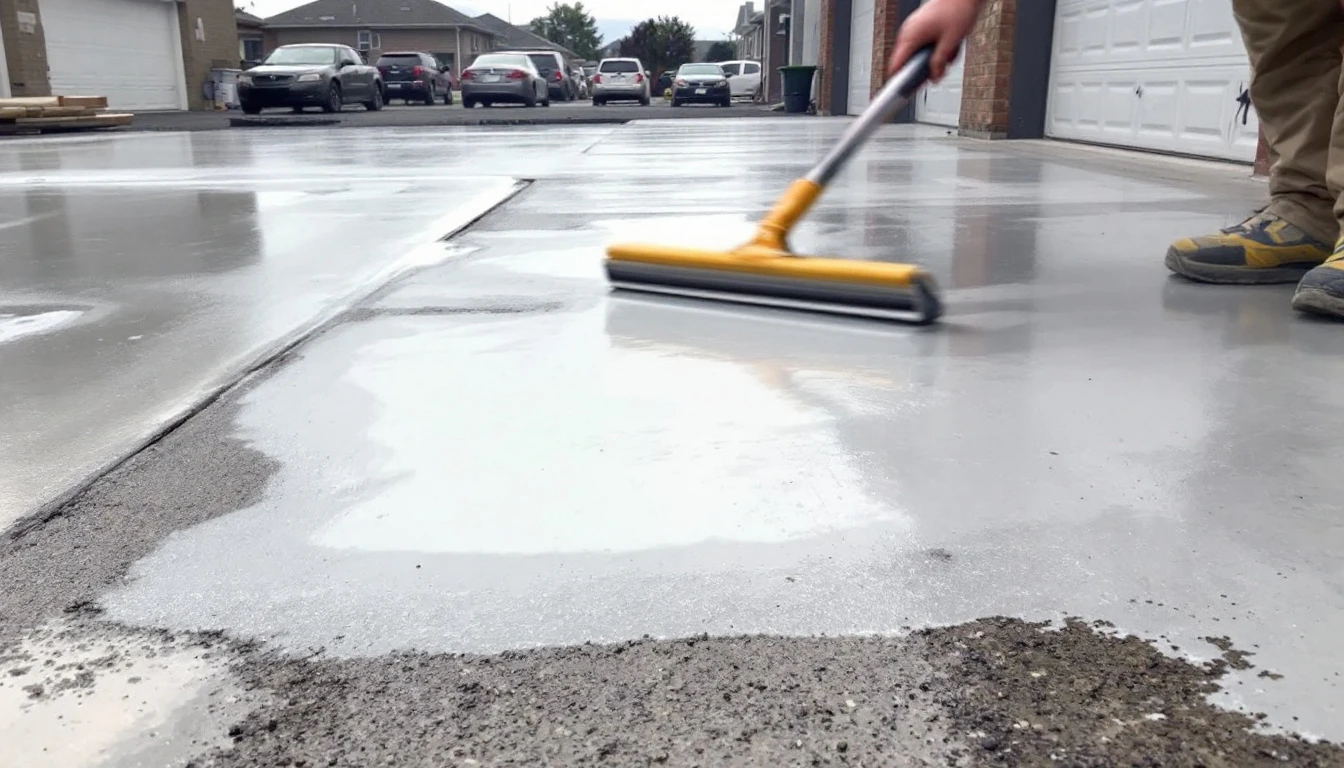
Not every worn-out concrete driveway needs to be jackhammered up and poured from scratch. If the slab underneath is still structurally sound but the surface has seen better days — wear marks, discoloration, hairline cracks, shallow pitting — then a latex-modified overlay is one of the more practical resurfacing routes available. Latex-modified (and polymer-modified) cementitious materials exist because plain cement coatings have real limitations. Add the right polymer to the mix, and you can pick up better adhesion, more flexibility, improved tensile strength, and better resistance to abrasion and wear. But here's the thing homeowners often skip past — the real question isn't how good the new surface will look. It's whether your existing driveway is even a decent candidate for an overlay in the first place.
What Is a Latex-Modified Overlay?
It's a thin resurfacing layer applied directly over your existing concrete driveway. The mix combines a cement binder with latex or a similar polymer modifier, which helps the new material actually stick to the old concrete and gives it properties a basic cement coating just can't match.
The overlay becomes your new driving surface, while the original slab stays put underneath. That's a big part of the appeal: it's far less disruptive than tearing out the whole driveway.
An overlay isn't magic. It won't fix major settlement, unstable soil, badly deteriorated concrete, or cracks that are actively moving. If the ground underneath keeps shifting, those problems will eventually work their way back up through the new surface.
How Latex Modification Actually Helps
Better Bonding, More Flexibility
The whole point of adding polymers to a resurfacing material is to change how the binder behaves mechanically. Polymer-modified cementitious materials are used for resurfacing specifically because they bond to existing concrete better and tolerate more movement than a plain cement coating can.
Results vary a lot by product and installation quality, so it's worth asking your contractor exactly which overlay system they're proposing rather than assuming all latex-modified products are interchangeable.
A Thin Layer, Not a New Slab
The whole idea behind an overlay is adding a new wearing surface without ripping out concrete you don't need to remove. How thick that layer ends up depends entirely on the product and how it's applied. The contractor needs to stick to the manufacturer's specs for thickness, mixing, bonding, and cure time. That matters: go too thin, too thick, or skip proper surface prep, and the whole thing can underperform.
Is Your Driveway Even a Good Candidate?
Before you get excited about a latex-modified overlay, take a hard look at what you're actually working with. Good candidates for resurfacing generally check these boxes:
- The slab is structurally stable
- No major settlement anywhere
- No widespread delamination
- Damage is mostly cosmetic, not structural
- The surface can accept proper bonding prep
Minor cracks and shallow surface flaws can often be patched up before resurfacing; the right fix depends on the crack type and what the overlay manufacturer requires.
When an Overlay Isn't the Answer
If you're seeing large cracks that are actively moving, noticeable vertical shifts between slab sections, severe settlement, frost heave, widespread spalling, or serious structural decay, that's a sign to dig deeper before resurfacing anything.
Take a driveway where one section has sunk several inches because the soil underneath gave way. Slapping a decorative overlay on top might make it look better for a while, but it does nothing for the actual problem. You need to fix the structural or drainage issue first — the overlay comes after, not instead of it. This is really the line between resurfacing and replacement. Resurfacing works on a base that's still sound. Replacement becomes the right call once the base itself has failed.
How the Installation Actually Works
- Inspect and prep the concrete: Check the existing slab for cracks, weak spots, contamination, drainage issues, and old coatings first. Oil stains, dirt, loose concrete chunks, and old sealers all get in the way of proper bonding. This step gets skipped more often than it should, but it's the most important one.
- Clean and profile the surface: Depending on the product, this might mean pressure washing, mechanical grinding, or some combination of approved methods. The goal is a clean surface with the right texture profile for whatever overlay system you're using. Just hosing off the driveway and pouring material over a smooth, still-contaminated slab won't hold up.
- Fix what's broken first: Cracks, spalled areas, holes — all of it needs repair with materials that are actually compatible with the overlay system you've chosen. If there's active structural movement, that needs a real investigation, not a quick patch and a prayer.
- Apply the bonding layer and overlay: Some systems call for a bonding primer or slurry coat before the overlay goes down. Everything gets mixed and applied per the manufacturer's instructions. The water ratio matters a lot here. Too much water thins out the mix and weakens the finished product.
- Finish and cure: From here, you can add texture or a decorative finish depending on the system — broom finishes, integral color, stamped patterns, whatever fits. Curing time depends on the material, weather, thickness, and humidity, and nobody should be driving on it until the installer gives the green light.
What You Get Out of This
Done right, a latex-modified overlay has some genuine upsides:
- Less demolition — the old slab stays if it's still solid enough
- A refreshed look — discoloration and worn spots get covered
- Design options — colors, patterns, and textures depending on the product
- Less mess overall — you skip the demolition and hauling that comes with full replacement
- Better material performance — polymer modification improves adhesion and flexibility compared with a plain cement coating
Overlay or Full Replacement?
This decision should come down to what condition your driveway is actually in, not just how it looks from the curb. A slab that's stable but mostly cosmetically worn is usually a fine candidate for resurfacing. One with real structural damage, unstable sections, or serious settlement probably needs to come out entirely.
What Does This Cost?
There's no clean national average you can rely on here. Price depends on the size of your driveway, how much prep and repair it needs, what material and finish you pick, local labor rates, how easy the site is to access, and the overall condition of the existing slab.
Be a little skeptical of a flat per-square-foot quote handed out before anyone's actually looked at your driveway. A contractor might lead with a low base number, then tack on charges for crack repair, grinding, patching, or decorative work once they see the real scope. Ask for an itemized estimate that breaks out prep, repairs, materials, finishing, sealing, and any traffic restrictions.
Final Thoughts
A latex-modified overlay can be a smart move when your existing concrete driveway is structurally fine but showing its age on the surface. The polymer modification does change how the material behaves, but how well the finished product actually performs comes down to prep work, material choice, installation quality, curing, and the shape the original concrete was in to begin with.
At Drivewayz USA, the goal is helping homeowners understand their options before they commit to a project. From materials and resurfacing to maintenance and installation, you'll find practical guidance to help you make a more informed call about your driveway.
Frequently Asked Questions
It's a thin cement-based resurfacing layer that includes latex or another polymer modifier, applied over an existing concrete driveway. It's meant to improve both the look and the performance of the surface, assuming the concrete underneath is actually a good candidate for resurfacing.
No. It's not built to handle structural movement, severe settlement, or widespread concrete failure. Anything that serious needs to be evaluated and repaired before resurfacing even enters the conversation.
Not as a rule. This type of overlay generally needs a rigid concrete substrate and a bonding system built for that. Asphalt behaves very differently, so don't assume a standard concrete overlay product will work the same way on it.
There's no single answer. It depends on the specific material, how well it was installed, the condition of the concrete underneath, your climate, how much traffic it sees, and how well it's maintained. A contractor should be able to give you product-specific expectations rather than a blanket promise about years of life.
Neither wins in every case. Resurfacing makes sense when the existing slab is still structurally sound and mainly needs a surface refresh. Full replacement becomes the better option once the base or supporting structure has real problems.