
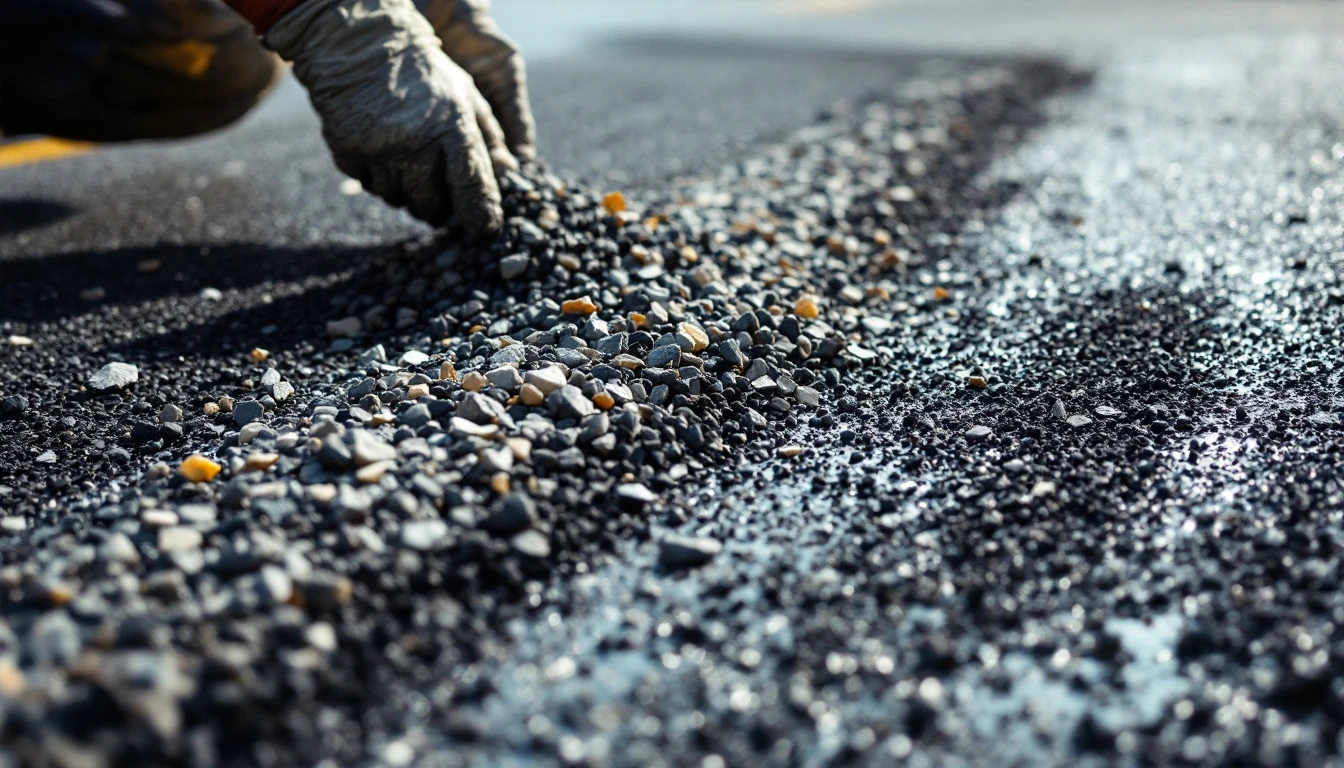
If you've been pricing out driveway paving lately, you've probably run into chip seal somewhere along the way. Also known as tar and chip, it's a hybrid surface of asphalt binder topped with crushed stone. That gives you something sturdier than gravel without the price tag of a full asphalt or concrete pour. Whether chip seal actually works well on your property comes down to a handful of things: how your existing driveway is holding up, drainage, how the base was prepped, your local climate, how much traffic the driveway sees, and maybe who's installing it.
What Exactly Is a Chip Seal?
Asphalt binder on a surface that's already been properly prepped, then immediately covered with crushed aggregate before the binder has a chance to cool. That stone gets rolled in so it locks into place and becomes the actual wearing surface. The Federal Highway Administration classifies chip sealing as a pavement preservation treatment, something used to seal a surface, patch up minor cracking, and boost friction, rather than rebuild a driveway from scratch.
Once it's done, you're left with a surface that has real texture to it, almost pebbly underfoot. And since aggregate comes in different colors and stone types, there's some room to pick a look that fits your property.
But chip seal works best when the base underneath is already solid. This is a surface treatment, not a fix for a driveway that's crumbling, sinking, or riddled with potholes. If your base has serious problems, chip seal isn't going to solve them.
Chip Seal vs. Regular Asphalt
Standard asphalt gives you a smooth, uniform surface. Chip seal, by contrast, leaves the stone exposed at the top, which changes more than just the look. It affects how the driveway feels underfoot, how much grip you get, and how comfortable it is to walk, bike, or skateboard on.
That texture cuts both ways. You get better skid resistance with a chip seal, but asphalt is going to feel smoother for anyone rolling wheels across it. If you're weighing the two purely as a budget decision, chip seal often comes out ahead on upfront cost while still delivering a genuinely paved surface.
What Does It Actually Cost?
There's no single number that applies everywhere. Driveway size, aggregate type, binder choice, labor rates in your area, hauling costs, drainage repairs, and the state of your existing base all move the price around. A 600-square-foot driveway at that rate lands roughly somewhere between $1,200 and $3,000. If your project needs significant grading, new drainage work, excavation, or a fresh aggregate base underneath, expect that number to climb.
It's also worth noting that public agencies see similar cost advantages on a larger scale. Minnesota's Department of Transportation has reported that chip sealing can run about a quarter to a fifth of what a full asphalt overlay costs. Skip the national average and get a quote based on your actual property. That's the only way that shows real cost.
How the Chip Seal Installation Actually Goes
A chip seal job that holds up long-term almost always comes down to prep work. Here's roughly how it unfolds:
- The base gets inspected and prepped: Before anything else happens, the contractor checks whether the existing base can actually support a new surface. Soft spots, drainage issues, settlement, structural cracking, all of that needs to be dealt with first. Since chip seal doesn't add structural strength the way a full-depth pavement system would, this step matters more than people expect.
- Binder goes down: The asphalt binder is usually an emulsified type, though other binders get used depending on the job. It spread across the prepped surface at a set rate.
- Aggregate gets spread while the binder's still tacky: Timing is everything, wait too long and the stone won't bond properly.
- A roller presses everything into place: This locks the aggregate into the binder and creates the finished surface. FHWA (Federal Highway Administration) describes the process the same way, first binder, then aggregate, and then rolling.
- Loose stone gets swept away: There's almost always some leftover loose aggregate right after installation. Sweeping clears it out and leaves the properly bonded stone behind.
Curing time depends on weather and material conditions, so it's worth just following whatever timeline your contractor gives you for when it's safe to drive on.
Why Homeowners Choose It
It Costs Less Upfront
Chip seal tends to be one of the more budget-friendly paving options out there, and that gap widens the bigger your driveway gets.
It Grips Well
The exposed stone creates real texture underfoot, and FHWA lists improved friction as one of the main reasons agencies use chip seal in the first place.
It Keeps Water Out
One of chip seal's core jobs is blocking water from soaking into the pavement below. On a driveway with a solid base, that alone can slow down long-term wear.
It Fits Quickly
Because it's a surface treatment rather than a full rebuild, installation tends to move quicker than heavier paving jobs.
Where It Falls Short
Chip seal isn't the right call for every driveway. The texture, while great for grip, is rougher than asphalt or concrete. Some people just don't like that underfoot. Loose chips can also turn up after installation, especially in the early period before everything's fully settled. FHWA itself notes that chip loss is a known issue, and how much of a problem it becomes depends partly on traffic levels.
Weather plays a role too, these are temperature-sensitive materials, and a contractor needs to account for local climate when scheduling and picking materials. And despite what some sales pitches imply, chip seal isn't maintenance-free. It'll need attention over time just like any paved surface.
Chip Seal, Gravel, Asphalt, or Concrete - How Do They Compare?
- Gravel is usually the cheapest to install, but it moves around, ruts form, and you'll be regrading and topping it off periodically.
- Asphalt gives you a smoother ride and remains one of the most common residential paving choices. It costs more going in but can last a long time with proper design and upkeep.
- Concrete tends to be the longest-lasting and lowest-maintenance of the group, but it's also the priciest, and fixing it when it does crack is more involved.
- Chip seal lands in the middle, more durable and stable than loose gravel, more textured and less expensive than asphalt or concrete. For a lot of homeowners, that middle ground is exactly the point.
Keeping a Chip Seal Driveway in Good Shape
Maintenance isn't complicated, but it does matter. Keep the surface clear of leaves, dirt, and pooled water. Walk or drive the length of it now and then to catch early cracking, drainage trouble, potholes, or spots where the stone's coming loose.
Oil and chemical spills, petroleum products don't play nice with asphalt-based surfaces. Aggressive scraping or a poorly set plow blade can tear up the surface aggregate. If you're somewhere with regular freeze-thaw cycles, pay extra attention to drainage, since water that gets into cracks and then freezes is a fast track to bigger problems. Resealing depends on your climate, traffic, and how the surface is holding up.
Final Thoughts
Chip seal can be a genuinely smart, affordable alternative to full asphalt, as long as the site has a sound base, decent drainage, and you go in with realistic expectations about texture and upkeep. You're getting asphalt binder and aggregate combined into a surface with solid traction and a look you won't get from plain blacktop.
The real key is prep work. Skimp on it, and even a cheap surface can turn into an expensive headache down the road. Get it right, and a properly installed chip seal driveway can hold up for years. It's not a coincidence that public agencies lean on chip seals so heavily for pavement preservation. They're genuinely effective at protecting a sound surface from water and wear.
Before you commit to chip seal, asphalt, gravel, or concrete, take stock of your current driveway's condition, how much traffic it handles, your drainage situation, your climate, what look you're going for, and how much upkeep you're realistically willing to do.
Drivewayz USA can walk you through your options, costs, and installation requirements if you want help figuring out the right fit for your property. Contact us to check out their driveway guides and services.
Frequently Asked Questions
It varies a lot based on traffic, climate, drainage, and how well it was installed. Public agencies often report service lives in the range of several years, with some applications stretching to 7–10 years. Residential driveways may perform differently than public roads, so it's worth asking your contractor for a realistic estimate specific to your property.
Generally, yes, chip seal tends to cost less than a full asphalt overlay. But real numbers depend heavily on your location and how much prep work is needed, so get an actual quote rather than assuming.
Depends what you're after. Chip seal bonds into a fixed surface, so you avoid the ruts and shifting that come with loose gravel. Gravel, though, is usually cheaper upfront and gives you a different aesthetic, neither is objectively "better."
Yes, as long as the existing pavement or base is structurally sound and drains properly. Anything seriously damaged underneath needs to be repaired before the chip seal goes on top, it won't fix structural problems on its own.
Yes. Regular inspection, cleaning, drainage checks, and prompt repairs all help it last. How often you need to do this depends on your climate, traffic, and how it was installed, there's no one-size-fits-all schedule.