
If you've ever watched a brand-new driveway in Oregon crack after its first winter, you know that just looks aren't everything. In Oregon, the weather is the deciding factor for you. Soggy falls, freezing snaps, and soil that never quite dries out all season. Pick the wrong material and you'll be patching potholes by year three. Pick the right one, installed the right way, and you won't think about your driveway again for a couple of decades. Here's what actually holds up, what doesn't, and why.
Why Oregon Is Tougher on Driveways Than Most States
A driveway that thrives long in Arizona might fall apart here within a few seasons. That's because Oregon throws a specific combination of problems at a slab of pavement:
- Rain that doesn't let up for weeks at a time
- Freeze-thaw cycles, especially east of the Cascades and at higher elevations
- Soil that shifts and settles when it stays wet
- Moss and algae creeping across any surface that holds moisture
Put Those Together and You Get a Simple Rule
whatever you install has to manage water, or it will eventually fail because of it.
Asphalt Driveway: The Workhorse Choice
Ask a paving contractor in Oregon what they install most, and odds are it's asphalt. There's a reason for that, it flexes. When temperatures swing, asphalt expands and contracts instead of snapping, which matters a lot in a state where freeze-thaw cycles are common in colder pockets.
What makes it a good fit here:
- It shrugs off temperature swings better than rigid materials
- It goes in faster than concrete
- It costs less upfront
- Cracks and wear spots are relatively cheap to patch
Example
One Portland homeowner switched from gravel to asphalt after years of watching heavy rain wash their driveway into ruts. Once the asphalt went in with proper grading underneath the drainage problems disappeared.
The Catch
asphalt needs to be resealed every few years. Skip that maintenance and water will find its way in, and once it does, the clock speeds up on replacement.
Concrete Driveway: Built to Last
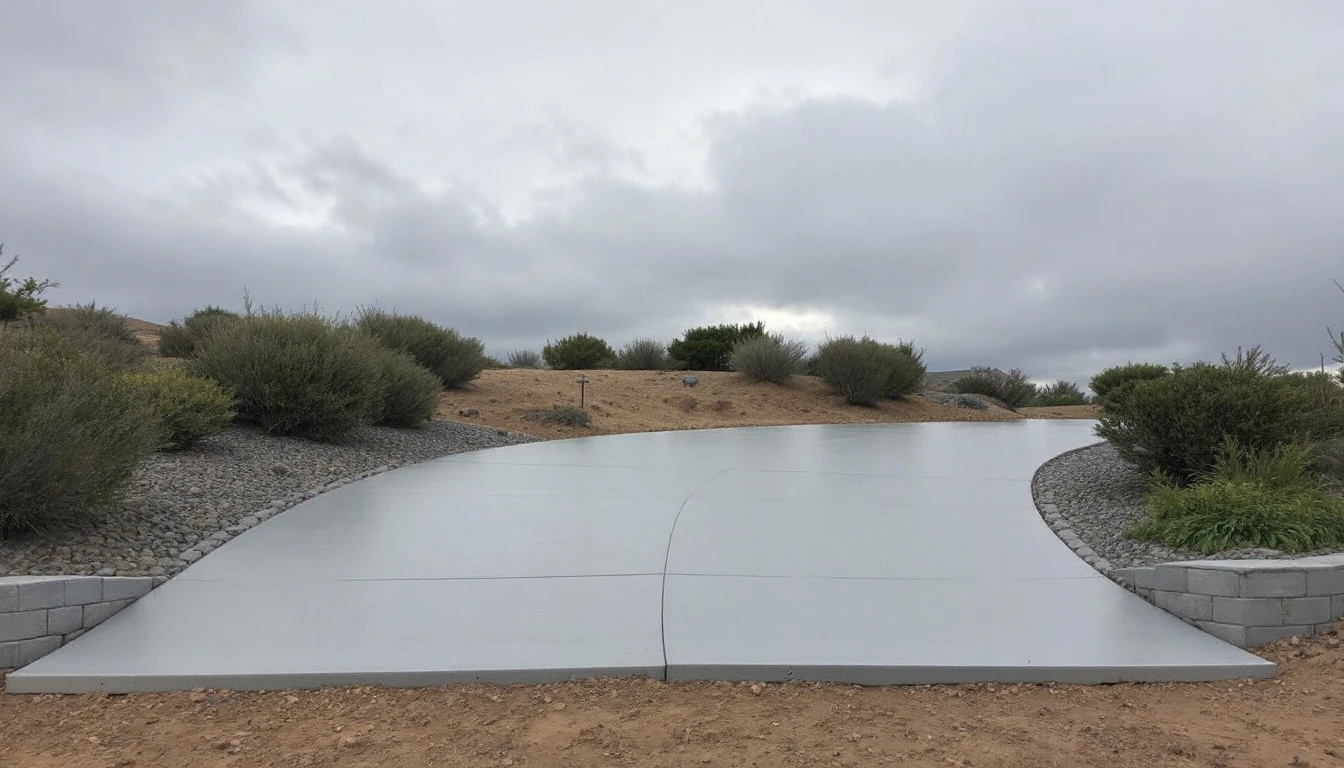
Concrete is the other heavyweight option. It's tough, it looks clean, and it can carry serious weight without flinching.
Where it shines:
- Decades of use with little structural trouble
- Barely any routine upkeep
- Handles heavy vehicles without a problem
- A crisp, modern look that asphalt can't quite match
If a contractor skips the expansion joints or the drainage plan is sloppy, Oregon's wet, shifting soil will eventually crack it. This is a material where the installation matters just as much as the material itself.
Gravel Driveway: Cheap Now, Work Later
Gravel is the budget option, and it's a reasonable one for rural properties or driveways that don't see much traffic. But "affordable" and "low-maintenance" are not the same thing here.
Heavy Oregon rain has a habit of washing gravel into ruts and low spots, which means you're regularly adding fresh material just to keep the surface even. A homeowner outside Bend, for instance, tops off their gravel driveway every year. A trade-off they accept in exchange for the lower cost.
Pavers Driveway: The Best-Looking Option That Also Performs
Pavers, whether concrete, brick, or natural stone tend to get chosen for looks first. But they actually solve some of Oregon's drainage headaches better than solid slabs do, because water can pass through the joints between units instead of pooling on top.
Why they hold up well:
- Wide range of styles and finishes
- Individual pavers can shift slightly without cracking the whole surface
- Damaged sections can be swapped out one at a time
- Naturally better drainage than a single poured surface
The trade-off is in the prep work. Pavers demand a properly built base. Skip that step and you'll see shifting once the ground gets saturated.
Permeable Driveways: The Newer, Eco-Minded Pick
More Oregon homeowners are turning to permeable materials like porous asphalt or permeable pavers, partly for the environmental upside and partly because some local jurisdictions are starting to favor them.
These surfaces let water soak straight into the ground instead of running off, which cuts down on erosion, puddling, and neighborhood flooding. For anyone trying to build a more sustainable property, or just tired of standing water at the end of the driveway, this is worth a look.
Which One Should You Choose?
There's no single right answer, it depends on how you weigh a handful of factors:
- How well it handles rain and freezing temperatures
- How it drains water
- How much upkeep you're willing to do
- What kind of vehicle traffic it needs to support
- What you're comfortable spending, both now and over time
In short:
Material
Best For
Asphalt
Balanced Cost, Durability, and Flexibility
Concrete
Long-Term Durability, If Installed Precisely
Gravel
Tight Budgets, Rural or Low-Traffic Driveways
Pavers
Looks Plus Solid Performance
Permeable Options
Eco-Conscious Homeowners Managing Runoff
Final Thoughts
Honestly, there's no single "best" driveway material for Oregon homes. It really comes down to your budget, your property, and how much upkeep you're actually willing to keep up with. Asphalt continues to be the default pick for most homeowners simply because it hits that sweet spot between cost and performance. Concrete and pavers pay off for people willing to spend more upfront on a quality install. And gravel or permeable surfaces cover the situations where the mainstream options don't quite fit tighter budgets, specific drainage needs, that sort of thing.
If you're trying to sort through these choices, Drivewayz USA can walk you through what makes sense given local conditions here in Oregon. Whether you're replacing a driveway that's seen better days or starting fresh with a new build, we can help you land on the right approach.
Frequently Asked Questions
Asphalt tends to be the top overall pick because it flexes with temperature changes and holds up well in wet weather. Concrete and pavers are strong alternatives depending on your budget and style preferences.
It can, especially if the driveway wasn't installed with proper drainage. Materials that shed or absorb water well and installations that account for Oregon's rainfall tend to last much longer.
It works fine for rural or low-traffic properties, but expect to replenish it regularly since heavy rain washes gravel out of place over time.
With regular sealing and basic upkeep, asphalt driveways in Oregon commonly last 15 to 25 years.
For most homeowners dealing with heavy rainfall, yes, they help manage runoff, reduce puddling, and support more sustainable landscaping.