
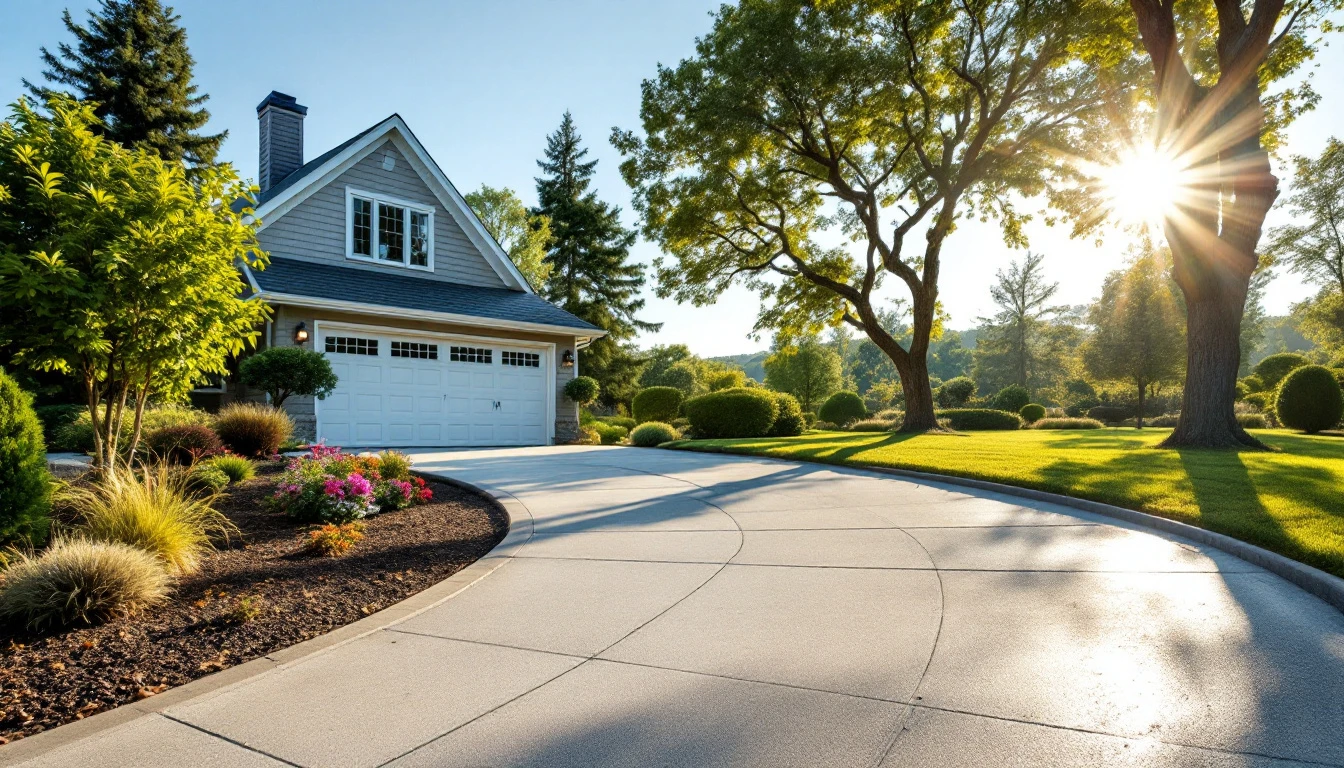
There's no single "best" driveway material that works for every California home and honestly, anyone who tells you otherwise is probably trying to sell you something. A driveway in Eureka deals with a completely different set of stresses than one in Palm Springs. Salt air, blistering inland heat, wildfire risk, mountain freeze-thaw swings. California throws a bit of everything at homeowners, and the material you pick needs to match what your specific property is up against. This guide walks through the main options, what they're actually good at, where they tend to fall short, and how to think through the decision instead of just picking based on price.
Know Your Climate Before You Know Your Material
Before you even start comparing concrete versus pavers versus asphalt, it helps to be honest about what your driveway will live through day to day:
- Coastal properties fight moisture, salt air, and slow corrosion
- Inland areas bake under intense heat and UV for months at a time
- Higher-elevation zones deal with freeze-thaw cycling
- Dense urban lots often care more about looks and drainage than raw toughness
Concrete Driveway: The Dependable Default
Concrete keeps showing up as a top pick for California driveways, and it's not hard to see why. Because it's tough, it lasts, and it doesn't demand much from you once it's down.
What Makes It Work Here
Concrete handles both coastal dampness and inland heat reasonably well when it's installed correctly. It also reflects sunlight better than dark asphalt, which matters a lot once temperatures climb. A few reasons people keep choosing it:
- It lasts a long time without much upkeep
- UV exposure barely touches it
- You can stamp it, stain it, or texture it to fit almost any look
A Real Example
Walk through newer neighborhoods around Los Angeles and you'll spot a lot of decorative concrete, homeowners like being able to match the driveway to a modern facade without sacrificing durability. Sealing it periodically keeps small surface cracks from forming as temperatures shift throughout the year.
Where It Can Go Wrong
Skip proper joints or base prep and concrete will crack, full stop. In earthquake territory especially, expansion joints aren't optional. Because they keep ground movement from turning into structural damage.
Asphalt Driveway: Budget-Friendly, but Climate-Dependent
Asphalt still appeals to a lot of homeowners who want a solid driveway without concrete's price tag.
Where It Earns Its Keep
It's a strong fit for milder climates, though it can get soft when temperatures spike. The upside:
- Cheaper than concrete up front
- Goes down fast
- Resurfacing and patching are relatively painless
A Real Example
Cooler pockets of Northern California tend to be kind to asphalt. The flexibility that makes it prone to softening in heat actually helps it resist cracking in milder conditions. Most owners reseal every few years to stretch its lifespan further.
Where It Can Go Wrong
Inland valleys are a different story. Extreme heat can soften asphalt enough that heavy vehicles leave ruts behind. If you go this route somewhere hot, plan on sealing it regularly, it's not optional maintenance, it's the price of admission.
Pavers Driveway: Best Looks, Most Flexibility
If appearance and adaptability top your list, pavers are hard to beat.
Why Homeowners Gravitate Toward Them
Because pavers are individual pieces rather than one solid slab, they can shift slightly without cracking. A real advantage in areas prone to soil movement or seismic activity. Standout benefits:
- Tons of design flexibility and visual variety
- Damaged sections can be swapped out individually instead of repairing the whole surface
- Naturally resistant to cracking compared to poured materials
A Real Example
In higher-end California neighborhoods, pavers often get chosen specifically because they play well with landscaping and tend to boost curb appeal. They also tolerate minor ground shifting better than a single concrete slab would.
Where It Can Go Wrong
Get the base prep wrong and pavers will drift out of place over time. This is one material where cutting corners during installation shows up years later.
Gravel Driveway: Practical for Big, Rural Lots
For sprawling rural properties, gravel is often the only material that makes financial sense.
Where It Shines
Long private driveways are expensive to pave with anything else, which is exactly where gravel earns its reputation. What it has going for it:
- Cheap to install
- Drains well on its own
- Occasional leveling is basically all the maintenance it needs
A Real Example
Out in Central California, homeowners with long stretches of driveway often default to gravel simply because covering that much ground with concrete or asphalt would cost a fortune.
Where It Can Go Wrong
It needs regular upkeep to stay level, and the dust and loose stone it kicks up make it a poor match for tighter urban lots.
Permeable Driveways: The Eco-Conscious Option
As sustainability becomes more of a priority across California, permeable materials are picking up steam.
Why They're Worth a Look
These surfaces let water pass through instead of pooling or running off, which helps recharge groundwater and ease pressure on local drainage systems. Key advantages:
- Helps satisfy local environmental requirements
- Cuts down on standing water
- Performs noticeably better during heavy rain
A Real Example
In communities that lean environmentally minded, porous concrete or permeable pavers are a common choice. Because they check the sustainability box without giving up much on style.
Where It Can Go Wrong
These systems only work if they're designed and installed correctly, and that usually means more planning and more upfront cost than a standard driveway.
How Do You Actually Decide?
A few things should drive the decision more than anything else:
Your Climate
Heat tolerance, moisture resistance, flexibility, line these up against what your area actually experiences.
How You'll Use It
Heavy vehicles or equipment need a different answer than a driveway that mostly sees a sedan and the occasional delivery truck.
How Much Upkeep You're Willing to Do
Some materials basically take care of themselves; others need regular attention to hold up.
How It Looks
At the end of the day, your driveway is part of your home's first impression and part of its resale value too.
Mistakes Worth Avoiding
Even a great material choice can fail if the installation cuts corners. Watch out for:
- Skimping on base preparation
- Overlooking drainage
- Picking a material purely because it's the cheapest option
- Ignoring what your local climate actually demands
A common one is installing asphalt in a scorching inland region without factoring in heat. It looks fine at first, then wears out far sooner than it should.
Final Thoughts
Picking the right driveway material isn't really about finding some universal "winner". It's about matching the material to your climate, your budget, and how you actually plan to use the space. Concrete, asphalt, pavers, gravel, permeable systems, each one solves a different problem well. The trick is being honest about which problems you're actually trying to solve before you commit. Contact Drivewayz USA if you're planning a new installation or upgrading the driveway for your California home.
Frequently Asked Questions
Concrete and pavers tend to lead the pack, both hold up well across a range of climates when they're installed the right way.
It depends where you are. Asphalt does fine in cooler regions but can soften under extreme heat, so plan on regular maintenance if you go this route somewhere hot.
Not universally, but some municipalities encourage or require them as part of water runoff and environmental regulations.
Concrete and pavers generally hold up best against moisture and salt exposure near the coast.
Weigh your climate, your budget, how much maintenance you're willing to do, and how much the look matters to you. Getting those four things right is most of the battle.