
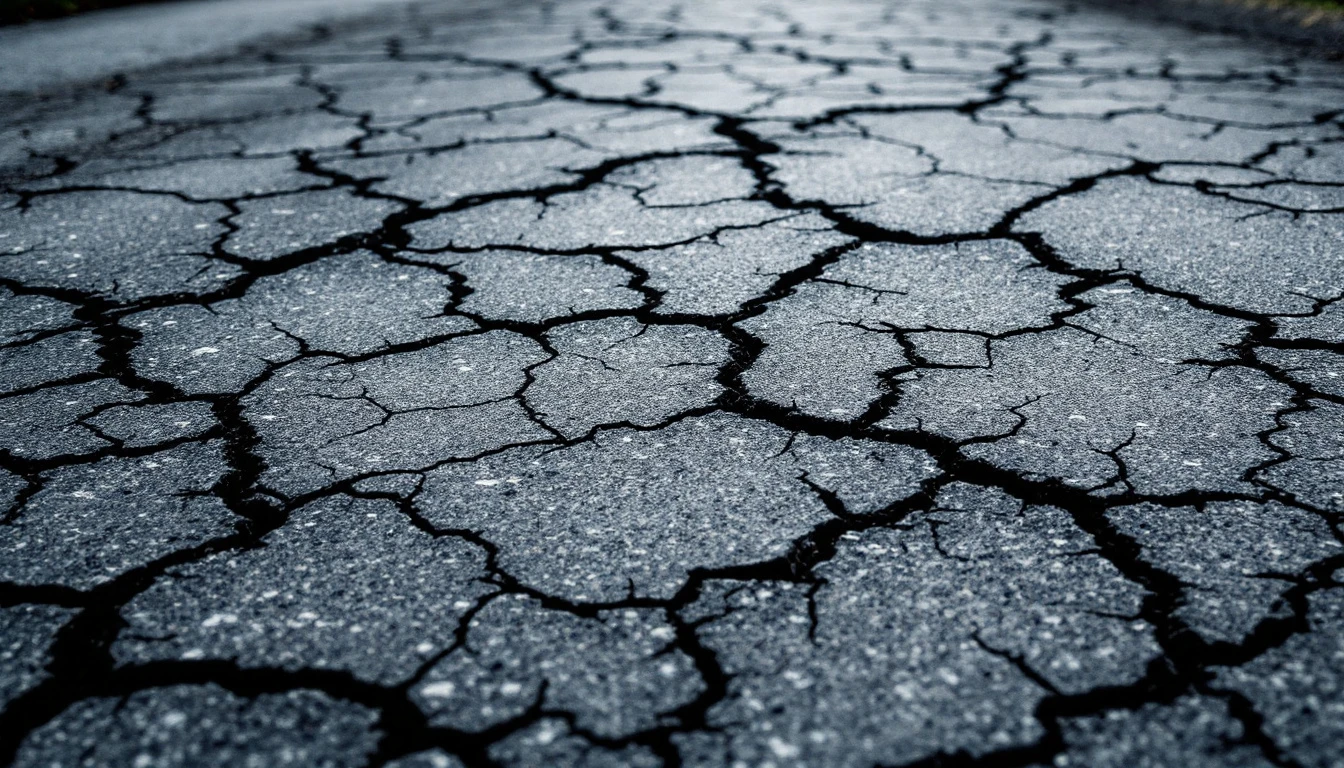
If you've ever walked out to your driveway and noticed a web of cracks that looks eerily like the scales on an alligator's back. This is one of the most common calls driveway contractors get, and for good reason. It looks alarming because it is a little alarming. Alligator cracking isn't just a cosmetic flaw you can shrug off, it's your driveway telling you something has gone wrong underneath the surface. Understanding what actually causes it, how to catch it before it spreads, and which repair route makes sense depending on how bad things have gotten.
What Exactly Is Alligator Cracking?
Picture a driveway that's slowly breaking apart into a tight grid of interlocking cracks like small, jagged, and clustered together in a way that genuinely resembles reptile skin. That's alligator cracking. It tends to show up first in the spots that take more load and exposure like where you park daily, where you pull in and out, anywhere the asphalt is under repeated stress.
This isn't a surface problem you can just seal over and forget. By the time those cracks form a connected pattern, something below the asphalt, usually the base layer has already started to fail. Fixing the top without addressing what's underneath is basically putting a band-aid on a broken bone.
Why Does This Happen in the First Place?
Rarely is there one single reason. Usually it's a mix of a few things working against your driveway at once.
A Base That Was Never Strong Enough
This is the big one. If the ground underneath wasn't properly compacted or prepared when the driveway went in, it simply can't hold up under the weight of vehicles long-term. Eventually, something has to give.
Heavy Vehicles, Over and Over
A driveway that regularly sees trucks, trailers, or equipment is working a lot harder than one that just sees a sedan. That extra weight flexes the asphalt repeatedly until it can't bounce back anymore.
Water Finding Its Way In
Even a hairline crack is an open door for water. Once it seeps down and reaches the base, it softens everything underneath, and a soft base means a driveway with nothing solid to rest on.
Simple Aging
Asphalt is flexible when it's new, but that flexibility fades with time and sun exposure. Skip the sealcoating for a few years and you're looking at brittle asphalt that cracks far more easily under normal pressure.
Poor Drainage
If water has nowhere to go and just sits on or near the driveway, it's only a matter of time before it works its way down and starts causing damage.
Catching It Early Makes All the Difference
The earlier you spot this, the cheaper and easier it is to deal with. Keep an eye out for:
- Small cracks that seem to be clustering together rather than staying isolated
- A crack pattern that's visibly growing month over month
- Spots that feel spongy or give slightly when you walk or drive over them
- Any dip or low spot that wasn't there before
Fixing It: Your Options Depending on Severity
There's no one-size-fits-all fix here. What works depends entirely on how far the damage has spread.
For Minor, Just-Starting to Damage
Surface Patching
If you catch the cracking early and it's confined to a small area, a patch can buy you time.
- Clean out the damaged section completely
- Apply a quality asphalt patching material
- Compact it properly so it bonds well
This is a stopgap, not a permanent fix. It only holds up if the base underneath is still in decent shape.
For Moderate Damage
Remove and Rebuild the Section
Once the damage is more established, patching alone won't cut it. You need to go deeper.
- Cut out the entire cracked section
- Repair or rebuild the base beneath it
- Pour and compact fresh asphalt in its place
This actually deals with the source of the problem instead of just hiding it.
For Severe, Widespread Cracking
Full-Depth Repair
When alligator cracking has taken over a large chunk of the driveway, there's really only one real option left.
- Remove the entire affected area, asphalt and base together
- Regrade and properly compact a new base
- Lay fresh asphalt in layers
It's the most involved and most expensive route, but it's also the only one that fully restores the driveway's structural strength.
A Few Mistakes to Avoid
It's tempting to go for the cheapest, fastest fix but a few common shortcuts almost always backfire:
- Sealcoating directly over alligator cracking (it looks fine for a few weeks, then the cracks come right back)
- Filling deep cracks without ever touching the failing base underneath
- Ignoring small clusters of cracking because "it's not that bad yet"
None of these actually solve anything. They just delay the inevitable and usually make the eventual repair more expensive.
How to Keep This from Happening Again
A little prevention goes a long way with asphalt.
Start with a Solid Installation
Everything comes back to the base. Proper grading, compaction, and quality materials at the outset prevent most of these headaches down the road.
Don't Skip Sealcoating
Reapplying every couple of years shields the surface from water, sun, and oxidation, keeping the asphalt flexible instead of brittle.
Fix Your Drainage
Water needs somewhere to flow. Make sure the slope and any drainage systems around your driveway are actually directing water away, not letting it pool.
Spread Out the Weight
If you can, avoid parking the same heavy vehicle in the exact same spot every single day. Even small changes in where weight sits can reduce long-term stress.
Do Periodic Walk-Throughs
Every so often, just look at your driveway. Small cracks are easy to catch and cheap to fix. Ignored ones aren't.
A Real-World Example
One homeowner had a driveway installed without much attention paid to base preparation, a corner was cut, and it wasn't obvious right away. About two years later, small cracks started popping up near the parking area. Rather than dealing with it, they sealcoated right over the cracks, figuring that would take care of it.
By year three, that small cracking had turned into a full-blown alligator pattern across a large section. At that point, a full-depth repair was the only real option and it cost far more than addressing the issue early on would have. It's a good illustration of why identifying the actual cause matters more than covering up the symptoms.
Final Thoughts
Alligator cracking is never just a look, feel and just seal issue, it's a sign that something structural has gone wrong beneath your driveway. Catching it early and choosing the right level of repair, rather than the cheapest one, is what actually protects your investment long-term. Whether you're dealing with a few small cracks or a driveway that's cracked all over, understanding the root cause is the first step toward fixing it right.
For homeowners who want more guidance on maintenance and repair decisions, Drivewayz USA has resources that can help you figure out the right path forward for your specific situation.
Frequently Asked Questions
Sometimes, if it's caught early and stays minor, patching can work. But in most cases, the base has already been compromised, so removing and rebuilding that section is usually necessary.
With good installation and regular maintenance, 15 to 20 years is typical. Skip the maintenance or start with a weak base, though, and that timeline shrinks fast.
No, sealcoating is a preventive step, not a repair. It won't do anything to address structural damage that's already happened.
A weak or failing base layer, usually combined with repeated heavy loads and water damage over time.
Proper installation, solid drainage, regular sealcoating, and not overloading the same spot repeatedly are your best defenses.