
Overview
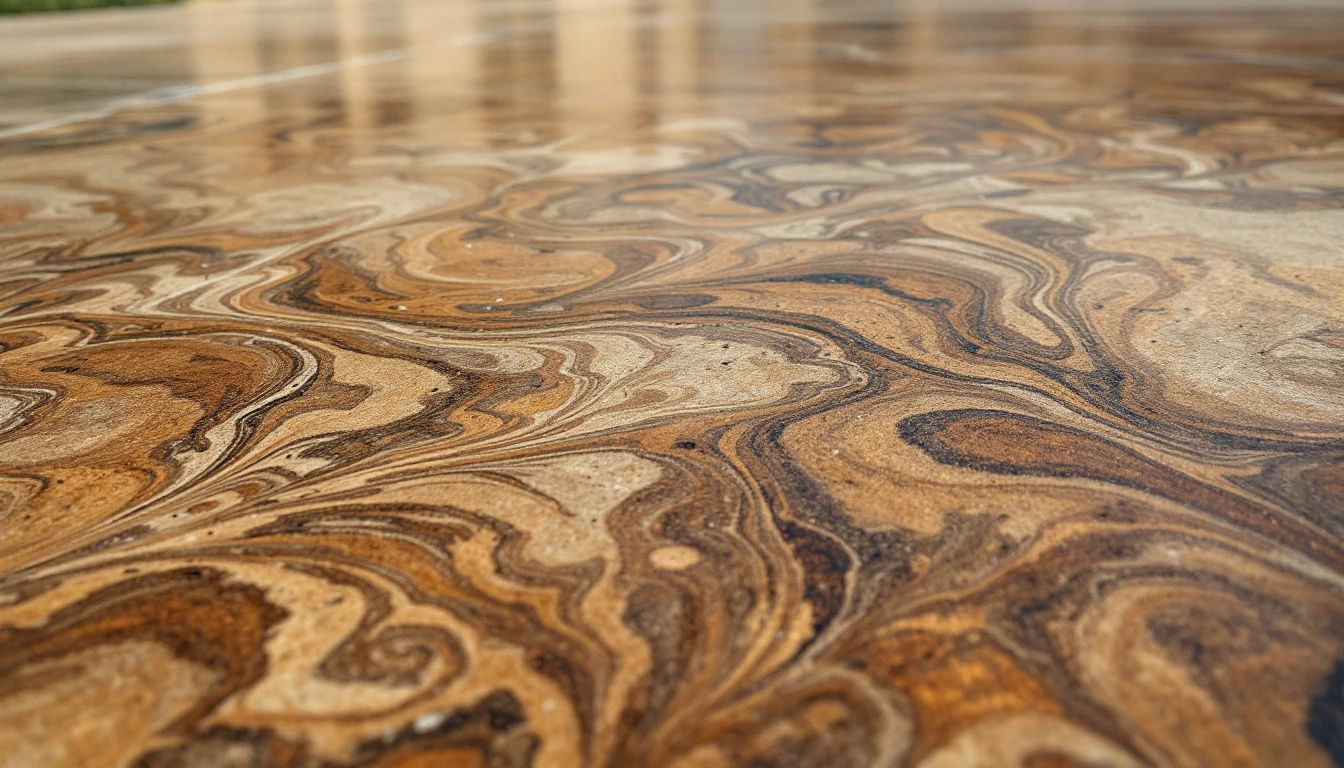
Acid staining a concrete driveway is one of the most effective ways to transform plain gray concrete into a visually rich, decorative surface. Unlike paints or coatings that sit on top of the surface, acid stain chemically reacts with the concrete itself, producing permanent, natural-looking color variations. This process is widely used in modern landscaping and exterior design because it delivers a stone-like, marble-inspired, and naturally variegated finish that cannot be duplicated with traditional coloring methods. Driveway surfaces treated with acid stain not only look premium but also gain long-lasting durability when properly sealed and maintained.
What Is Acid Staining for Concrete Driveways?
Acid staining is a chemical coloring process that uses a mixture of water, acid (commonly hydrochloric or muriatic acid), and metallic salts. When applied to cured concrete, it reacts with the lime content in the surface. This reaction creates permanent color changes that become part of the concrete itself rather than sitting on top like paint.
How the Process Works
When the stain is applied:
- The acid lightly opens the pores of the concrete surface
- Metallic salts penetrate deep into the material
- A chemical reaction occurs with calcium hydroxide (lime)
- New mineral compounds form, producing natural color variations
Because every concrete slab has a different composition, each acid-stained driveway turns out unique.
Unique Effects of Acid Staining a Concrete Driveway
One of the biggest reasons homeowners choose acid staining is its unpredictable and artistic finish. No two driveways ever look identical.
1. Natural Stone-Like Appearance
Acid staining creates tones that resemble marble, granite, or aged stone. The finish often includes soft transitions between colors, giving the surface a high-end architectural feel.
2. Mottled and Variegated Coloring
Instead of a flat, uniform color, acid staining produces layered tones. These variations depend on:
- Concrete age and composition
- Surface porosity
- Application technique
- Mineral content in the slab
This randomness is what gives acid stain its signature “organic” look.
3. Earth-Tone Color Palette
Most acid stains produce natural shades such as:
- Browns and tans
- Rust and copper tones
- Greenish hues
- Subtle black overlays
These colors blend well with outdoor environments and driveway landscaping.
4. Permanent, UV-Stable Finish
Unlike paint or surface coatings, acid stain does not peel or chip. It is UV-stable, making it ideal for outdoor driveways exposed to sunlight and weather conditions.
Benefits of Acid Staining a Concrete Driveway
Acid staining is not just about aesthetics, it also provides functional advantages.
Long-Lasting Durability
Since the stain penetrates the surface, it wears only as the concrete wears. This ensures a long lifespan when properly maintained.
Low Maintenance Surface
Once sealed, acid-stained driveways are easy to clean and maintain. Regular washing and occasional resealing are usually enough.
Cost-Effective Upgrade
Compared to full driveway replacement or paving, acid staining is a more affordable way to dramatically upgrade curb appeal.
No Peeling or Flaking
Because the color becomes part of the concrete matrix, there is no risk of peeling like traditional coatings.
Important Preparation Before Acid Staining
Proper preparation is essential for achieving consistent and attractive results.
Surface Requirements
Before applying acid stain:
- Concrete should be fully cured (typically at least 28 days)
- Surface must be clean and free of oil, dust, or sealers
- Any previous coatings must be removed
- Repairs should be completed in advance
If the surface is not properly prepared, the chemical reaction may not occur evenly.
Application Process Overview
Although professional application is recommended for large driveways, the process generally includes:
- Cleaning and preparing the concrete surface
- Applying the acid stain evenly or in layers
- Allowing chemical reaction time
- Neutralizing and rinsing the surface
- Drying completely
- Applying a protective sealer
A sealer is essential to enhance color depth and protect the finish from moisture and wear.
Limitations and Things to Consider
While acid staining is highly effective, it is important to understand its limitations:
- Color results can be unpredictable
- Surface imperfections remain visible
- Requires proper sealing for maximum durability
- Some colors may vary based on concrete composition
Despite these factors, many homeowners prefer the natural variation because it adds character and uniqueness.
Why Acid Staining Is Ideal for Driveways
Driveways endure heavy use, weather exposure, and constant wear. Acid staining works well because it:
- Bonds chemically with concrete
- Resists fading under UV exposure
- Provides a decorative yet durable finish
- Enhances curb appeal significantly
It is especially popular for modern homes, luxury driveways, and decorative exterior landscaping.
Transform Your Driveway with Drivewayz USA
Acid staining a concrete driveway is one of the most effective ways to achieve a high-end, natural stone-like appearance without replacing the entire surface. Its unique chemical process ensures every driveway has a one-of-a-kind finish with long-lasting durability and visual depth. For homeowners looking to upgrade their outdoor surfaces with professional-quality results, Drivewayz USA offers reliable solutions, expert guidance, and premium driveway enhancement services.
Frequently Asked Questions
No—the translucent nature of acid stain actually makes cracks more visible, though many homeowners like the authentic aged-stone look. We recommend filling significant cracks with a gray-tinted polyurethane caulk before staining if you prefer a cleaner appearance.
Acid stain is permanent. You can darken with additional layers of the same color family, but you can’t go lighter. A complete color change requires either grinding the surface or overlaying with a tinted micro-topping before re-staining.
Concrete should cure at least 28 days before acid staining. Early application interrupts hydration and can cause soft, chalky paste that later powders under tires.
Stamped concrete runs $8–$12 per sq ft because it requires new concrete, forms, and labor-intensive imprinting. Acid staining your existing slab is roughly half the cost and gives equally dramatic curb appeal without tearing out the old driveway.